1. What tool might a first-grade teacher use to help kids count?
2. How do elementary teachers treat mistakes during learning?
🤯 Mind-Blowing Fact • Grade 2
Most elementary teachers spend hours planning creative hands-on activities before the first morning bell even rings!
✨ Word Sparks (Grade 2 Glossary)
Tap 🔊 to hear
schedule
A daily plan showing when events happen
experiment
A hands-on test to see how things work
encourage
To give someone hope and confidence
🪝
How does one teacher teach reading, math, science, and kindness all in the same day?
1
Before Students Arrive
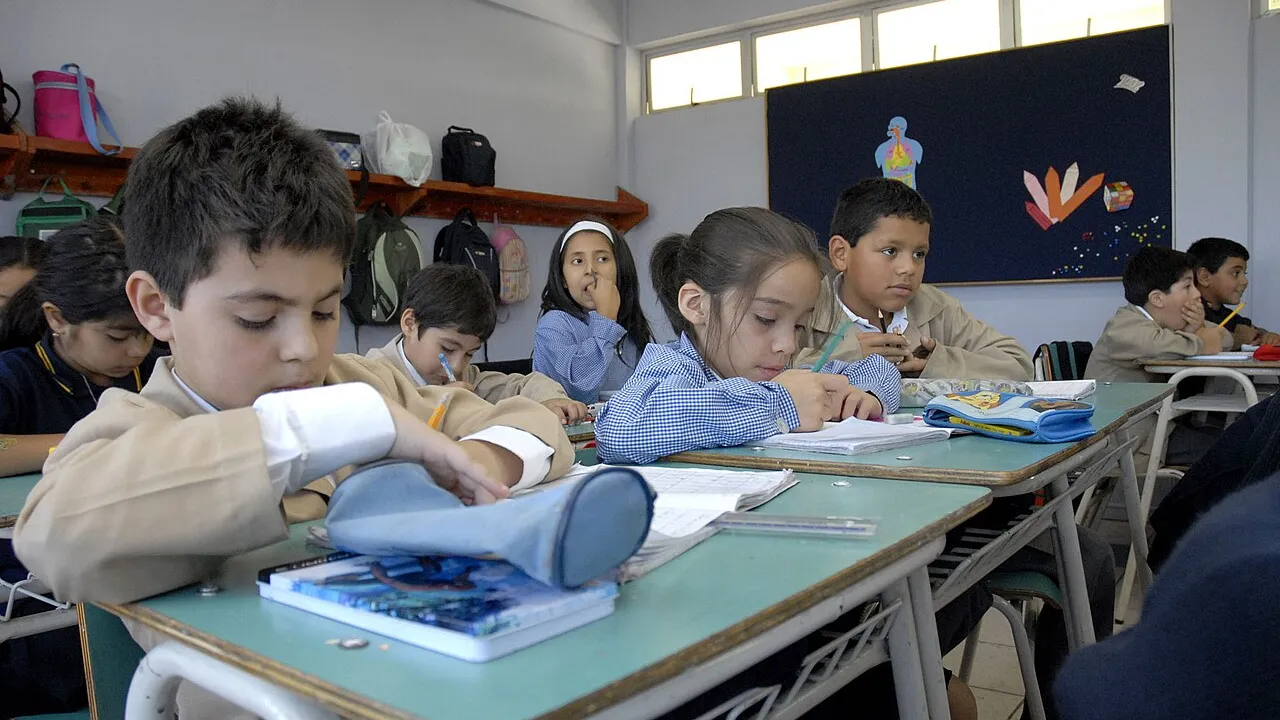
Sunlight streams across rows of small desks before the school bus pulls up. At a busy table, an elementary school teacher sets out magnifying glasses, storybooks, and number cards for an exciting day of discovery.
2
Wearing Many Hats
Unlike high school educators who teach one subject, elementary teachers lead almost everything! In the morning, they sound out tricky words with small reading groups. After lunch, they guide hands-on science and history stories.
3
Building a Caring Team
Learning works best when everyone feels safe and included. Teachers show classmates how to share ideas, listen respectfully, and solve playground problems with calm words.
1. How is an elementary teacher's day different from many high school teachers' days?
2. Why do teachers help students practice listening and sharing?
🤯 Mind-Blowing Fact • Grade 3
Brain researchers found that children learn up to three times faster when teachers connect new ideas to hands-on games and real-world stories!
✨ Word Sparks (Grade 3 Glossary)
Tap 🔊 to hear
curriculum
All the subjects and skills taught in school
strategy
A smart plan for reaching a goal
manipulatives
Small objects kids move to learn math
🪝
What secret planning turns twenty-five curious kids into confident readers, writers, and scientists?
1
A Buzzing Learning Lab
Markers squeak across a whiteboard while twenty-four pairs of eyes watch a sprouting bean seed in a clear cup. Guiding every question is an elementary school teacher who transforms a plain room into an active learning lab.
2
Designing the Curriculum
Every lesson follows a careful roadmap called a . Teachers break big goals—like multiplying numbers or understanding weather—into clear, bite-sized steps. They use fraction tiles, maps, and digital boards so students can see ideas in action.
3
Reaching Every Learner
No two children learn in the exact same way. Some students grasp ideas fastest by listening to a story, while others need to build a model with their hands. Skilled teachers adjust their strategies so every child can shine.
4
Partnering with Families
After dismissal, the job continues. Teachers review student notebooks, celebrate progress with parents and guardians, and prepare tomorrow's fresh adventures.
1. Why do elementary teachers use tools like fraction tiles and bean seeds?
2. What is a school curriculum?
🤯 Mind-Blowing Fact • Grade 4
Over 1.8 million elementary and middle school teachers work across the United States, forming one of the nation's largest professional communities!
✨ Word Sparks (Grade 4 Glossary)
Tap 🔊 to hear
pedagogy
The art and science of how people teach
differentiation
Adapting lessons to fit different student needs
phonics
Connecting written letters with spoken word sounds
🪝
How does an elementary teacher apply brain science to unlock literacy and critical thinking for an entire community?
1
Sparks at the Whiteboard
Imagine watching a third grader suddenly connect how prefixes change a word's meaning while across the rug another group tests magnets on copper coins. Orchestrating all of those light-bulb moments at once takes the training and heart of an elementary school teacher.
2
The Science of Pedagogy
Before leading a classroom, future teachers earn a university degree and complete supervised student-teaching placements to earn a state license. They study —the science and craft of teaching—along with child development and . In states like Virginia, teachers align daily activities with clear learning standards such as the Standards of Learning so every child builds strong foundations in reading, mathematics, science, and civics.
3
Differentiation in Real Time
Inside a single classroom, students bring diverse strengths, languages, and interests. Using a method called , teachers tailor reading levels, small-group coaching, and enrichment projects to match what each learner needs next. Quick progress checks during a lesson reveal who is ready for a tougher puzzle and who needs a helpful hint.
4
Shaping Future Citizens
Beyond academics, elementary classrooms serve as a child's first civic community. By practicing teamwork, empathy, and fair debate, students gain habits they will carry into adulthood.
1. What does a teacher do when practicing differentiation?
2. How do state learning standards help elementary classrooms?
🤯 Mind-Blowing Fact • Grade 5
Educational studies estimate that an elementary teacher makes roughly 1,500 real-time instructional decisions during a single six-hour school day!
✨ Word Sparks (Grade 5 Glossary)
Tap 🔊 to hear
scaffolding
Temporary learning support removed as skills grow
morphology
Studying word parts like roots and prefixes
executive function
Brain skills for planning, focus, and self-control
🪝
Why do cognitive scientists call K–5 teachers architects of the developing human brain?
1
Orchestrating Twenty-Five Minds
Picture a fourth-grade classroom at ten o'clock on a Tuesday morning: four students debate primary sources from Jamestown, a small group models decimal fractions with base-ten grids, and two partners debug a block-coding loop. Guiding this intricate symphony without missing a beat is an elementary school teacher making hundreds of instructional decisions every hour.
2
Cognitive Science Meets Literacy
Between ages six and eleven, neural pathways for language, , and numerical reasoning expand at a remarkable pace. Modern elementary educators apply structured literacy—grounded in phonemic awareness, , fluency, and comprehension—to rewire visual and language centers in the brain so print turns effortlessly into meaning.
3
Scaffolding and Inquiry
Rather than simply handing out answers, effective teachers use instructional . They pose compelling inquiry questions, model how to analyze evidence, and gradually release responsibility until students can solve multi-step problems independently. Formative check-ins—such as exit tickets, student conferences, and lab journals—give immediate feedback that guides the very next day's mini-lessons.
4
Preparation and Collaboration
Becoming a licensed elementary educator requires a bachelor's or master's degree, rigorous coursework in child psychology and subject-area methods, and hundreds of clinical hours in real classrooms. Throughout the school year, grade-level teams collaborate with reading specialists, math coaches, school counselors, and families to support the whole child academically and socially. Teachers also integrate educational technology, hands-on STEM engineering labs, and outdoor environmental investigations so abstract textbook concepts connect vividly to students' everyday neighborhoods.
5
Lasting Civic Ripples
Every aerospace engineer, pediatric surgeon, poet, and public servant began their journey inside an elementary classroom. By nurturing curiosity, intellectual resilience, collaborative problem-solving, and civic respect early in life, elementary teachers lay the enduring cornerstone of an informed democratic society.