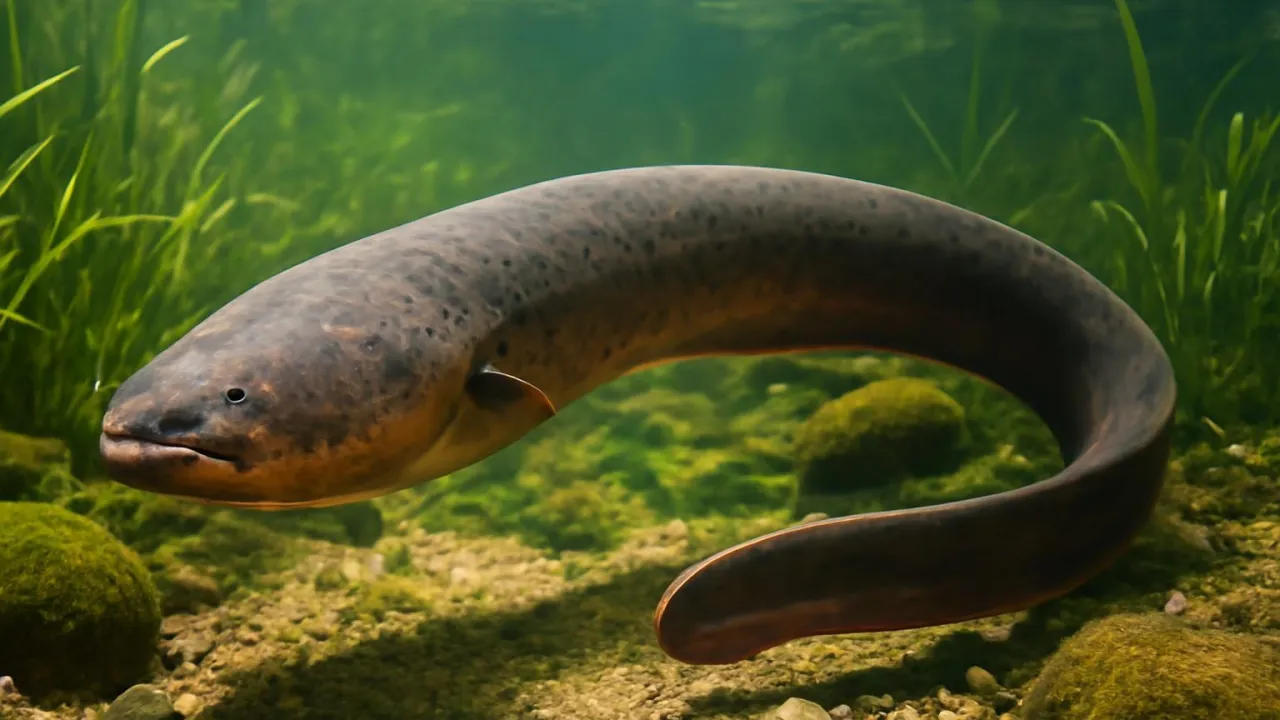
Electric eels have three electric organs that create different shock levels for hunting and defense!
✨ Word Sparks (Grade 3 Glossary)
Tap 🔊 to hear
camouflage
Colors or shapes that help hide animals
predator
An animal that hunts other animals
adaptation
A body change that helps survival
🪝
Did you know electric eels use electricity to survive underwater?
1
Habitat and Camouflage
Electric eels live in slow-moving rivers and swamps in South America. Their dark, slim bodies help them blend into muddy water. This hides them from and prey. They often rest near plants to stay unseen.
2
Electric Shocks for Defense
Electric eels produce strong electric shocks to protect themselves from . These shocks can reach up to 600 volts, which stuns or scares animals nearby. This helps them avoid danger and survive in the wild.
3
Hunting with Electricity
They use electric shocks to catch prey like fish and frogs. The shocks stun the prey, making it easier to catch. This hunting method is a unique that gives electric eels an advantage in their environment.
4
Life Cycle and Growth
Electric eels grow from small larvae to large adults over time. Young eels learn to control their electric organs as they develop. They need clean water and enough food to grow strong and healthy.
2. What is one way electric eels catch their prey?
🤯 Mind-Blowing Fact • Grade 4
Electric eels can produce different shock levels for hunting, navigation, and communication!
✨ Word Sparks (Grade 4 Glossary)
Tap 🔊 to hear
ecosystem
All living things and their home together
symbiosis
Animals living closely and helping each other
pollution
Harmful stuff that dirties water or air
🪝
How does the electric eel’s shocking power affect its river ecosystem?
1
Electric Eel’s Habitat and Role
Electric eels live in freshwater rivers and swamps across the Amazon basin. Their ability to produce electric shocks helps control fish populations by stunning prey. This role balances the food web and supports health. They also provide food for larger predators despite their defenses.
2
Cause and Effect of Electric Shocks
When threatened, electric eels release powerful shocks that can stun or scare predators away. This defense mechanism reduces their risk of injury or death. The shocks also affect nearby fish, sometimes causing temporary paralysis. This interaction shapes animal behavior in their habitat.
3
Symbiosis and Human Impact
Electric eels sometimes share habitats with other species that benefit from their electric fields. However, and habitat loss threaten their survival. Human activities like dam building change river flow and water quality, impacting electric eel populations. Conservation efforts aim to protect these unique fish and their environment.
4
Geographic Distribution
Electric eels are found mainly in the Amazon and Orinoco river basins. They prefer slow-moving, muddy waters rich in plants. Their distribution depends on water temperature, oxygen levels, and food availability. Understanding their range helps scientists protect their habitats and .
1. What happens when an electric eel uses its shock for defense?
2. Why do humans need to protect electric eel habitats?
🤯 Mind-Blowing Fact • Grade 5
Electric eels’ shocks can reach 600 volts, six times stronger than a household outlet!
✨ Word Sparks (Grade 5 Glossary)
Tap 🔊 to hear
electrocytes
Cells that make electric power in the eel
bioelectricity
Electric power made by living things
conservation
Protecting animals and their homes
🪝
What scientific secrets allow electric eels to generate powerful electric shocks underwater?
1
Scientific Classification and Anatomy
The electric eel, Electrophorus electricus, belongs to the Gymnotiformes order of knifefish. It has specialized electric organs made of thousands of arranged in series. These organs occupy most of its body length and generate electric discharges for various functions. Its elongated body supports both swimming and electrical activity.
2
Physiological Mechanics of Electricity
Electric eels produce electricity by rapidly activating that create ion flows, generating voltage. They can emit low-voltage pulses for navigation and high-voltage shocks up to 600 volts for hunting or defense. This is controlled by their nervous system and muscle-like cells. The shocks can stun prey or deter predators effectively.
3
Ecological Role and Conservation
Electric eels play a crucial role in freshwater ecosystems by regulating prey populations and maintaining food web balance. However, habitat destruction, pollution, and overfishing threaten their populations in the Amazon and Orinoco basins. programs focus on habitat protection and pollution control to ensure their survival. Understanding their biology aids in these efforts.
4
Botanical and Zoological Insights
Unlike plants that use electricity for signaling, electric eels uniquely generate strong shocks for survival. Their electric organs evolved from muscle tissue, illustrating a remarkable physiological adaptation. This ability distinguishes them from other fish and highlights evolutionary innovation in aquatic environments. Their shocks also serve communication and navigation purposes.
5
Quantitative Comparisons and Facts
Electric eels can grow up to 8 feet (2.5 meters) and weigh around 44 pounds (20 kilograms). Their 600-volt shock is about six times stronger than a standard U.S. wall outlet. They inhabit waters with temperatures ranging from 75 to 86 degrees Fahrenheit (24 to 30 degrees Celsius). These measurements highlight their impressive size and electrical power.