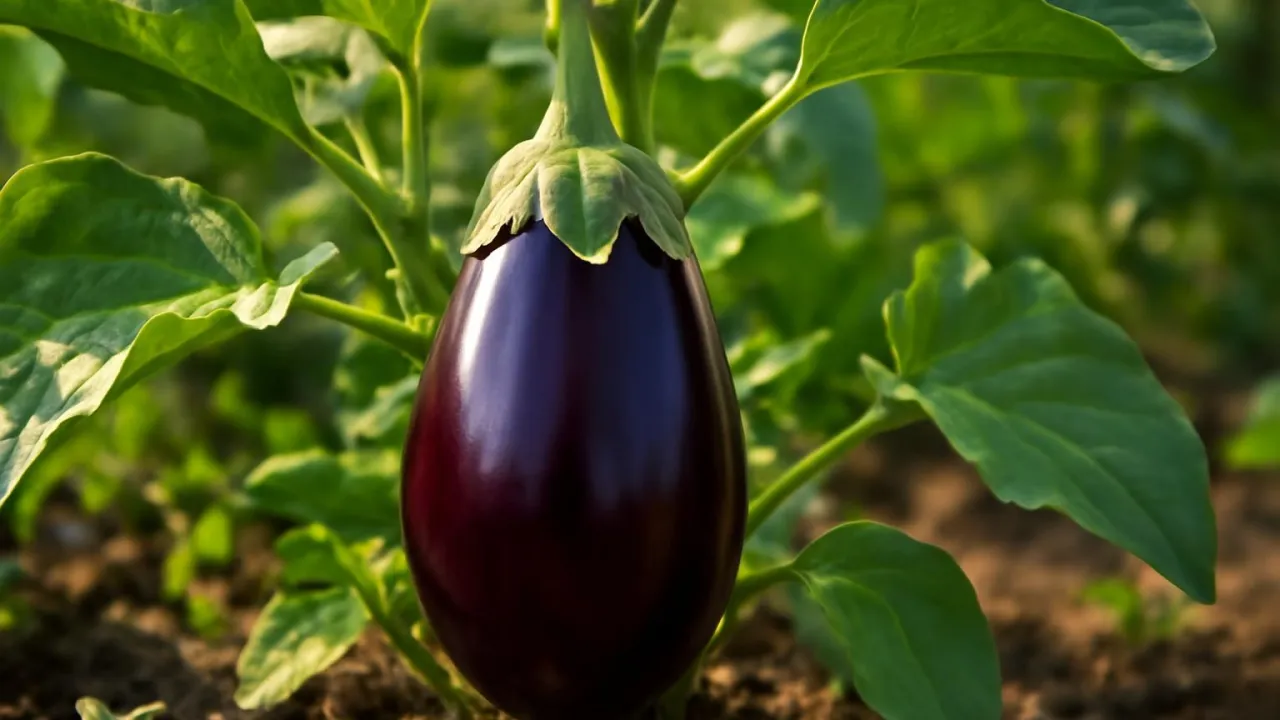
Eggplants belong to the same family as tomatoes and potatoes!
✨ Word Sparks (Grade 2 Glossary)
Tap 🔊 to hear
fruit
The part of a plant that holds seeds
sunlight
Light from the sun that helps plants grow
protect
To keep something safe from harm
🪝
Have you ever seen a vegetable that looks like a shiny purple balloon?
1
Eggplant’s Color and Shape
Eggplants have shiny purple skin, and they look like big balloons. Sometimes, they can be white or green, too. Their smooth skin helps the soft inside.
2
Where Eggplants Grow
Eggplants grow best in warm places with lots of . They grow on tall green plants that need plenty of water. Farmers plant them in gardens or fields during summer.
3
How Eggplants Grow
Eggplants start as small flowers that turn into . They need sun and water to grow big and strong. The shiny skin helps keep the fruit safe from bugs.
Eggplants are berries because they have seeds inside their fruit!
✨ Word Sparks (Grade 3 Glossary)
Tap 🔊 to hear
adaptation
A change that helps plants survive better
pollination
When bees help plants make seeds
nutrients
Good stuff in food that helps us grow
🪝
Did you know eggplants are actually fruits, not vegetables?
1
Eggplant’s Unique Appearance
Eggplants have shiny, smooth skin that can be purple, white, or green. Their shape is usually oval or round, and they grow on tall, leafy plants. The shiny skin helps protect the fruit from insects and sun damage.
2
How Eggplants Grow and Adapt
Eggplants start as small purple flowers that turn into fruits. They need warm temperatures and plenty of sunlight to grow well. Their thick skin is an that helps reduce water loss in hot climates.
3
Eggplants in the Plant Family
Eggplants belong to the nightshade family, which includes tomatoes and potatoes. This family shares traits like similar flower shapes and fruit types. Knowing this helps farmers understand how to care for eggplants.
4
Why Eggplants Matter
Eggplants provide like fiber and vitamins to people who eat them. They also play a role in gardens by attracting pollinators like bees. helps eggplants produce healthy fruits for harvest.
Eggplants were first cultivated over 4,000 years ago in Asia!
✨ Word Sparks (Grade 4 Glossary)
Tap 🔊 to hear
symbiotic
A helpful relationship between two living things
ecosystem
All living things and their homes together
agriculture
Growing plants and raising animals for food
🪝
How does the eggplant’s shiny skin help it survive in hot places?
1
Eggplant’s Protective Skin
The eggplant’s shiny skin acts as a natural barrier that protects it from harmful insects and excessive sunlight. This protective layer reduces water loss, which is crucial in the hot climates where eggplants thrive. Because of this adaptation, eggplants can survive in warm environments with strong sun exposure.
2
Eggplant’s Role in Ecosystems
Eggplants provide food for many animals, including insects and birds, which helps support local food webs. They also attract pollinators such as bees and butterflies that are essential for the reproduction of many plants. In return, pollinators gain nectar, creating a relationship that benefits the .
3
Where Eggplants Grow Worldwide
Originally from tropical Asia, eggplants are now grown in warm regions worldwide, including the Mediterranean and the southern United States. They require well-drained soil and full sun to grow well, which limits their cultivation to warmer climates. Farmers often rotate eggplants with other crops to maintain healthy soil.
4
Human Impact and Agriculture
Eggplants are important in because they provide nutritious food and income for farmers. However, they can be affected by pests and diseases, so farmers use crop rotation and natural pest control methods to protect their plants. Sustainable farming helps keep eggplant crops healthy and productive.
1. Why is eggplant skin important in hot climates?
2. What kind of relationship do eggplants have with pollinators?
🤯 Mind-Blowing Fact • Grade 5
Eggplants are berries botanically, but chefs treat them as vegetables in cooking!
✨ Word Sparks (Grade 5 Glossary)
Tap 🔊 to hear
transpiration
Water loss from plants through leaves and skin
integrated pest management
Using many ways to control pests safely
botanical
Related to plants and how they grow
🪝
Did you know eggplants belong to the nightshade family and have fascinating botanical traits?
1
Scientific Classification and Origins
Eggplants, scientifically called Solanum melongena, belong to the Solanaceae family, commonly known as nightshades. This family includes tomatoes, potatoes, and peppers, sharing similar flower structures and fruit types. Native to tropical Asia, eggplants have been cultivated for over 4,000 years, spreading globally due to their culinary and agricultural value.
2
Physiological Features and Growth
Eggplants grow on bushy plants reaching up to four feet tall, requiring full sun and well-drained soil. Their glossy, thick skin protects against pests and reduces water loss through in hot climates. Internally, the spongy flesh contains numerous small seeds, classifying eggplants botanically as berries despite their savory use.
3
Botanical and Culinary Distinctions
Although commonly treated as vegetables in cooking, eggplants are botanically fruits because they develop from flowers and contain seeds. This distinction is shared with tomatoes and cucumbers, which are also fruits by standards but used as vegetables in meals. Understanding this helps explain their growth and reproduction processes.
4
Conservation and Agricultural Practices
Eggplant cultivation faces challenges from pests like flea beetles and diseases such as verticillium wilt, prompting farmers to use crop rotation and . Sustainable farming practices enhance soil health and reduce chemical use, ensuring long-term productivity and environmental protection. These methods help maintain eggplant availability worldwide.
5
Quantitative Comparisons and Global Impact
Eggplants typically weigh between one and three pounds (0.45 to 1.36 kilograms) and grow best in temperatures from 70 to 85 degrees Fahrenheit (21 to 29 degrees Celsius). They mature within 100 to 120 days after planting, and global production exceeds 50 million metric tons annually. These impressive numbers highlight eggplant’s importance in global agriculture and cuisine.