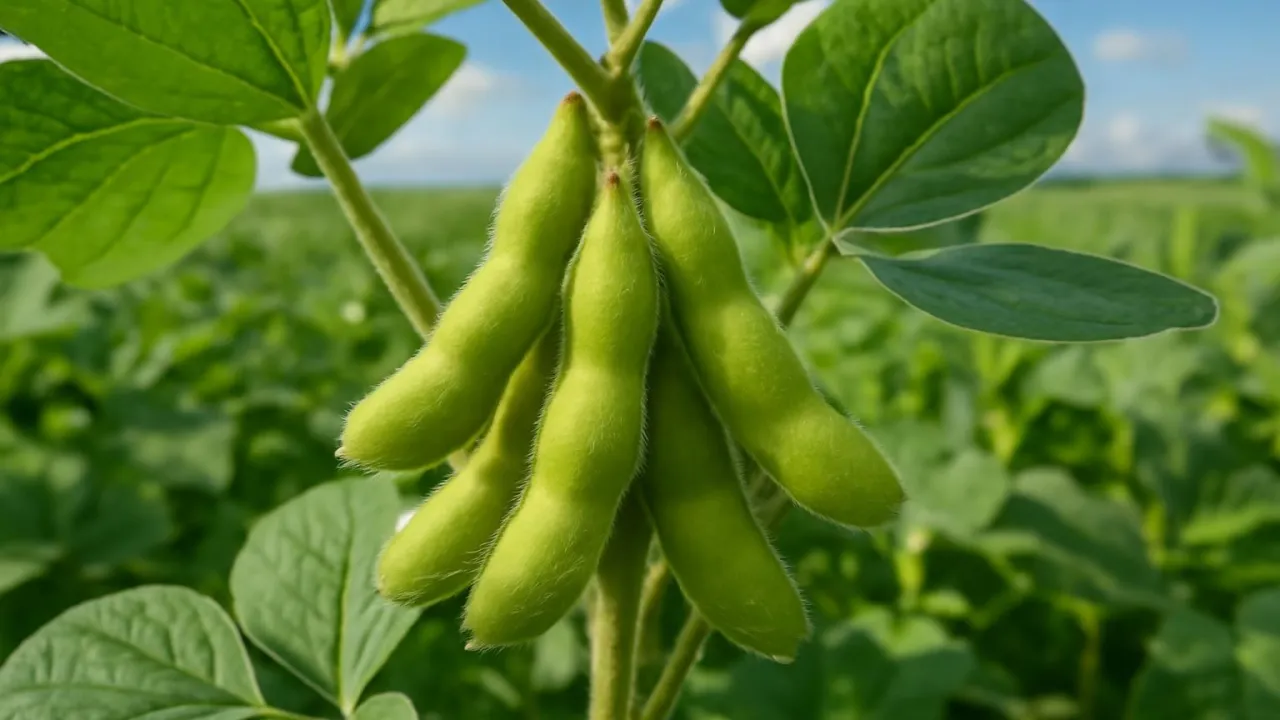
Edamame is one of the few vegetables that is also a complete protein food!
✨ Word Sparks (Grade 2 Glossary)
Tap 🔊 to hear
fiber
Part of food that helps your tummy work well
protein
A nutrient that helps muscles grow strong
pod
A case that holds beans on a plant
🪝
Did you know edamame is a green soybean that grows in pods on plants?
1
Edamame’s Growing Home
Edamame plants grow best in warm places with full sun and good water. Farmers plant seeds in spring and watch them grow tall. The green fill with beans as the plant matures. When pods are full, farmers pick them to eat.
2
How Edamame Grows
The start small but get bigger as beans grow inside. Each pod usually holds two to three beans. Edamame beans are soft and green when ready to eat. People often boil or steam the pods before eating.
3
Why Edamame is Healthy
Edamame is a tasty snack that has lots of and . Protein helps build muscles and fiber helps digestion. Many people enjoy edamame as a healthy treat. It can be eaten warm or cold.
2. What do people usually do before eating edamame pods?
🤯 Mind-Blowing Fact • Grade 3
Edamame plants help the soil by fixing nitrogen, which feeds other plants nearby.
✨ Word Sparks (Grade 3 Glossary)
Tap 🔊 to hear
legume
A plant family that grows beans in pods
nitrogen fixation
How plants add helpful nutrients to the soil
adaptation
A way plants change to survive better
🪝
Have you ever wondered how edamame plants protect their tasty beans inside pods?
1
Edamame’s Natural Habitat
Edamame plants thrive in warm climates with plenty of sunlight and water. They belong to the family, which helps enrich soil with nutrients. The plants grow to about two feet tall, producing pods filled with green soybeans. These pods protect the beans from predators and weather.
2
How Edamame Grows and Develops
The pods start small and grow larger as the beans inside develop fully. Each pod usually contains two or three beans, which are soft and edible when mature. The plant’s leaves provide shade to protect the pods from too much sun. This helps the beans stay fresh and nutritious.
3
Edamame’s Role in Nature
Edamame plants improve soil by adding nitrogen, a vital nutrient for other plants. This process is called and helps farmers grow healthier crops. Edamame also provides food for some insects and animals, but its tough pods help protect it from many predators. The plant fits well into farming ecosystems.
4
Why Edamame is Good to Eat
Edamame beans are a rich source of protein, fiber, and vitamins, making them a healthy food choice. Unlike many vegetables, edamame is a , which means it stores protein in its beans. People eat edamame steamed or boiled, often as a snack or side dish. It is a tasty and nutritious addition to meals.
Edamame farming helps reduce chemical fertilizer use by naturally enriching soil nutrients.
✨ Word Sparks (Grade 4 Glossary)
Tap 🔊 to hear
symbiotic
A helpful relationship between two living things
ecosystem
All living things and their environment together
nitrogen fixation
Process that adds nitrogen to soil for plants
🪝
Did you know edamame plants play an important role in farming and ecosystems worldwide?
1
Edamame’s Growing Conditions and Distribution
Edamame plants require warm temperatures and full sunlight to grow successfully, often thriving in East Asia and many other regions. They need moderate water but cannot survive in waterlogged soils because roots may rot. Farmers cultivate edamame in fields that provide good drainage and nutrient-rich soil. This careful environment helps the pods develop healthy, tasty beans.
2
How Edamame Supports Ecosystems
Edamame plants contribute to their by fixing nitrogen in the soil through root bacteria, which benefits nearby plants and increases crop yields. This relationship reduces the need for chemical fertilizers in farming. Additionally, edamame pods provide food for some insects and animals, though their tough pods act as a natural defense against many predators. This balance helps maintain healthy farmland ecosystems.
3
Edamame’s Role in Human Agriculture
Humans have cultivated edamame for thousands of years, especially in East Asia, where it is a popular snack and cooking ingredient. Its high protein content makes it valuable for vegetarian and vegan diets. Edamame farming contributes to sustainable agriculture by improving soil health and reducing fertilizer use. This vegetable continues to grow in popularity worldwide due to its health benefits and flavor.
4
Why Edamame is Nutritious and Popular
Edamame beans are rich in protein, fiber, vitamins, and minerals, making them a nutritious food choice for many people. Because they are legumes, they provide a complete protein source, which is rare among plants. People eat edamame steamed, boiled, or even roasted as a healthy snack. Its mild, slightly sweet flavor appeals to many palates and fits well into diverse cuisines.
1. How does edamame help reduce the need for fertilizers?
2. Why do edamame pods protect the beans inside?
🤯 Mind-Blowing Fact • Grade 5
Edamame plants can fix up to 200 kilograms of nitrogen per hectare each year, enriching soil naturally.
✨ Word Sparks (Grade 5 Glossary)
Tap 🔊 to hear
Fabaceae
The plant family that includes beans and peas
symbiotic
A close, helpful relationship between two organisms
nitrogen fixation
Process where bacteria turn air nitrogen into soil nutrients
🪝
What makes edamame a unique legume with important roles in nutrition, agriculture, and ecology?
1
Scientific Classification and Origin
Edamame, scientifically named Glycine max, is a subspecies of the soybean plant native to East Asia. It belongs to the family, commonly known as legumes, which are characterized by their pod-bearing seeds. Cultivated for thousands of years, edamame has become a staple crop in many countries due to its nutritional value and adaptability. Its pods typically contain two to three green beans rich in essential nutrients.
2
Physiological Mechanics and Growth
The edamame plant grows best in temperate climates with full sun exposure and well-drained soils, requiring moderate water to prevent root rot. Its roots form relationships with nitrogen-fixing bacteria, converting atmospheric nitrogen into usable forms that enrich the soil. The pods develop over approximately 70 to 90 days after planting, protecting the beans inside with a tough outer layer. This adaptation helps the beans mature safely while deterring many herbivores.
3
Conservation and Agricultural Importance
Edamame cultivation supports sustainable agriculture by naturally enhancing soil fertility through , reducing the dependence on synthetic fertilizers. Its ability to improve soil health makes it a valuable rotational crop in farming systems worldwide. Conservation efforts focus on preserving diverse soybean varieties to maintain genetic resources and improve resistance to pests and diseases. Edamame’s popularity has increased globally due to its health benefits and environmental advantages.
4
Nutritional and Culinary Comparisons
Edamame beans provide approximately 11 grams of protein per 100 grams, making them an excellent plant-based protein source compared to other legumes. They also contain significant amounts of fiber, vitamins C and K, and minerals such as iron and calcium. Culinary uses range from steaming and boiling to roasting, often served as snacks or added to salads and stir-fries. Their mild, slightly sweet flavor and firm texture distinguish them from mature soybeans used for oil or tofu.
5
Quantitative Growth and Environmental Data
Edamame plants typically reach heights of 1.5 to 2 feet (45 to 60 centimeters) and produce pods measuring 2 to 3 inches (5 to 7 centimeters) long. Optimal growth occurs at temperatures between 68°F and 86°F (20°C to 30°C), with yields averaging 2,500 to 3,500 pounds per acre under good conditions. The process can supply up to 200 kilograms of nitrogen per hectare annually, significantly benefiting subsequent crops. These factors contribute to edamame’s role as a nutritious and environmentally friendly crop.