👷 CAREERS
💼 Emergency Management, Logistics & Public Service
VA Economics, Civics & Career Readiness SOL K.8, 1.8, 2.8, 3.9
Disaster Relief Coordinator
Organizing Fast Help When Storms Strike
Grade 1 • Early Reader • 69 words
🧭 Career FieldEmergency Management, Civic Government & Nonprofit Relief
🛠️ Key Tools & SkillsTwo-way satellite radios, live weather and road maps, supply checklists, shelter cots, and emergency command boards
🏢 WorkplaceEmergency operations centers, school gym shelters, flood zones, and supply warehouses
⚡ Everyday Impact SparkTurns confusion after hurricanes, floods, or blizzards into calm teamwork so water, food, power, and safe shelters reach everyone fast
🤯 Mind-Blowing Fact • Grade 1
Emergency warehouses keep thousands of folded cots, blankets, and water packs stacked and ready on pallets before hurricane season even begins!
✨ Word Sparks (Grade 1 Glossary)
Tap 🔊 to hear
Coordinator
Leader who organizes helpers to work together
Shelter
Safe dry place where people stay protected
Supplies
Needed items like water, food, and blankets
🪝
Who makes sure warm blankets and clean water arrive right after a big storm?
1
A Calm Team Leader
Boom goes the thunder and down pours the rain! When a big storm knocks out lights, a disaster relief steps up with a calm plan.
2
Safe Cozy Shelters
Using radios and big wall maps, they open safe inside school gyms. Trucks roll in with warm cots, hot meals, and clean water bottles.
3
Planning Ahead
Even on sunny days, practice safety drills with firefighters and neighbors so the whole town stays ready!
1. What does a disaster relief coordinator organize right after a major storm?
2. What do disaster relief coordinators do on calm, sunny days when there is no storm?
🤯 Mind-Blowing Fact • Grade 2
Modern pet-friendly disaster shelters set up special kennels right next door so families never have to leave beloved dogs or cats behind during evacuations!
✨ Word Sparks (Grade 2 Glossary)
Tap 🔊 to hear
Evacuation
Moving people safely away from approaching danger
Generator
Machine making backup electricity during power outages
Radar
Weather tool tracking rain and wind storms
🪝
How do twenty different rescue groups work together after a flood without bumping into each other?
1
Inside the Operations Center
Screens glow with live storm while phones buzz across a busy room! Inside an Emergency Operations Center, a disaster relief coordinator acts like the conductor of an orchestra. Firefighters, power crews, nurses, and food-bank volunteers all check in here.
2
Routing Trucks Around Blocked Roads
Fallen trees or floodwater can block highways. Coordinators check live road maps to steer supply trucks safely to neighborhoods that need flashlights, baby formula, pet food, and .
3
Helping Families Recover
Long after storm clouds clear, coordinators stay on the job helping towns clear branches, fix bridges, and rebuild homes stronger than before.
1. Why is a disaster relief coordinator compared to the conductor of an orchestra?
2. Why do many modern disaster shelters include pet-care areas?
🤯 Mind-Blowing Fact • Grade 3
One adult needs at least one gallon of clean water per day for drinking and sanitation—so sheltering a thousand neighbors for three days takes three thousand gallons!
✨ Word Sparks (Grade 3 Glossary)
Tap 🔊 to hear
Logistics
Planning how supplies move where needed fast
FEMA
National agency helping states during major disasters
Recovery
Rebuilding homes, roads, and communities after storms
🪝
How can relief teams talk across a storm zone when cell phone towers lose power?
1
The Four Phases of Emergency Management
Watch a weather map spin off the Atlantic coast, and disaster relief coordinators are already two steps ahead! Their job follows four connected phases: preventing damage beforehand, preparing kits and drills, responding fast during the crisis, and guiding long-term .
2
Backup Radios and Satellite Links
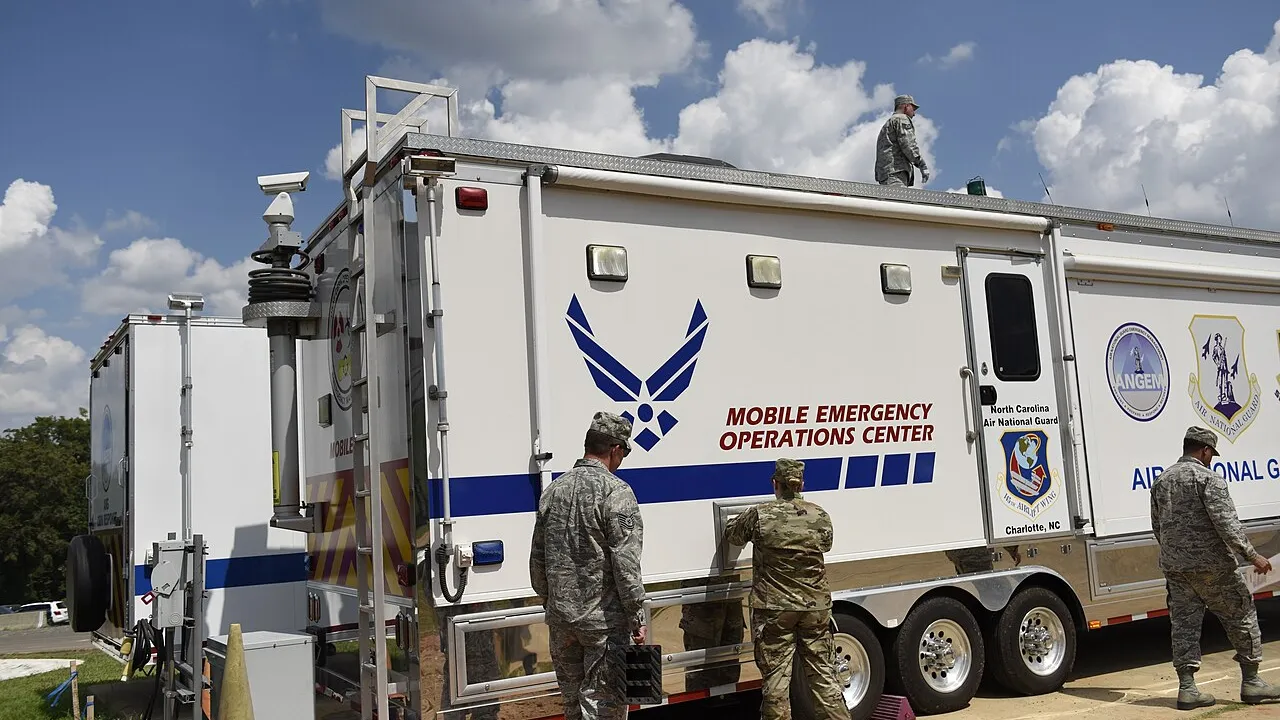
High winds and ice storms can knock out electricity and cell towers. Coordinators keep mobile command vans stocked with satellite phones, VHF two-way radios, and licensed amateur 'ham' radio operators so emergency messages always get through.
3
Logistics: Right Supplies, Right Place
Sending ten thousand winter coats to a summer flood does not help! Coordinators run careful field surveys and tracking so exact needs—clean drinking water, insulin coolers, diapers, and tarps—reach the right towns first.
4
Local, State, and National Partners
County coordinators team up with state agencies, the American Red Cross, and when big disasters require extra support.
1. How do disaster relief coordinators communicate if storms knock out regular cell phone service?
2. Why is smart 'logistics' more helpful than mailing random boxes of unrequested items into a storm zone?
🤯 Mind-Blowing Fact • Grade 4
Studies by the National Institute of Building Sciences found that every single dollar invested in pre-disaster mitigation—like flood walls and stronger roofs—saves an average of six dollars in future storm repairs!
How did wild California wildfires in the 1970s inspire a universal teamwork system used by every emergency crew in America today?
1
Speaking One Common Language: ICS
In the 1970s, when huge wildfires swept across county lines, fire crews arriving from different cities used different radio codes and command titles, causing dangerous delays. Emergency planners solved that puzzle by inventing the System (ICS). Today, whether a hurricane hits coastal Virginia, a river floods in the Shenandoah Valley, or a blizzard stalls highways, every disaster relief coordinator organizes teams into five clear sections: Command, Operations, Planning, Logistics, and Finance.
2
Mitigation Saves Lives Before Storms Form
Smart disaster work starts years before clouds gather—a phase called . Coordinators partner with civil engineers and city planners to elevate flood-prone homes, bury vulnerable power lines, restore coastal wetlands that soak up , and test multi-language text alerts.
3
Geographic Information Systems in Crisis
Inside the Virginia Emergency Operations Center in Richmond and county centers nationwide, coordinators layer live GIS digital maps. By combining river-gauge heights, power-outage grids, hospital bed counts, and senior-citizen housing locations, they dispatch high-water rescue boats and backup generators with pinpoint speed.
4
Accessibility for Every Neighbor
Equitable disaster plans ensure sign-language interpreters at televised briefings, wheelchair-accessible shelter cots, pet-friendly evacuation transport, and refrigerated medicine storage so every resident in the community stays protected and informed.
1. Why was the Incident Command System (ICS) created for disaster response?
2. Which of these actions is an example of disaster 'mitigation' before a storm ever forms?
🤯 Mind-Blowing Fact • Grade 5
Through the interstate Emergency Management Assistance Compact (EMAC), a flood-struck state can legally borrow swift-water rescue boats, flight crews, and coordinators from forty-nine other states within hours!
✨ Word Sparks (Grade 5 Glossary)
Tap 🔊 to hear
Lifeline infrastructure
Essential systems like water, power, and hospitals
Mutual aid
Agreements letting regions share emergency crews
Pre-staging
Positioning relief supplies nearby before storms hit
🪝
How do Certified Emergency Managers orchestrate supply-chain math, satellite telemetry, and mutual-aid compacts when a Category 4 hurricane makes landfall?
1
NIMS Architecture and Tiered Federalism
In the United States, disaster response operates from the bottom up under the National Incident Management System (NIMS): every emergency begins locally with city or county responders. When impacts exceed local capacity, Certified Emergency Managers (CEMs) and Disaster Relief Coordinators request state activation from the governor—unlocking National Guard transport and interstate help through the Emergency Management Assistance Compact (EMAC)—and, if warranted, a Stafford Act presidential declaration mobilizing FEMA resources.
2
Pre-Positioned Supply Chains and Last-Mile Logistics
Seventy-two hours before hurricane landfall, coordinators use ensemble atmospheric and hydrodynamic storm-surge models to pre-stage tractor-trailers at inland incident support bases without putting drivers in danger. Once winds subside below tropical-storm thresholds, 'last-mile' distribution pods calculate throughput math—tracking shelf-stable meals, potable water tankers, pediatric medical kits, and megawatt diesel generators for hospitals and water treatment plants.
3
Situational Awareness and Rapid Impact Surveys
Modern Emergency Operations Centers fuse synthetic-aperture radar satellites (which trace flood extents right through thick night clouds), civil drone orthomosaics, river-stage telemetry gauges, and 911 call-density heat maps onto shared Common Operating Pictures. Rapid field inspections prioritize seven critical lifelines: safety, food and water, health, energy, communications, transportation, and hazardous-materials containment.
4
Human Factors and Vulnerable Population Equity
Coordinators integrate census and Social Vulnerability Index mapping to ensure dialysis patients, electricity-dependent oxygen users, rural isolated households, and multilingual neighborhoods receive proactive accessible evacuation transport, backup battery power, and ADA-compliant sheltering.
5
Resilient Rebuilding and Hazard Adaptation
Long after temporary shelters close, disaster relief coordinators administer multi-year hazard-mitigation grants—upgrading hospital solar microgrids, enlarging highway storm culverts, restoring living oyster-reef breakwaters, and strengthening wind-resistant building codes so communities emerge safer for generations.