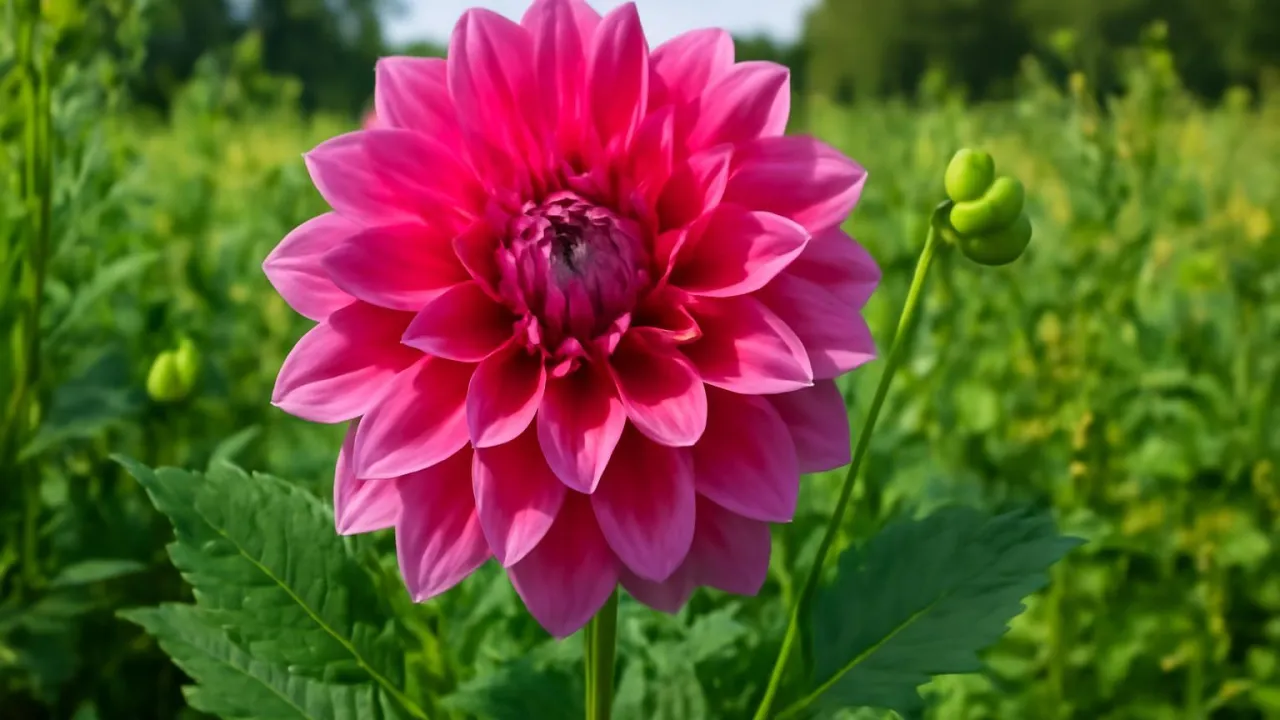
Dahlias have over 42,000 different types grown by gardeners worldwide!
✨ Word Sparks (Grade 2 Glossary)
Tap 🔊 to hear
pollination
How bees help flowers make seeds
nectar
Sweet juice inside flowers
bulbs
Plant parts that grow new flowers
🪝
Have you ever seen a flower that looks like a colorful star?
1
Dahlia’s Bright Colors
Dahlias bloom with bright petals in red, yellow, pink, and white colors. They often look like stars or fireworks in the garden. Their shapes can be round, spiky, or layered beautifully.
2
Where Dahlias Grow
Dahlias come from Mexico and Central America where the sun is warm. They grow best in gardens with full sun and need water every day to stay healthy. They can grow from small in the soil.
3
Dahlias and Bees
Bees visit dahlias to collect and pollen, which helps flowers make seeds. This process is called , and it helps new plants grow. Dahlias attract many kinds of bees and butterflies.
Some dahlias can grow up to 6 feet tall and bloom for months!
✨ Word Sparks (Grade 3 Glossary)
Tap 🔊 to hear
camouflage
Colors that help hide a plant or animal
tubers
Thick underground stems that store food
photosynthesis
How plants make food from sunlight
🪝
Did you know dahlias use bright colors to hide from predators?
1
Dahlia’s Colorful Camouflage
Dahlias have bright petals that attract pollinators like bees and butterflies. Their colors also help them blend into colorful garden environments, which protects them from some predators. This adaptation helps dahlias survive longer in nature.
2
How Dahlias Grow
Dahlias grow from underground that store nutrients and water for the plant. These tubers help dahlias survive winter and regrow each spring. The plant needs sunlight and water for , which makes food.
3
Pollination and Seeds
Bees and butterflies help dahlias with pollination by carrying pollen from flower to flower. This process allows dahlias to produce seeds and reproduce. Without pollinators, dahlias would not be able to make new plants.
4
Dahlias in Ecosystems
Dahlias provide food and shelter for many insects and animals in their habitats. They play an important role in garden food webs by supporting pollinators. Their bright flowers also help gardeners attract helpful insects.
Dahlias have been cultivated for over 200 years and have thousands of varieties worldwide.
✨ Word Sparks (Grade 4 Glossary)
Tap 🔊 to hear
ecosystem
A community of living things and their environment
tubers
Underground stems that store nutrients
pollinators
Animals that help plants make seeds
🪝
How do dahlias help gardens and the environment around them?
1
Dahlia’s Role in Gardens
Dahlias attract like bees and butterflies, which are essential for pollination and healthy . Their bright colors and shapes encourage these insects to visit, helping many plants reproduce. This creates a balanced food web in garden ecosystems. Without dahlias, many pollinators would struggle to find food.
2
Growth and Adaptations
Dahlias grow from that store nutrients, allowing them to survive cold winters and regrow each year. These tubers enable dahlias to adapt to different climates by storing energy underground. Their leaves and petals also help protect the plant from pests and harsh weather conditions.
3
Geographic Distribution
Originally from Mexico and Central America, dahlias now grow worldwide in warm climates. Gardeners cultivate dahlias in many countries because of their beauty and diversity. Their ability to adapt to various soils and climates makes them popular globally. This wide distribution supports many local .
4
Human Impact and Uses
Humans grow dahlias for decoration, food, and medicine in some cultures. Dahlias contribute to agriculture by supporting that help crops. However, habitat loss and climate change can threaten wild dahlia populations. Conservation efforts are important to protect these beautiful plants.
Dahlias have over 42,000 registered cultivars, making them one of the most diverse flower groups worldwide.
✨ Word Sparks (Grade 5 Glossary)
Tap 🔊 to hear
Asteraceae
Flower family with sunflowers and daisies
tuberous
Thick roots that store food and water
cultivar
A plant variety made by humans
🪝
Did you know dahlias belong to the same family as sunflowers and daisies?
1
Scientific Classification
Dahlias belong to the family , which includes sunflowers and daisies. Their genus is Dahlia, with over 40 species native to Mexico and Central America. The species Dahlia pinnata is commonly cultivated worldwide for its ornamental flowers. This classification helps scientists understand their relationships to other plants.
2
Physiological Mechanics
Dahlias grow from roots that store carbohydrates and water, enabling survival during droughts or cold seasons. Their large, composite flower heads consist of many small florets, which attract diverse pollinators. Photosynthesis occurs mainly in their broad leaves, producing energy for growth. Their vascular system efficiently transports water and nutrients throughout the plant.
3
Conservation and History
Dahlias were first cultivated by the Aztecs for food and decorative purposes before European explorers introduced them globally in the 18th century. Today, conservation efforts focus on preserving wild species threatened by habitat loss and climate change. Botanical gardens maintain genetic diversity through seed banks and cultivation. Protecting native habitats is crucial for their survival.
4
Ecological and Agricultural Roles
Dahlias support pollinator populations, which benefit agricultural crops by enhancing fruit and seed production. Their adaptability to various soil types and climates allows gardeners worldwide to cultivate thousands of . However, invasive species and urban development pose challenges to native dahlia habitats. Sustainable gardening practices can help protect these plants.
5
Quantitative Comparisons
Dahlias can grow between 1 and 6 feet tall, with flower diameters ranging from 2 to 12 inches. Their tubers can weigh up to several pounds, storing enough energy for regrowth. Optimal growth occurs at temperatures between 60 and 75 degrees Fahrenheit, with full sun exposure required. Their flowering season can last up to four months in ideal conditions.