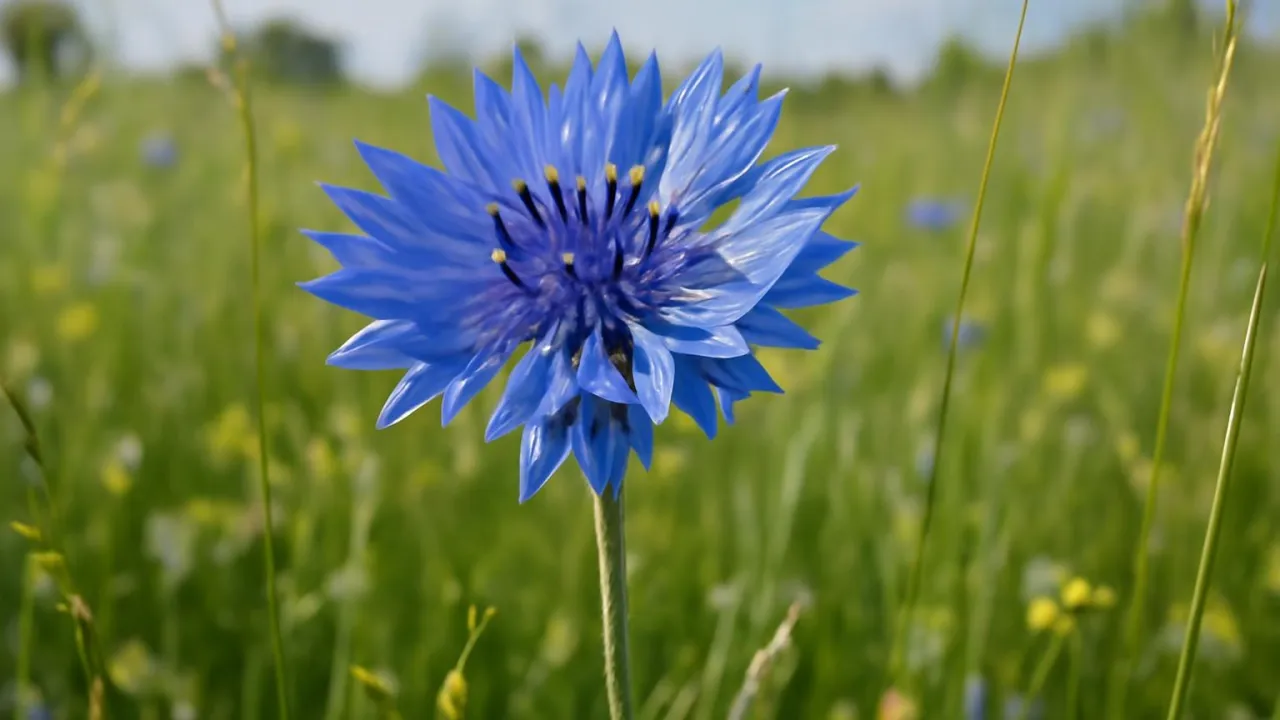
Cornflowers were once worn by young men to show they were single and hopeful.
✨ Word Sparks (Grade 2 Glossary)
Tap 🔊 to hear
nectar
Sweet juice inside flowers
pollinators
Animals that help flowers make seeds
meadow
A field full of grass and flowers
🪝
Have you ever seen a flower as blue as the sky on a sunny day?
1
Bright Blue Cornflower
The cornflower has bright blue petals that shine in the sunlight. It can also be pink or white, but blue is the most common color. Bees and butterflies visit the flower to collect and pollen.
2
Where Cornflowers Grow
Cornflowers grow in open fields and where there is plenty of sunlight. They need moderate water to grow well, and they prefer places with good air and space around them. These flowers are native to Europe but now grow in many parts of the world.
3
A Special Flower Feature
The cornflower's petals are thin and soft, helping it attract like bees. Its bright color stands out against green leaves, making it easy for insects to find. This helps the flower spread its pollen and grow new plants.
Cornflowers are often used in gardens because their bright blue color adds beauty and attracts pollinators.
✨ Word Sparks (Grade 3 Glossary)
Tap 🔊 to hear
pollination
How flowers make seeds with help
adaptation
A change that helps plants survive
nutrients
Food plants get from soil
🪝
Did you know cornflowers use bright blue petals to attract helpful pollinators?
1
Cornflower’s Bright Blue Color
The cornflower has bright blue petals that act as a signal to pollinators like bees and butterflies. This bright color helps the flower stand out in its meadow habitat. The petals are soft and thin, which makes them easy for insects to land on.
2
Where Cornflowers Live and Grow
Cornflowers grow mostly in open fields and meadows with full sunlight. They need moderate water and well-drained soil to thrive. These conditions provide the and space the plants require to grow strong and healthy.
3
How Cornflowers Help Pollination
Pollinators visit the cornflower to gather nectar and pollen, which helps the flower reproduce. The flower’s bright color and scent attract these helpful insects. This process is called , and it is important for the plant’s survival.
4
Adaptations for Survival
Cornflowers have thin petals that can survive wind and rain without damage. Their roots grow deep to find water during dry times. These help cornflowers live in open fields where weather can change quickly.
Cornflowers were once a symbol of hope and used in traditional medicine across Europe.
✨ Word Sparks (Grade 4 Glossary)
Tap 🔊 to hear
ecosystem
A community of plants and animals living together
fertilization
When pollen helps make new seeds
conservation
Protecting plants and animals from harm
🪝
How does the cornflower’s bright blue color affect its role in nature’s food web?
1
Cornflower’s Color and Ecosystem Role
The cornflower’s bright blue petals serve as a visual beacon that attracts pollinators such as bees and butterflies, which are essential for pollination. This interaction supports the reproduction of many plants in the meadow . By helping pollinators find food, cornflowers contribute to the health of the entire food web.
2
Growth and Habitat Preferences
Cornflowers thrive in temperate regions, especially in open fields and meadows with full sunlight and well-drained soil. They require moderate water levels and benefit from the nutrient-rich soil found in these habitats. Their presence can improve soil quality by preventing erosion and supporting other plant species.
3
Cause and Effect in Pollination
When pollinators visit cornflowers to collect nectar and pollen, they transfer pollen grains from one flower to another, enabling . This process leads to the production of seeds, which grow into new plants. Without pollinators, cornflowers would struggle to reproduce and maintain their populations.
4
Human Impact and Conservation
Cornflowers have been affected by modern agriculture and habitat loss, reducing their natural meadows. However, they are often planted in gardens and wildflower mixes to support pollinator populations. efforts focus on protecting natural habitats and promoting pollinator-friendly practices.
1. What role do cornflowers play in their ecosystem?
2. Why is pollination important for cornflowers?
🤯 Mind-Blowing Fact • Grade 5
The cornflower’s blue pigment reflects light at 450 nanometers, perfectly matching bee color vision sensitivity.
✨ Word Sparks (Grade 5 Glossary)
Tap 🔊 to hear
anthocyanins
Pigments that give flowers blue or red colors
taproot
A deep main root that finds water underground
biodiversity
Many different kinds of plants and animals
🪝
What scientific secrets make the cornflower a vital species in temperate meadow ecosystems?
1
Scientific Classification and Origin
Cornflower, scientifically named Centaurea cyanus, belongs to the Asteraceae family, known for composite flower heads. It is native to Europe and commonly found in temperate meadows and agricultural fields. Its classification helps scientists understand its relationships with other flowering plants. This knowledge aids in studying plant evolution and ecology.
2
Physiological Adaptations and Mechanics
The cornflower’s bright blue petals contain pigments called that absorb sunlight and attract pollinators. Its deep system allows it to access water from lower soil layers during dry periods. The flower’s composite head structure maximizes pollen exposure to visiting insects, enhancing reproductive success. These combined traits improve survival in variable meadow environments.
3
Ecological Role and Conservation History
Cornflowers play a crucial role in supporting pollinator populations, which are vital for many crops and wild plants. Historically, agricultural intensification reduced their habitat, causing population declines. Conservation programs now promote wildflower meadows and organic farming to restore cornflower habitats and . These efforts help maintain balanced ecosystems and food webs.
4
Quantitative Comparisons and Growth Patterns
Cornflowers typically grow between 30 to 90 centimeters tall and bloom from late spring to early summer. Their seeds can disperse up to several meters by wind or animals. The flower’s bright blue color reflects light at wavelengths around 450 nanometers, which is highly attractive to bee vision. This precise color reflection improves pollination efficiency.
5
Cultural Significance and Botanical Insights
Cornflowers have been used symbolically as emblems of hope and remembrance in European cultures. Botanically, they are often mistaken for weeds but are valuable wildflowers. Their ability to thrive in disturbed soils makes them important pioneer species in meadow restoration. This resilience supports and ecosystem recovery after environmental changes.