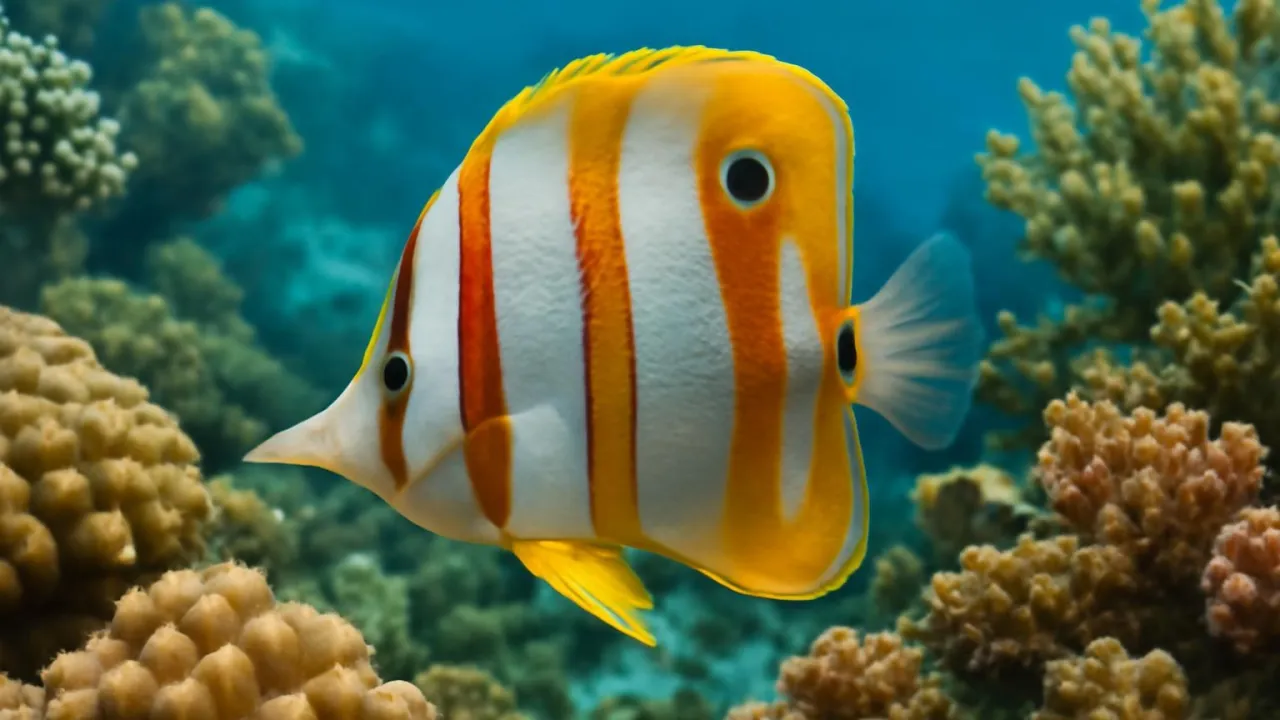
Copperband butterflyfish can pick food from coral using their long snouts like tiny underwater tweezers!
✨ Word Sparks (Grade 2 Glossary)
Tap 🔊 to hear
invertebrates
Animals without bones like bugs and worms
polyps
Tiny sea animals that build coral reefs
coral reefs
Underwater homes made by many tiny animals
🪝
Have you ever seen a fish with stripes like a candy cane?
1
Colorful Stripes
The copperband butterflyfish has bright orange and white stripes that help it stand out in . It swims slowly and uses its colors to blend in with coral. These stripes make it easy to spot for people watching underwater.
2
Long Snout for Food
This fish has a long, thin snout that helps it reach small bugs and tiny animals hiding in coral cracks. It eats small and coral , which are tiny sea animals. The snout acts like a tool to get food from hard-to-reach places.
3
Home in Warm Waters
Copperband butterflyfish live in warm, clear water near in the Indo-Pacific Ocean. These reefs provide shelter and food for many fish and sea creatures. The fish often swim in pairs or small groups near the coral.
1. What helps the copperband fish reach food in coral?
2. Where does the copperband butterflyfish live?
🤯 Mind-Blowing Fact • Grade 3
Copperband butterflyfish use their stripes and shape as camouflage to hide from bigger fish.
✨ Word Sparks (Grade 3 Glossary)
Tap 🔊 to hear
camouflage
Colors or shapes that help hide animals
adaptation
A body change that helps survival
ecosystem
A community of living things and places
🪝
Why do you think the copperband butterflyfish has stripes and a long snout?
1
Stripes for Camouflage
The copperband butterflyfish has orange and white stripes that help it blend into coral reefs. This protects it from predators by breaking up its body shape. The stripes also confuse predators and make it harder to catch.
2
Snout for Finding Food
Its long snout is an that allows it to reach small invertebrates hiding deep inside coral crevices. This special tool helps the fish get nutrients that other fish cannot reach. It feeds mostly on coral polyps and tiny sea bugs.
3
Living in Coral Reefs
Copperband butterflyfish live in the Indo-Pacific region’s coral reefs, where water is warm and clear. These reefs provide shelter and food, creating a rich . The fish often swim in pairs to protect themselves from predators.
4
Role in the Ecosystem
By eating small invertebrates and coral polyps, the copperband butterflyfish helps control populations and keeps coral healthy. It plays a role in the reef’s food web by being both predator and prey. Its presence supports the balance of the underwater community.
Copperband butterflyfish can pick tiny prey from coral crevices using their long snouts like underwater tweezers.
✨ Word Sparks (Grade 4 Glossary)
Tap 🔊 to hear
predator
An animal that hunts other animals
niche
A special role in an ecosystem
bleaching
When coral loses color and health
🪝
How do the copperband butterflyfish’s stripes and snout help it survive in coral reefs?
1
Camouflage and Protection
The copperband butterflyfish’s orange and white stripes create camouflage that breaks up its outline and confuses , increasing its chances of survival in the coral reef. This adaptation helps it avoid being seen by larger fish that might eat it. The stripes also help it blend into the colorful coral environment, making it less visible.
2
Specialized Snout for Feeding
Its long, narrow snout allows the fish to reach small invertebrates and coral polyps hidden deep within coral crevices, which other cannot access. This feeding adaptation gives it a unique and reduces competition for food. The snout acts like a tool to pick food from tight spaces.
3
Ecosystem Role and Behavior
By feeding on coral polyps and small animals, copperband butterflyfish help maintain coral reef health and balance the food web. They often form pairs, which may help in defending territory and increasing reproductive success. Their presence supports reef biodiversity and helps keep coral populations in check.
4
Geographic Distribution
This species is found throughout the Indo-Pacific region, including coral reefs near Australia, Indonesia, and the Philippines. Its habitat preference for warm, shallow waters makes it vulnerable to coral and habitat loss caused by climate change. Protecting these habitats is important for the fish’s survival.
Copperband butterflyfish use their long snouts to pick prey from coral crevices, a feeding skill few fish possess.
✨ Word Sparks (Grade 5 Glossary)
Tap 🔊 to hear
morphological
Body shape and structure of an animal
ecological niche
The role an animal plays in nature
coral bleaching
When coral loses color and health from stress
🪝
What makes the copperband butterflyfish a unique and important species in coral reef ecosystems?
1
Scientific Classification and Description
The copperband butterflyfish, scientifically named Chelmon rostratus, belongs to the family Chaetodontidae, known for their bright colors and laterally compressed bodies. It reaches up to 8 inches (20 centimeters) in length, featuring distinctive orange and white vertical bands along its body and a long, pointed snout adapted for specialized feeding.
2
Physiological Adaptations for Feeding
Its elongated snout and small mouth enable it to extract small invertebrates and coral polyps from narrow crevices inaccessible to other fish. This adaptation reduces feeding competition and allows the fish to exploit a unique within coral reef habitats.
3
Ecological Role and Conservation Status
As both predator and prey within the coral reef food web, the copperband butterflyfish helps regulate populations of coral polyps and small invertebrates, contributing to reef health. However, threats like and habitat degradation from climate change pose risks to its populations, emphasizing the need for conservation efforts to protect these delicate ecosystems.
4
Geographic Range and Habitat Preferences
This species inhabits coral reefs throughout the Indo-Pacific region, including areas near Australia, Indonesia, and the Philippines. It prefers warm, shallow waters between 1 and 25 meters deep, where coral cover is abundant and water clarity is high, essential for its survival and feeding behaviors.
5
Quantitative Comparisons and Behavior
Copperband butterflyfish swim at moderate speeds around 0.5 meters per second, using their laterally compressed bodies for agile movements among coral branches. They typically weigh less than 150 grams and can live up to 7 years in the wild, demonstrating adaptations that balance speed, maneuverability, and longevity within their coral reef environment.