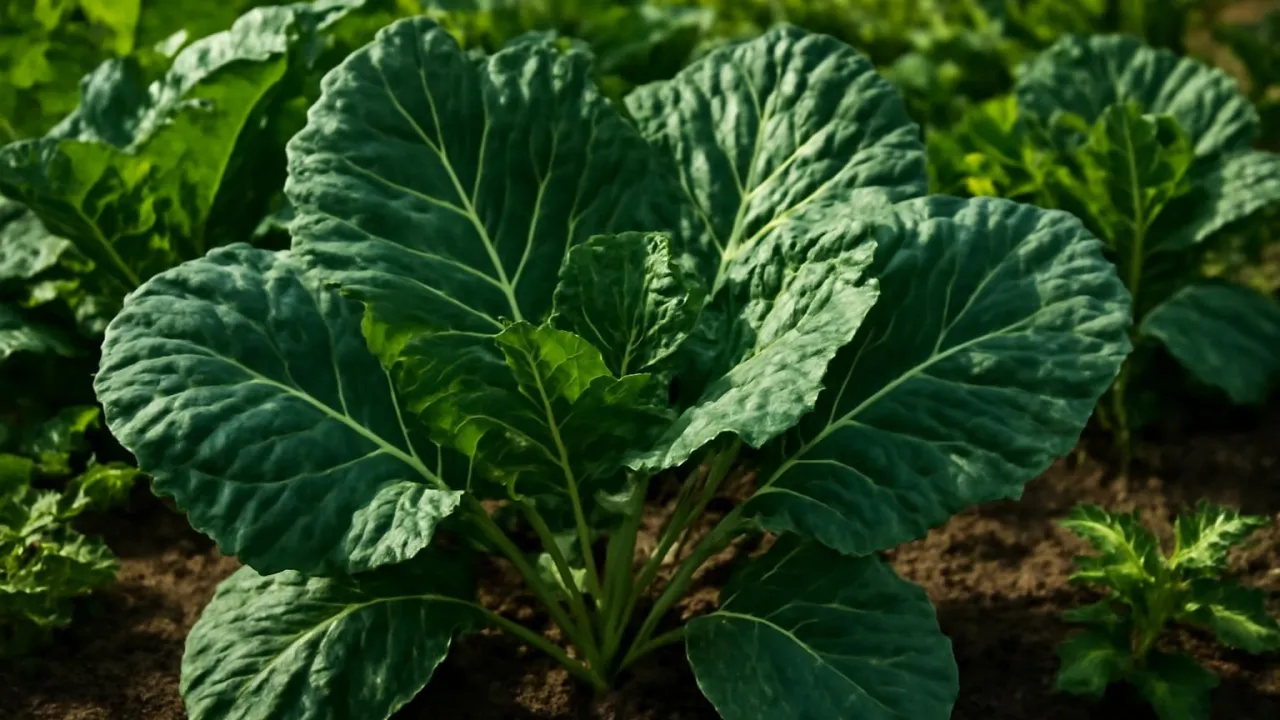
Collard greens can survive frost and still stay green and fresh!
✨ Word Sparks (Grade 2 Glossary)
Tap 🔊 to hear
harvest
To pick plants when they are ready to eat
vitamin
A nutrient that helps your body stay healthy
frost
When it is very cold and ice forms outside
🪝
Did you know collard greens can grow even when it is cold?
1
Growing Big Leaves
Collard greens grow big, flat leaves that are dark green and smooth. They need plenty of sunlight and water to grow well. Farmers plant them in gardens or fields where the soil is rich. The plants can grow up to two feet tall during the season.
2
Where They Live
Collard greens come from the Mediterranean but now grow in many places worldwide. They like warm weather but can survive cold temperatures better than many plants. People often grow them in gardens or farms in the southern United States. They are ready to when leaves are large and healthy.
3
Healthy and Strong
These greens are full of like A, C, and K that help keep you healthy. People cook collard greens by boiling or steaming the leaves until they are soft. The leaves taste a little bitter but become mild when cooked. Eating collard greens can help your body stay strong and full of energy.
Collard greens produce natural antifreeze chemicals to survive freezing temperatures!
✨ Word Sparks (Grade 3 Glossary)
Tap 🔊 to hear
photosynthesis
How plants use sunlight to make food
pollination
When bees help plants make seeds
adaptation
A special trait that helps plants survive
🪝
Have you ever wondered why collard greens stay green even in cold weather?
1
Plant Structure and Growth
Collard greens have large, broad leaves that capture sunlight for . Their thick stems support the heavy leaves and help the plant stand tall. This vegetable belongs to the Brassica family, which includes cabbage and kale. The plant grows best in well-drained soil with plenty of nutrients.
2
Cold Weather Adaptation
Collard greens have a special called cold tolerance that helps them survive frost. Their leaves contain chemicals that act like antifreeze to protect cells from freezing damage. This allows the plant to stay green and healthy even when temperatures drop. Many other vegetables turn brown or wilt in cold weather, but collards stay fresh.
3
Role in the Ecosystem
Collard greens provide food for many insects and animals, including caterpillars and bees. Bees help with , which allows the plant to produce seeds for new plants. The leaves also offer shelter for small insects. This shows collards play an important role in their ecosystem by supporting other living things.
4
Nutritional Benefits
These leafy greens are rich in vitamins A, C, and K, which support eyesight, immunity, and blood health. They also contain calcium and fiber, which help bones and digestion. Eating collard greens regularly can improve overall nutrition and health. Their nutrients make them a popular choice in many healthy diets.
1. What helps collard greens survive cold weather?
2. Why are bees important to collard greens?
🤯 Mind-Blowing Fact • Grade 4
Collard greens’ natural frost resistance helps farmers harvest fresh greens even in winter!
✨ Word Sparks (Grade 4 Glossary)
Tap 🔊 to hear
ecosystem
A community of plants and animals living together
frost tolerance
Ability to survive cold and ice without damage
photosynthesis
How plants make food using sunlight
🪝
Did you know collard greens help other animals and survive cold winters?
1
How Collard Greens Grow
Collard greens grow best in fertile soil that drains well and receives full sunlight throughout the day. Their large leaves capture sunlight efficiently, which supports and healthy growth. The plant’s sturdy stems help it resist strong winds and heavy rain. Because of these traits, collard greens thrive in many parts of the world, especially in warm and mild climates.
2
Cold Tolerance and Effects
One reason collard greens are valuable is their ability to tolerate frost and cold temperatures without damage. This cold tolerance results from natural compounds in the leaves that prevent ice crystals from forming inside plant cells. As a result, collard greens can be harvested later in the season when other vegetables have died back. This trait makes them a reliable food source during winter months.
3
Role in Ecosystems and Food Webs
Collard greens support many organisms in their by providing food and shelter. Caterpillars and other insects feed on the leaves, while bees visit flowers for nectar and help pollinate the plants. These interactions help maintain a balanced food web, supporting birds and small mammals that eat the insects. Additionally, collard greens can be grown alongside other crops, benefiting agricultural biodiversity.
4
Human Uses and Distribution
Humans have cultivated collard greens for centuries, especially in the Mediterranean and southern United States. They are a staple in many traditional dishes and valued for their nutritional benefits. Because collards grow well in various climates, they are distributed worldwide and continue to be an important leafy green vegetable. Their ability to remain green in cold weather also helps reduce food scarcity in cooler seasons.
1. Why can collard greens be harvested later in the season?
2. How do collard greens help other animals?
🤯 Mind-Blowing Fact • Grade 5
Collard greens produce antifreeze proteins that help them survive freezing temperatures near 20°F (-6°C)!
✨ Word Sparks (Grade 5 Glossary)
Tap 🔊 to hear
Brassicaceae
The family of plants like cabbage and broccoli
antifreeze proteins
Proteins that stop ice crystals in plant cells
photosynthesis
Process plants use sunlight to make food
🪝
What makes collard greens a vital leafy vegetable with unique cold-weather survival traits?
1
Scientific Classification and Origins
Collard greens belong to the species Brassica oleracea, variety acephala, within the family. They are closely related to kale, cabbage, and broccoli, sharing many botanical characteristics. Originating from the Mediterranean region, collard greens have been cultivated for thousands of years due to their nutritional value and hardiness. Their name derives from the Old English word “colewort,” meaning cabbage plant.
2
Physiological Adaptations to Cold
Collard greens exhibit remarkable cold tolerance through physiological mechanisms that prevent cellular damage during frost. Their leaves accumulate solutes like sugars and amino acids, lowering the freezing point of cell fluids. Additionally, the plant produces that inhibit ice crystal formation inside cells. These adaptations enable collard greens to maintain and nutrient transport even at temperatures near freezing.
3
Nutritional and Agricultural Importance
Rich in vitamins A, C, and K, as well as calcium and fiber, collard greens contribute significantly to human nutrition worldwide. Their ability to grow in diverse climates and resist frost allows farmers to extend growing seasons and increase food availability. Collard greens also play a role in sustainable agriculture by improving soil health and supporting pollinator populations. They are a staple in Southern U.S. cuisine and other global culinary traditions.
4
Conservation and Botanical History
The cultivation of collard greens dates back to ancient times, with historical records showing their use in Roman and Greek diets. Modern breeding programs focus on enhancing disease resistance and yield while maintaining cold hardiness. Conservation of heirloom varieties preserves genetic diversity essential for adapting to climate change. Botanical gardens and seed banks worldwide maintain collections to support research and sustainable cultivation.
5
Quantitative Comparisons and Growth Metrics
Collard green leaves can reach lengths of up to 12 inches (30 centimeters) and plants typically grow between 1.5 to 2 feet (45 to 60 centimeters) tall. They require approximately 6 to 8 hours of sunlight daily and consistent moisture for optimal growth. Compared to other Brassica vegetables, collard greens tolerate temperatures as low as 20°F (-6°C) without significant damage. Their nutrient density per 100 grams surpasses many common leafy greens, making them a powerhouse vegetable.