2. When does the coconut crab come out to look for food?
🤯 Mind-Blowing Fact • Grade 2
Coconut crabs can climb trees up to 30 feet high to get coconuts!
✨ Word Sparks (Grade 2 Glossary)
Tap 🔊 to hear
burrow
A hole in the ground where animals hide
nutrients
Food parts that help living things grow strong
scavenge
To search for food from dead plants or animals
🪝
Have you ever seen a crab that climbs trees and eats coconuts?
1
Amazing Climber Crab
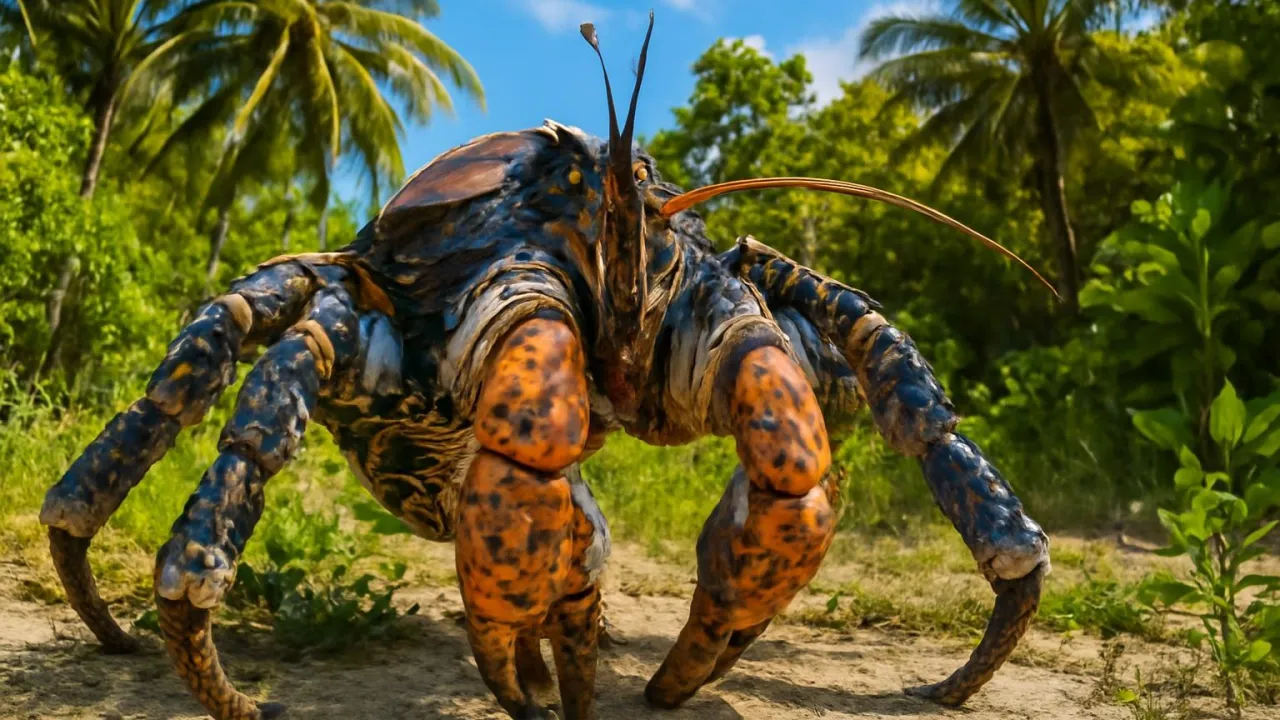
The coconut crab is the biggest land crab in the world, and it climbs trees easily. It uses its strong claws to hold onto branches and climb up to find food. This crab can grow very large, with legs that can stretch almost three feet wide.
2
What It Likes to Eat
Coconut crabs eat many things like fruits, nuts, and even small animals. Their favorite food is coconuts, which they crack open with their powerful claws. They also eat leaves and sometimes dead animals for extra .
3
Home Sweet Home
These crabs live on tropical islands in warm places near the ocean. They hide in during the day to stay safe and come out at night to look for food. The warm climate helps them grow big and strong.
Coconut crabs can lift objects weighing up to 30 pounds with their claws!
✨ Word Sparks (Grade 3 Glossary)
Tap 🔊 to hear
arthropod
An animal with a hard shell and jointed legs
exoskeleton
A hard outer shell that protects the body
nocturnal
Active mostly during the night time
🪝
Did you know the coconut crab is the largest land-living arthropod in the world?
1
Giant Land Crab
The coconut crab is the largest terrestrial , with a leg span reaching up to one meter. Its strong claws are an important adaptation, allowing it to crack open tough coconut shells. This crab’s body is covered with a hard that protects it from predators.
2
Climbing and Feeding
Coconut crabs are excellent climbers and can scale trees to reach coconuts for food. They use their claws to strip the coconut husk and then crack the shell to eat the nutritious meat inside. This behavior helps them access food sources that many other animals cannot.
3
Habitat and Shelter
These crabs live mainly on tropical islands in the Indian and Pacific Oceans, where they dig burrows for shelter. The burrows provide protection from predators and harsh weather. Coconut crabs are mostly , coming out at night to forage for food.
4
Survival and Adaptations
Their powerful claws serve both as tools for feeding and defense against predators. The crab’s ability to climb trees helps it avoid ground-based threats and find fresh food. These adaptations increase their chances of survival in island ecosystems.
Coconut crabs can live up to 60 years in the wild, showing remarkable longevity.
✨ Word Sparks (Grade 4 Glossary)
Tap 🔊 to hear
scavengers
Animals that eat dead plants and animals
seed dispersers
Animals that help spread plant seeds
conservation
Protecting animals and their homes
🪝
How does the coconut crab’s strength help it survive on tropical islands?
1
Powerful Claws and Feeding
The coconut crab’s powerful claws allow it to crack open coconuts, which are a rich food source. This ability gives it an advantage in island ecosystems where food can be scarce. By breaking open tough shells, the crab accesses nutrients that many other animals cannot reach. This unique feeding skill helps it thrive where few others can.
2
Role in the Ecosystem
Coconut crabs play an important role as and on tropical islands. They help clean up dead plant and animal matter, recycling nutrients back into the soil. Their feeding habits also assist in spreading seeds, which supports plant growth and forest health. This symbiotic relationship benefits the entire island ecosystem.
3
Habitat and Geographic Range
These crabs are found on islands across the Indian and Pacific Oceans, including parts of Southeast Asia and Oceania. They prefer coastal forests and areas with plenty of coconut trees. Their burrows provide shelter from predators and extreme weather conditions. The warm climate of these islands supports their large size and nocturnal lifestyle.
4
Human Impact and Conservation
Coconut crabs face threats from habitat loss and hunting by humans for food. efforts aim to protect their habitats and regulate hunting to ensure their populations remain stable. Educating island communities about sustainable practices helps preserve this unique species. Protecting coconut crabs also maintains important ecological balance on these islands.
1. What role do coconut crabs play in their ecosystem?
2. Why do humans hunt coconut crabs?
🤯 Mind-Blowing Fact • Grade 5
Coconut crabs can exert claw forces over 750 newtons, one of the strongest bites in the animal kingdom.
✨ Word Sparks (Grade 5 Glossary)
Tap 🔊 to hear
arthropod
Animals with jointed legs and a hard shell
exoskeleton
Hard outer shell that protects the animal’s body
nocturnal
Active mainly at night to avoid danger
🪝
What makes the coconut crab the largest terrestrial arthropod and a tropical island marvel?
1
Scientific Classification and Size
The coconut crab, Birgus latro, belongs to the family Coenobitidae and is the largest terrestrial . Adults can reach a leg span of up to one meter and weigh as much as nine pounds. This size makes it the heaviest land-living crab species worldwide. Their massive size helps them dominate island habitats.
2
Physiological Adaptations for Survival
Coconut crabs have developed powerful claws capable of exerting forces strong enough to crack coconuts, their primary food source. Their provides protection and reduces water loss, which is vital for their terrestrial lifestyle. They breathe using modified gills adapted to extract oxygen from air. These adaptations allow them to thrive on land unlike most other crabs.
3
Ecological Role and Behavior
These crabs serve as both scavengers and seed dispersers, contributing to nutrient cycling and forest regeneration on tropical islands. Their behavior helps reduce predation risks, and climbing ability allows access to food unavailable to many other species. Their burrowing also aerates soil, benefiting plant growth. This makes them key players in island ecosystems.
4
Conservation Challenges and History
Coconut crabs face threats from habitat destruction and overharvesting for food by humans. Conservation programs focus on habitat protection and sustainable hunting regulations, especially on islands where populations are declining. Historically, they have been important to island cultures for food and traditional practices. Protecting them ensures ecological balance and cultural heritage.
5
Quantitative Comparisons and Facts
Coconut crabs can climb trees up to 30 feet high and lift objects weighing over 30 pounds with their claws. They live up to 60 years in the wild, which is unusually long for . Their ability to survive in temperatures ranging from 75 to 85 degrees Fahrenheit demonstrates their adaptation to tropical climates. Their claw force exceeds 750 newtons, making them one of the strongest biters.