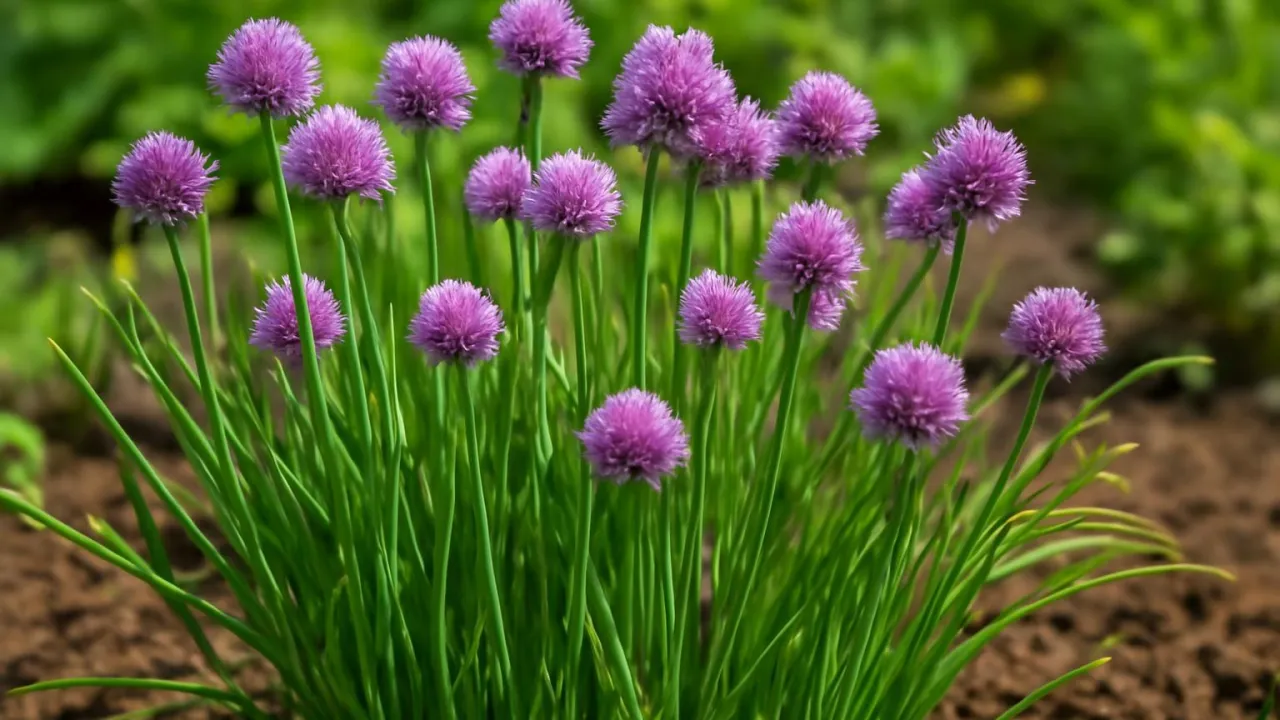
Chives are part of the onion family and help keep pests away in gardens!
✨ Word Sparks (Grade 2 Glossary)
Tap 🔊 to hear
garden
A place where people grow plants and flowers
pests
Small animals or bugs that can harm plants
bloom
When a plant makes flowers that open up
🪝
Have you ever tasted a plant that smells like onions?
1
Growing in Gardens
Chives grow in and need full sun to grow well. They like soil that drains water quickly. People plant them near vegetables to help keep bugs away.
2
Life Cycle and Flowers
Chives start as small green shoots in spring and grow tall. In late spring, they with purple flowers that bees love. After flowering, the plant makes seeds to grow new chives.
3
Long Thin Leaves
Chives have long, thin, hollow leaves that look like grass blades. These leaves give chives their mild onion flavor. People cut the leaves to add fresh flavor to food.
Chives use hollow leaves as camouflage and to hold their onion flavor safely!
✨ Word Sparks (Grade 3 Glossary)
Tap 🔊 to hear
pollination
When bees help flowers make seeds to grow new plants
adaptation
A way a plant changes to live better in its home
camouflage
When something blends in to hide from others
🪝
Did you know chives use their hollow leaves to survive and spread flavor?
1
Chives in Their Habitat
Chives grow in temperate climates where sunlight is bright and soil drains well. Their hollow leaves help reduce water loss, an to dry conditions. This helps chives survive in gardens and wild areas. Chives often grow near other plants to share nutrients.
2
Life Cycle and Pollination
Chives begin growing from bulbs in early spring and mature by late spring. Their purple flowers attract pollinators like bees, which help with . Pollination allows chives to produce seeds for new plants. This cycle repeats each year to keep chives growing.
3
Physical Features and Adaptations
Chives have long, thin, hollow leaves that look like grass blades and hold flavor. The hollow structure provides by blending with grasses and protects from predators. Their mild onion scent also deters some insects. These features help chives survive and spread.
4
Uses and Benefits
People harvest chive leaves to add fresh onion flavor to food without strong spice. Chives also support garden health by attracting beneficial insects. Their flowers provide nectar for pollinators, helping local ecosystems. Chives are easy to grow and useful in many dishes.
Chives protect their garden neighbors by repelling pests with their onion scent!
✨ Word Sparks (Grade 4 Glossary)
Tap 🔊 to hear
symbiosis
When two plants or animals help each other live better
ecosystem
A community of plants, animals, and their environment
repellent
Something that keeps bugs or animals away
🪝
How do chives protect themselves and help their garden neighbors?
1
Chives’ Growing Conditions and Distribution
Chives thrive in temperate regions of Europe and Asia where soil is well-drained and sunlight is abundant. Their ability to grow in various garden soils makes them popular worldwide. The hollow leaves reduce water loss, allowing chives to survive in drier climates. This adaptation helps chives spread across many environments.
2
Role in Ecosystems and Food Webs
Chives play a vital role in garden by attracting pollinators such as bees and butterflies with their purple flowers. These pollinators help other plants reproduce, supporting food webs. Additionally, chives deter harmful pests with their onion scent, protecting nearby plants. This symbiotic relationship benefits both chives and garden vegetables.
3
Physical Adaptations and Defense
The long, hollow leaves of chives not only conserve water but also act as camouflage among grasses, reducing predator attacks. Their mild onion scent serves as a natural insect , which decreases damage from pests. These adaptations increase chives’ survival chances and help maintain healthy plant populations.
4
Human Uses and Agricultural Impact
Humans cultivate chives worldwide for culinary uses, adding fresh onion flavor to many dishes without overpowering taste. Their flowers attract beneficial insects, promoting garden health and biodiversity. Chives also support sustainable agriculture by reducing the need for chemical pesticides. Their ease of growth makes them a favorite herb in home gardens.
Chives produce sulfur compounds that both flavor food and protect the plant from pests naturally!
✨ Word Sparks (Grade 5 Glossary)
Tap 🔊 to hear
genus
A group of related plants or animals with similar features
transpiration
How plants lose water through tiny leaf openings
perennial
A plant that lives and grows for many years
🪝
Did you know chives belong to the same genus as onions and garlic?
1
Scientific Classification and Origin
Chives, scientifically known as Allium schoenoprasum, belong to the Allium , which includes onions, garlic, and leeks. They are native to temperate regions of Europe and Asia but have been cultivated worldwide due to their culinary and ecological benefits. The species name 'schoenoprasum' derives from Greek words meaning 'beautiful leek.'
2
Physiological Structure and Flavor Mechanism
Chives have slender, hollow, tubular leaves that contain sulfur compounds responsible for their mild onion flavor and aroma. These compounds act as natural defense chemicals that deter herbivores and pests. The hollow leaf structure reduces water loss through , an important adaptation for survival in temperate climates.
3
Ecological Roles and Conservation
Chives contribute to ecosystem health by attracting pollinators such as bees and butterflies with their nectar-rich purple flowers. They also provide natural pest control by emitting sulfur-based compounds that repel harmful insects. Cultivation of chives supports biodiversity and reduces the need for chemical pesticides, promoting sustainable agriculture.
4
Botanical History and Culinary Importance
Historically, chives have been used in European and Asian cuisines for centuries, prized for their delicate onion flavor and edible flowers. Their ease of cultivation and growth make them a staple herb in kitchen gardens worldwide. Unlike stronger onions, chives add subtle flavor without overpowering dishes.
5
Quantitative Comparisons and Growth Metrics
Chives typically grow between 12 and 20 inches (30 to 50 centimeters) tall and can spread up to 12 inches (30 centimeters) wide in a single growing season. Their flowers bloom in late spring, lasting approximately two weeks. Optimal growth occurs at temperatures between 55 and 75 degrees Fahrenheit (13 to 24 degrees Celsius), with full sun exposure.