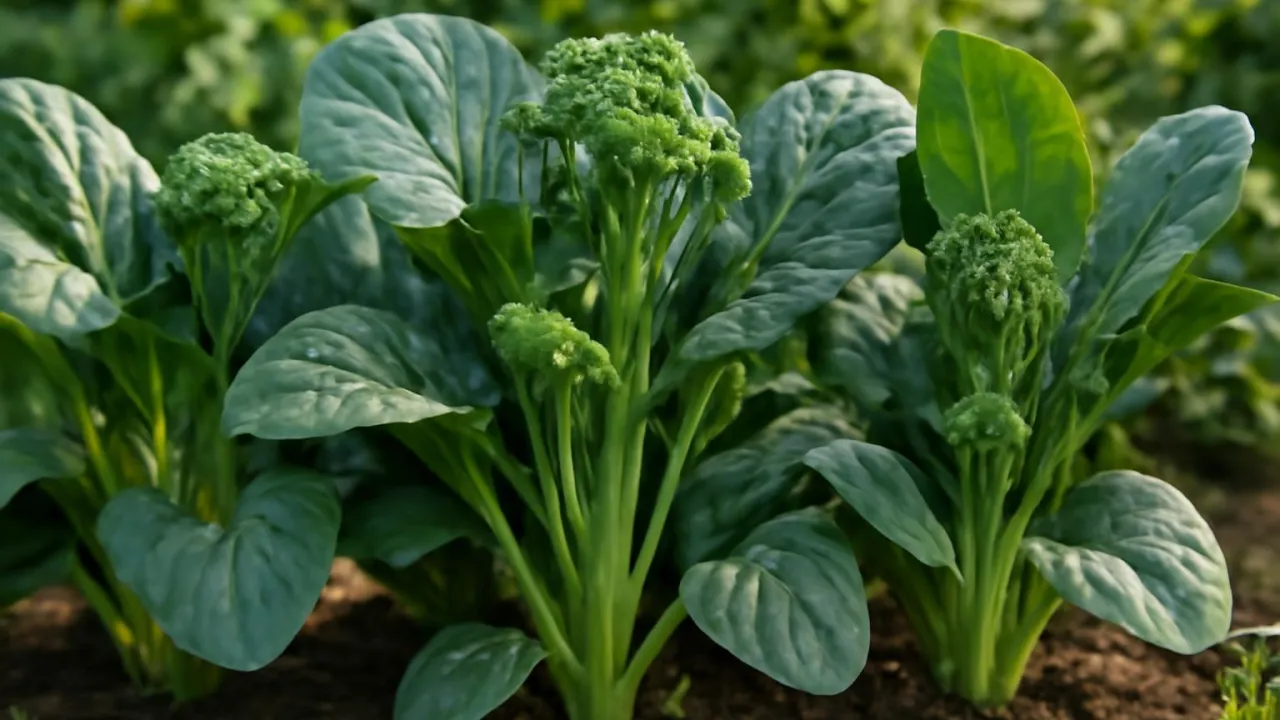
Chinese broccoli’s bitter taste comes from natural chemicals called glucosinolates!
✨ Word Sparks (Grade 2 Glossary)
Tap 🔊 to hear
moist
A little wet or damp
harvest
To pick plants when they are ready
bitter
A sharp taste that is not sweet
🪝
Have you ever tried a green vegetable that tastes a bit bitter and crunchy?
1
Where Chinese Broccoli Grows
Chinese broccoli grows best in warm places with plenty of sunlight and soil. It is popular in East Asia and Southeast Asia. Farmers plant it in gardens and farms. It needs good water to grow tall and strong.
2
How It Grows and Looks
This vegetable has thick, crunchy stems and large green leaves that are smooth and shiny. The plant can grow up to two feet tall. It starts as a small seed and grows into a leafy plant. People it when the stems are firm and fresh.
3
A Special Bitter Flavor
Chinese broccoli tastes a little , which makes it unique and tasty in many dishes. The bitterness comes from natural chemicals in the leaves and stems. Many people cook it by stir-frying or steaming. It adds a fresh crunch to meals.
Glucosinolates in Chinese broccoli help protect it from pests and diseases naturally!
✨ Word Sparks (Grade 3 Glossary)
Tap 🔊 to hear
adaptation
A change that helps plants survive
glucosinolates
Natural chemicals that taste bitter
predator
An animal that eats other animals or plants
🪝
Did you know Chinese broccoli uses its bitter taste to protect itself from hungry animals?
1
Where Chinese Broccoli Lives
Chinese broccoli grows mainly in East and Southeast Asia where the climate is warm and humid. It thrives in gardens and farms with rich, moist soil that provides nutrients. The plant needs full sunlight to perform photosynthesis and grow healthy leaves. Farmers carefully water it to keep the soil damp but not soggy.
2
How It Grows and Looks
This vegetable grows tall stems that are thick and crunchy with large, shiny green leaves. The leaves have a slightly bitter taste, which is an to protect against like insects and animals. Chinese broccoli starts from small seeds and grows quickly in a few weeks. It is harvested before the flowers bloom to keep the stems tender.
3
Bitter Taste and Survival
The bitter taste comes from natural chemicals called that help defend the plant from being eaten. These chemicals also help the plant fight diseases and pests. The bitterness might seem strong to humans but is a clever way to survive in nature. This helps Chinese broccoli stay healthy and grow well.
4
How People Use It
Chinese broccoli is a popular vegetable in many Asian dishes because of its crunchy texture and unique flavor. It is often stir-fried, steamed, or added to soups and noodles. The plant also plays a role in local food webs by providing nutrients to animals and insects. People enjoy its health benefits, including vitamins and fiber.
Chinese broccoli’s bitter chemicals reduce pest damage and lower pesticide use in farming!
✨ Word Sparks (Grade 4 Glossary)
Tap 🔊 to hear
ecosystem
All living things and places in one area
pollinator
An insect that helps plants make seeds
pesticide
A chemical that kills bugs harming plants
🪝
How does Chinese broccoli’s bitter taste help it survive in busy ecosystems?
1
Growing Conditions and Habitat
Chinese broccoli thrives in warm, humid climates found mainly in East and Southeast Asia, where it grows best in rich, moist soils. These conditions provide the nutrients and water necessary for the plant’s growth and photosynthesis. Farmers cultivate it in fields and gardens, ensuring it receives full sunlight and regular watering. Without these ideal conditions, the plant’s growth slows and leaves become less healthy.
2
Bitter Taste as a Survival Strategy
The plant’s bitter taste comes from glucosinolates, natural chemicals that deter many herbivores and insects from eating it, helping the plant survive. This defense reduces damage from predators and decreases the need for chemical in farming. The bitter flavor also affects how humans cook and enjoy Chinese broccoli, often balancing it with savory sauces. This cause-and-effect relationship shows how plant chemistry influences both ecology and cuisine.
3
Role in Ecosystems and Food Webs
Chinese broccoli serves as a food source for certain insects and animals that have adapted to tolerate its bitterness, forming part of local food webs. It also supports when it flowers, contributing to biodiversity. Farmers benefit from growing Chinese broccoli as it provides nutritious food and supports sustainable agriculture. Human impact includes selective breeding to improve taste and yield, showing how people shape plant evolution.
4
Geographic Distribution and Human Use
Originally from China, Chinese broccoli is now grown widely across Southeast Asia and in some Western countries with suitable climates. It is a staple in many Asian cuisines, prized for its crunchy texture and slightly bitter flavor. The vegetable’s spread shows how cultural preferences influence agriculture and plant distribution worldwide. Its popularity continues to grow as people discover its health benefits and unique taste.
1. Why does Chinese broccoli produce bitter chemicals?
2. How do humans affect Chinese broccoli’s growth?
🤯 Mind-Blowing Fact • Grade 5
Chinese broccoli’s glucosinolates act as natural pesticides and antioxidants, aiding plant and human health!
✨ Word Sparks (Grade 5 Glossary)
Tap 🔊 to hear
taxonomy
How scientists group living things
glucosinolates
Natural chemicals that protect plants
photosynthesis
How plants make food from sunlight
🪝
What scientific secrets help Chinese broccoli thrive and shape human diets worldwide?
1
Scientific Classification and Origins
Chinese broccoli, scientifically named Brassica oleracea var. alboglabra, belongs to the Brassicaceae family, which includes cabbage and kale. It originated in East Asia, especially China, where it has been cultivated for centuries. Its close relatives share many genetic traits, but Chinese broccoli is distinct for its thick stems and bitter leaves. Understanding its helps scientists study its growth and breeding.
2
Physiological Adaptations and Growth
Chinese broccoli’s thick stems store water and nutrients, helping it survive in warm climates with variable rainfall. Its leaves contain , sulfur-containing compounds that act as natural pesticides and antioxidants. occurs efficiently in its large, glossy leaves, supporting rapid growth. These physiological traits enable the plant to thrive in diverse environments and resist many pests.
3
Conservation and Agricultural History
Historically, Chinese broccoli has been selectively bred to enhance flavor, yield, and pest resistance, reflecting human agricultural practices. Conservation efforts focus on preserving heirloom varieties to maintain genetic diversity. Its cultivation supports sustainable farming by reducing reliance on synthetic pesticides due to its natural chemical defenses. Understanding its history aids in protecting this valuable crop amid changing climates.
4
Quantitative Comparisons and Growth Metrics
Chinese broccoli plants typically grow between 12 and 24 inches tall and can weigh up to 1.5 pounds when mature. It requires about 60 to 90 days from planting to harvest under optimal conditions. The glucosinolate concentration varies but can reach up to 100 micromoles per gram in leaves. Compared to other Brassica vegetables, it has a higher tolerance for heat and humidity.
5
Impact on Human Nutrition and Cuisine
Chinese broccoli is rich in vitamins A, C, and K, as well as dietary fiber, supporting human health and digestion. Its unique bitter flavor adds complexity to dishes and is balanced with savory sauces in many Asian cuisines. As global interest in healthy eating grows, Chinese broccoli’s popularity is increasing worldwide. Scientific studies continue to explore its potential antioxidant and anti-cancer properties.