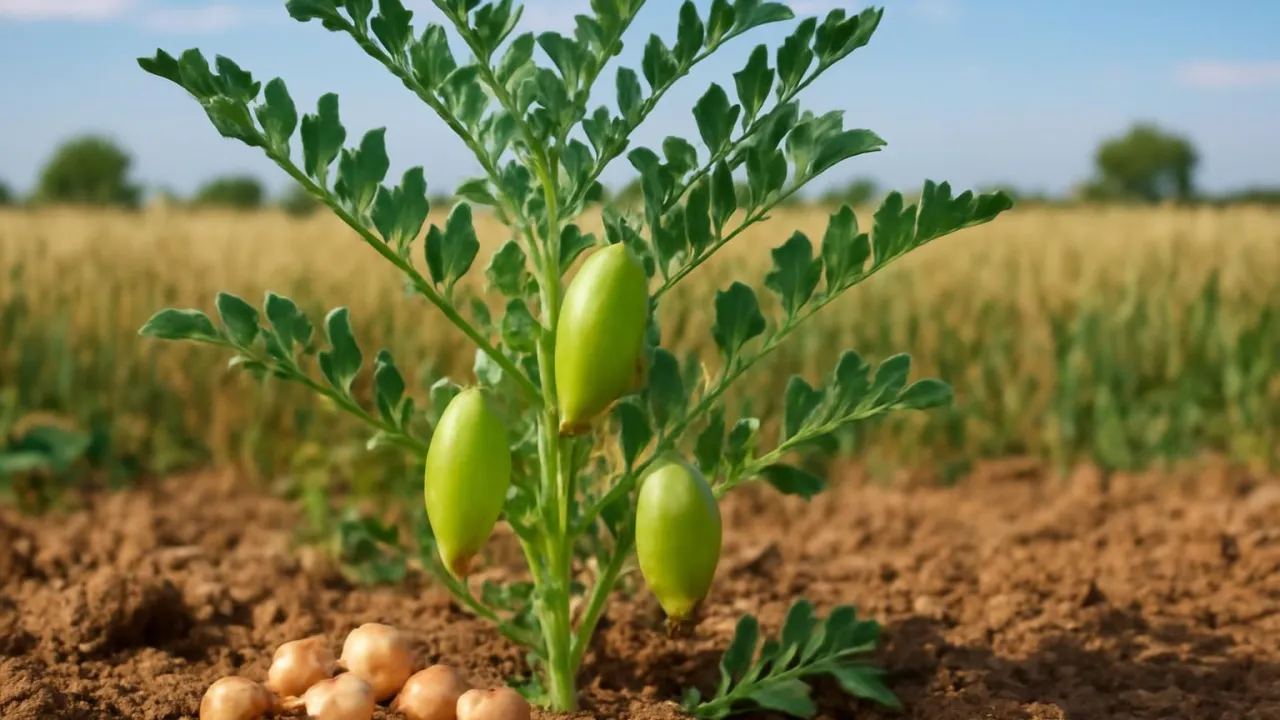
Chickpeas fix nitrogen in soil, helping plants grow without chemical fertilizers!
✨ Word Sparks (Grade 3 Glossary)
Tap 🔊 to hear
nitrogen
A gas that helps plants grow strong and healthy
symbiotic
A helpful partnership between two living things
germination
When a seed starts to grow into a new plant
🪝
Did you know chickpeas help other plants grow by fixing nitrogen?
1
Chickpea Plant Features
Chickpea plants grow about one to two feet tall and have small green leaves. They produce pods that contain the round, beige seeds we call chickpeas. These seeds are rich in protein and used in many dishes worldwide. The plant’s structure helps protect seeds until they are ready to harvest.
2
How Chickpeas Grow
Chickpeas develop inside pods that dry on the plant before harvesting. The plant thrives in warm climates with full sun and moderate water. Its roots have special bacteria that fix from the air into the soil. This adaptation improves soil fertility and helps other plants nearby.
3
Chickpeas in Nature
Chickpeas play an important role in farming ecosystems by enriching the soil naturally. They act as a natural fertilizer, reducing the need for chemical fertilizers. This relationship benefits farmers and the environment. Chickpeas also provide food for humans and some animals.
4
Physical Adaptations
The tough pods protect seeds from predators and harsh weather. Chickpeas’ hard seed coat allows them to stay dormant until conditions are right for . This camouflage and protection help ensure survival through dry seasons. Their protein-rich seeds attract animals that help spread them.
Chickpeas enrich soil naturally by fixing nitrogen, making farming more sustainable worldwide!
✨ Word Sparks (Grade 4 Glossary)
Tap 🔊 to hear
symbiotic
A helpful partnership between two living things
fertility
How rich soil is for growing plants
biodiversity
Many different plants and animals living together
🪝
How do chickpeas improve soil and support farming ecosystems worldwide?
1
Chickpea Plant and Growth
Chickpea plants typically grow one to two feet tall and thrive in warm, sunny climates with moderate rainfall. Their small, compound leaves help reduce water loss during dry periods, which is an important adaptation. The plants produce pods that dry on the stem, each containing one or two seeds called chickpeas. This drying process allows farmers to harvest mature seeds easily and store them for long periods.
2
Nitrogen Fixation and Soil Health
Chickpea roots form a relationship with nitrogen-fixing bacteria called rhizobia, which convert atmospheric nitrogen into a form plants can use. This natural process enriches the soil with nitrogen, reducing the need for synthetic fertilizers. As a result, chickpeas play a crucial role in sustainable agriculture by improving soil and supporting crop rotations. This cause-and-effect relationship benefits both farmers and the environment.
3
Ecosystem Role and Human Use
Chickpeas serve as a vital food source for humans worldwide, providing high protein and essential nutrients. They also support food webs by feeding some animals and insects that rely on their seeds. Additionally, chickpeas contribute to agricultural and help maintain healthy ecosystems. Their cultivation has a long history, spreading from the Middle East to South Asia and beyond due to their nutritional and ecological benefits.
4
Geographic Distribution and Farming Impact
Originally native to the Middle East, chickpeas are now grown in many warm regions, including India, Australia, and parts of Africa. Their ability to grow in semi-arid conditions makes them valuable in areas with limited water resources. Farmers use chickpeas in crop rotations to improve soil quality and reduce pests. This agricultural impact helps promote sustainable farming practices and food security in diverse environments.
2. Why do farmers include chickpeas in crop rotations?
🤯 Mind-Blowing Fact • Grade 5
Chickpeas fix up to 50 kilograms of nitrogen per hectare each year, reducing fertilizer needs!
✨ Word Sparks (Grade 5 Glossary)
Tap 🔊 to hear
legume
A plant that grows seeds in pods, like beans
nodules
Root bumps where bacteria help plants get nitrogen
pulse
Dry seeds from legume plants used for food
🪝
How do chickpeas scientifically enrich soil and support global agriculture sustainably?
1
Taxonomy and Botanical Context
Chickpeas, scientifically named Cicer arietinum, belong to the family Fabaceae, which includes peas and beans. They are classified as , harvested solely for their dry seeds. Unlike many vegetables, chickpeas are botanically seeds that grow inside pods. Their classification highlights their importance as a protein-rich legume crop worldwide.
2
Physiological Mechanics of Growth
Chickpea plants grow to about 1 to 2 feet tall, developing compound leaves and small flowers that produce pods. Their roots form housing rhizobia bacteria, which fix atmospheric nitrogen into ammonia usable by plants. This nitrogen fixation process reduces the need for synthetic fertilizers, enhancing soil nutrient content naturally. The hard seed coat protects seeds during dormancy until favorable germination conditions arise.
3
Conservation and Agricultural History
Chickpeas have been cultivated for over 7,000 years, originating in the Middle East and spreading to South Asia and Mediterranean regions. Their drought tolerance and soil-enriching abilities have made them vital in dryland farming systems. Conservation efforts focus on preserving genetic diversity to maintain resilience against pests, diseases, and climate change impacts. Sustainable chickpea farming supports food security in arid regions globally.
4
Quantitative Comparisons and Environmental Impact
Chickpea plants typically yield about 1,000 to 2,500 pounds per acre, depending on climate and soil conditions. They prefer temperatures between 59°F and 86°F (15°C to 30°C) and can grow in semi-arid soils with moderate rainfall. Their nitrogen fixation can add up to 50 kilograms per hectare annually, significantly reducing fertilizer needs. This environmental benefit lowers greenhouse gas emissions linked to fertilizer production.
5
Global Importance and Nutritional Value
Chickpeas are a staple protein source for millions, containing about 19 grams of protein per 100 grams of dry seeds. They also provide dietary fiber, vitamins, and minerals essential for human health. Globally, chickpeas rank as the third most important crop after dry beans and lentils. Their cultivation supports sustainable diets and agricultural systems worldwide.