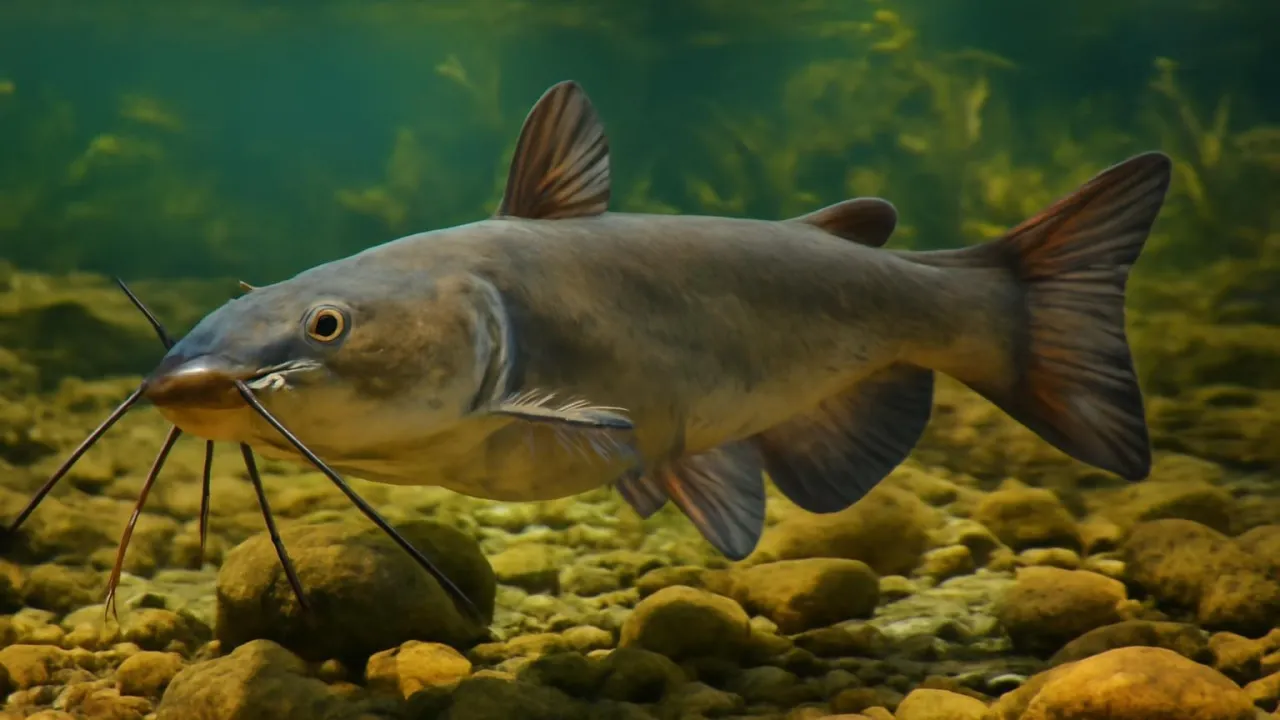
Channel catfish use their whiskers to taste and smell food in very dark water.
✨ Word Sparks (Grade 2 Glossary)
Tap 🔊 to hear
whiskers
Long feelers on a fish’s face
freshwater
Water from rivers or lakes, not salty
scavenger
An animal that eats leftovers or dead things
🪝
Have you ever seen a fish with long whiskers like a cat?
1
Whiskers Help Find Food
Channel catfish have long that help them find food in dark water. They use their whiskers to sense tiny movements and smells nearby. These whiskers act like special feelers for hunting.
2
Freshwater Homes
This fish lives mostly in rivers and lakes across North America. It likes to hide under rocks or logs during the day. At night, it swims out to search for food.
3
Eating Many Things
Channel catfish eat insects, small fish, plants, and even tiny crustaceans. They are good hunters and . Their diet helps them survive in many places.
1. What do channel catfish use their whiskers for?
2. Where do channel catfish live?
🤯 Mind-Blowing Fact • Grade 3
Channel catfish can taste food with their whiskers even in total darkness underwater.
✨ Word Sparks (Grade 3 Glossary)
Tap 🔊 to hear
barbels
Whiskers on fish that help find food
omnivore
An animal that eats plants and animals
camouflage
Colors that help animals hide in nature
🪝
Did you know channel catfish use special whiskers to sense their surroundings?
1
Whiskers Help with Hunting
Channel catfish have long whiskers called that help them find food. These barbels are covered with taste buds and help detect prey in murky water. This adaptation makes them excellent nocturnal hunters. Their whiskers sense vibrations and chemicals in the water.
2
Freshwater Habitat
Channel catfish live in freshwater rivers, lakes, and reservoirs across North America. They prefer slow-moving water with sandy or muddy bottoms. These habitats provide shelter and plenty of food. They often hide under rocks or submerged logs during the day.
3
Diet and Feeding
They are , eating insects, crustaceans, small fish, and plant material. Their diet varies depending on what is available in their habitat. Channel catfish use their sensitive to locate food in dark or murky water. This ability helps them survive as both predators and scavengers.
4
Body Features for Survival
Their smooth skin lacks scales but is covered in mucus to protect against parasites. Channel catfish have sharp spines on their dorsal and pectoral fins for defense. Their body shape helps them swim swiftly and hide from predators. coloring blends with river bottoms.
1. What is the main purpose of barbels on channel catfish?
2. Why do channel catfish have camouflage coloring?
🤯 Mind-Blowing Fact • Grade 4
Channel catfish can live in water temperatures ranging from 50 to 85 degrees Fahrenheit, showing great adaptability.
✨ Word Sparks (Grade 4 Glossary)
Tap 🔊 to hear
barbels
Whiskers that help fish sense food
scavenger
An animal that eats dead or leftover food
ecosystem
A community of living things and their home
🪝
How do channel catfish survive and thrive in murky freshwater ecosystems?
1
Sensory Adaptations and Feeding
Channel catfish rely on their , which are highly sensitive whiskers, to detect food in dark, murky waters where visibility is low. These barbels contain taste buds and sensory cells that allow the fish to locate prey by sensing vibrations and chemicals. This adaptation is crucial for their nocturnal feeding habits. Their omnivorous diet includes insects, crustaceans, small fish, and plant matter, making them versatile feeders in their .
2
Habitat and Geographic Range
Native to freshwater rivers and lakes throughout North America, channel catfish thrive in slow-moving or still waters with sandy or muddy bottoms. They often seek shelter under rocks, logs, or debris during daylight hours to avoid predators. Their wide distribution ranges from southern Canada to northern Mexico, demonstrating their adaptability to various freshwater environments.
3
Role in the Ecosystem
As both predators and , channel catfish play an important role in freshwater food webs by controlling insect and small fish populations. They also help recycle nutrients by consuming dead organisms. Their presence supports balanced and benefits human fishing industries. Additionally, their ability to adapt to different habitats makes them a key species in many freshwater systems.
4
Physical Defenses and Camouflage
Channel catfish possess sharp spines on their dorsal and pectoral fins that can lock in place to deter predators. Their smooth, scaleless skin is coated with mucus, which protects against parasites and infections. Their mottled coloration provides effective camouflage against riverbeds, helping them avoid detection. Together, these features increase their chances of survival in diverse aquatic environments.
2. What role do channel catfish play in their ecosystem?
🤯 Mind-Blowing Fact • Grade 5
Channel catfish use their barbels to detect food by tasting chemicals in water even in complete darkness.
✨ Word Sparks (Grade 5 Glossary)
Tap 🔊 to hear
barbels
Whisker-like organs that sense food chemicals
benthic
Living near the bottom of water bodies
scaleless
Skin without scales, often coated in mucus
🪝
What makes the channel catfish a remarkable species in North American freshwater systems?
1
Scientific Classification and Range
The channel catfish, scientifically known as Ictalurus punctatus, belongs to the family Ictaluridae. It is native to freshwater habitats across North America, ranging from southern Canada through the United States to northern Mexico. This species thrives in rivers, lakes, reservoirs, and ponds with slow-moving or still water. Its broad geographic distribution showcases its adaptability to various freshwater ecosystems.
2
Physiological Adaptations and Sensory Mechanics
Channel catfish possess distinctive around their mouth, which function as highly sensitive sensory organs equipped with taste buds and mechanoreceptors. These barbels enable the fish to detect chemical signals and vibrations in turbid waters where visibility is limited. The fish’s skin is coated with mucus that protects against parasites and reduces friction during swimming. Sharp spines on the dorsal and pectoral fins provide defense by locking into place when threatened.
3
Ecological Role and Conservation Status
As omnivorous feeders, channel catfish play a vital role in freshwater ecosystems by regulating populations of insects, crustaceans, and smaller fish. Their scavenging behavior contributes to nutrient recycling by consuming detritus and dead organisms. Channel catfish are also economically important for recreational and commercial fisheries. Currently, their populations remain stable, but habitat degradation and water pollution pose potential threats requiring ongoing conservation efforts.
4
Botanical and Culinary Curiosities
Unlike botanical fruits or plants, channel catfish are animals with complex sensory systems rather than photosynthesis. However, their whisker-like are often compared to mammalian whiskers due to their tactile and chemical sensing abilities. In culinary contexts, channel catfish are prized for their mild flavor and firm texture, making them popular in southern U.S. cuisine. Their role in human culture highlights the intersection between natural history and gastronomy.
5
Quantitative Comparisons and Environmental Tolerances
Adult channel catfish can reach lengths up to 40 inches (102 centimeters) and weigh over 50 pounds (23 kilograms). They can survive in water temperatures ranging from 50 to 85 degrees Fahrenheit (10 to 29 degrees Celsius). Their swimming speed can reach up to 5 miles per hour (8 kilometers per hour) when hunting or escaping predators. These physiological traits enable them to thrive in diverse and sometimes challenging freshwater environments.