Central Park
A Green Wonderland in New York City
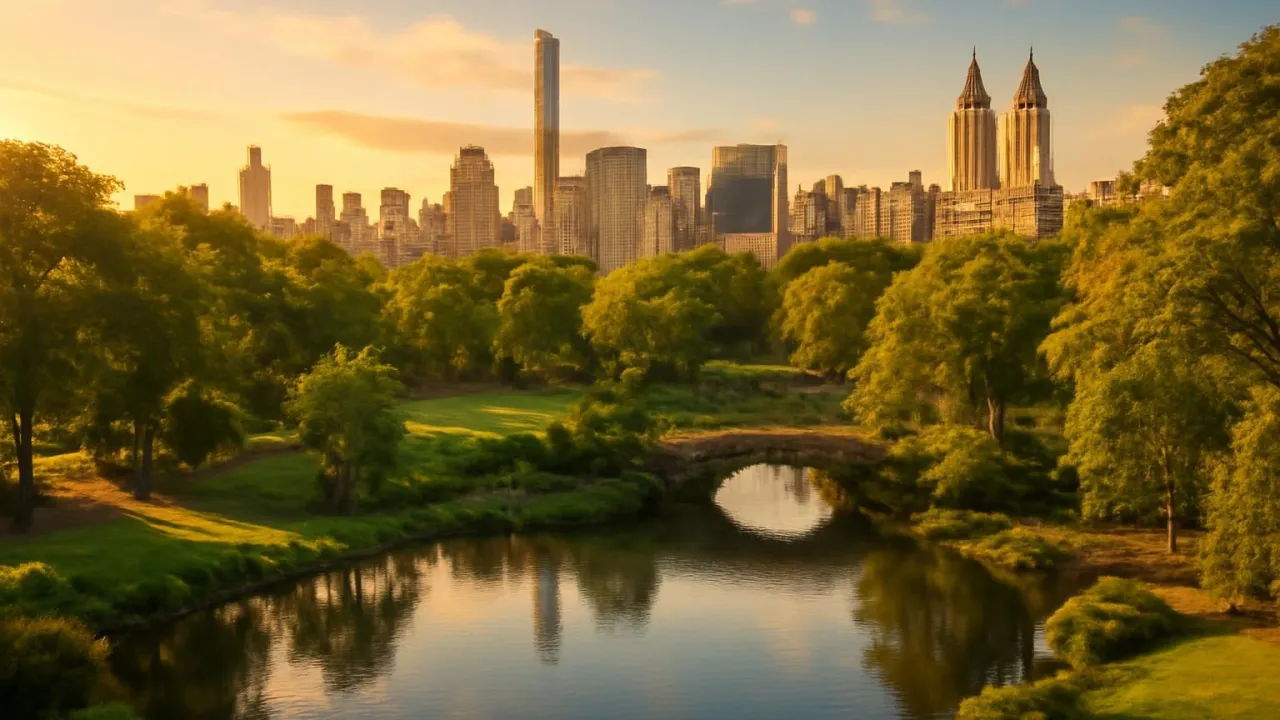
Central Park contains more than 10,000 benches, 58 miles of walking paths, and 21 playgrounds—making it a true urban adventure!
1 Vision and Origins of Central Park
In the 1850s, New York City’s population was growing rapidly, leading to crowded neighborhoods and little access to green space. City leaders called for a vast public park to improve health and provide recreation for all citizens, regardless of wealth. Frederick Law Olmsted and Calvert Vaux’s winning 'Greensward Plan' transformed 843 acres of marshland, rocky outcrops, and farmland into a designed landscape. Their vision was to create an urban oasis that would offer scenic beauty, social mixing, and relief from city stress.
2 Engineering Marvels and Landscape Architecture
Constructing Central Park required enormous engineering feats, including moving nearly 5 million cubic yards of soil and stone. Workers built artificial lakes, constructed 36 bridges and arches, and planted more than 270,000 trees and shrubs in the park’s early years. The design used principles of , such as curvilinear paths, varied , and carefully planned sightlines to create the illusion of wilderness. Four sunken transverse roads allowed cross-town traffic to pass invisibly beneath the park, preserving the peaceful atmosphere above.
3 Ecological Functions and Urban Biodiversity
Central Park serves as a vital urban ecosystem, supporting over 230 bird species, numerous mammals, and diverse plant communities. Its ponds, streams, and wetlands help manage stormwater runoff and reduce urban heat, while meadows and woodlands provide habitats for wildlife. The park’s varied microclimates result from differences in elevation, tree cover, and water features, supporting a remarkable range of species. Ongoing efforts protect rare plants and ensure the park remains a haven for biodiversity within the city.
4 Cultural Impact and Global Influence
Central Park is not only a recreational space but also a cultural landmark, hosting major events like the New York City Marathon, Shakespeare in the Park, and world-famous concerts. Its innovative design has inspired urban parks worldwide, from London’s Hyde Park expansions to Tokyo’s Ueno Park. The park’s architecture, such as Bethesda Terrace and Bow Bridge, blends artistic beauty with structural ingenuity, making it a model for integrating nature and city life. Central Park’s enduring popularity demonstrates the universal need for accessible green spaces in urban environments.
5 Preservation, Challenges, and the Future
Today, Central Park faces challenges from heavy use, climate change, and urban development, requiring ongoing restoration and management. The Central Park Conservancy, a nonprofit organization, leads efforts to maintain landscapes, restore historic features, and promote sustainability. Innovations in ecological restoration, such as native plantings and habitat creation, help protect the park’s future. As cities grow, Central Park stands as a testament to the importance of thoughtful design, environmental stewardship, and public access to nature. Its legacy continues to shape how people experience and value urban green spaces.
1. How did Central Park’s designers make the park feel natural and wild?
2. What is one way Central Park helps the city’s environment?