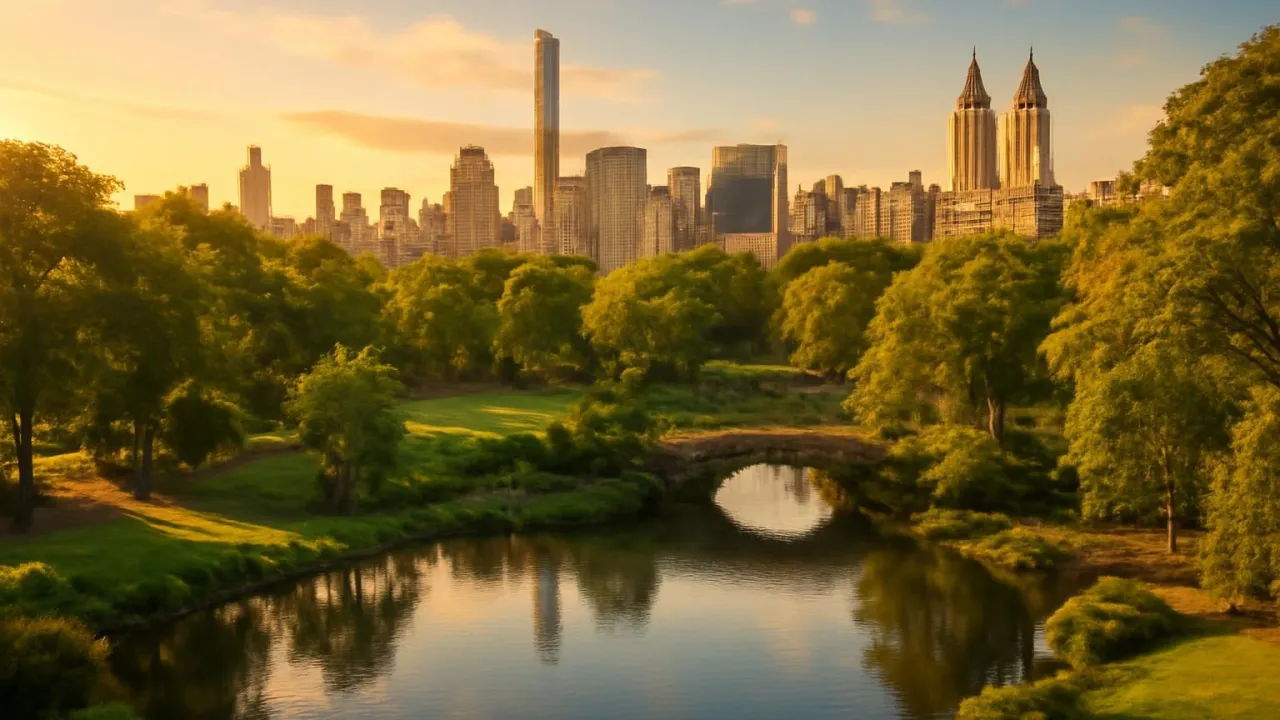
Central Park has over 9,000 benches for people to rest and watch the world!
✨ Word Sparks (Grade 2 Glossary)
Tap 🔊 to hear
row
To move a boat with oars
concert
A show where people play music
nature
Plants, animals, and outdoors together
🪝
Can you imagine a place with grass and trees right in the middle of a busy city?
1
Nature in the City
Step inside Central Park and you’ll spot tall green trees and wide grassy lawns. The sounds of birds singing and children laughing fill the air, even though cars and buildings are all around. It feels like a peaceful world hidden in the city.
2
So Much to Explore
People ride bikes, boats, and visit playgrounds in every season. In winter, families skate on the icy pond, while spring brings bright flowers and soft grass. Summer and fun shows make the park lively and exciting.
3
A Park for Everyone
Central Park was made for all people to enjoy together. Every day, friends have picnics or watch ducks swim by the pond. It’s a special place where city life and nature meet for fun.
1. What can families do in Central Park during winter?
2. Why do people love visiting Central Park?
🤯 Mind-Blowing Fact • Grade 3
Central Park’s Great Lawn is so big, it can fit eight baseball fields side by side!
✨ Word Sparks (Grade 3 Glossary)
Tap 🔊 to hear
meadow
A big, grassy open field
habitat
A place where animals live
landscape architect
A person who designs outdoor spaces
🪝
Imagine hearing birds and laughter while tall city buildings shine nearby—how does that happen?
1
A Green Heart in the City
Central Park stretches like a giant rectangle through busy Manhattan. It was designed in the 1800s to give people a peaceful place to relax. The park is filled with winding paths, grassy , and sparkling ponds. Even though skyscrapers surround it, inside you feel close to nature.
2
Nature and Wildlife
The park is home to many birds, squirrels, and even turtles. Trees and flowers bloom in every season, creating for wildlife. Ponds and streams help animals find water and cool places to hide. City sounds fade away as you walk deeper into the park.
3
Fun and Adventure
People come to Central Park to play sports, ride bikes, and have picnics. In winter, the ice rink opens for skating, and in summer, outdoor concerts fill the air with music. The park’s famous Bow Bridge and Bethesda Fountain are favorite spots for visitors.
4
How Was It Built?
Central Park was carefully planned by Frederick Law Olmsted and Calvert Vaux. They used soil, rocks, and plants to create rolling hills and peaceful lakes. The design used arches and bridges to connect paths, making it easy to explore. Today, the park is a living monument to creative city planning.
Over 42 million people visit Central Park every year from all around the world!
✨ Word Sparks (Grade 4 Glossary)
Tap 🔊 to hear
oasis
A peaceful green place in a city
transverse
A hidden road crossing the park
ecosystem
A community of living things together
🪝
What if a city could have a giant backyard filled with lakes, hills, and music?
1
A Park Born from Imagination
In the mid-1800s, New York City leaders wanted a place where everyone could escape the crowded streets. Frederick Law Olmsted and Calvert Vaux won a competition to design Central Park, using their vision to transform swamps and rocky land into a lush, green . Their plan included winding paths, scenic bridges, and open meadows for all to enjoy. The park officially opened in 1858, but construction continued for nearly two decades.
2
Engineering a Natural Wonderland
Building Central Park was a huge engineering challenge, requiring the movement of millions of cubic yards of soil and rock. Workers created artificial lakes, rolling hills, and even planted over 500,000 trees and shrubs. The designers used curved walkways and sunken roads called '' to keep traffic hidden from park visitors. Bridges and arches made from stone and cast iron connect different areas, blending beauty with function.
3
A Living Habitat in the City
Central Park is home to over 230 species of birds, turtles, and many small mammals. Carefully planned habitats, such as the Ramble and the North Woods, provide shelter and food for wildlife. The park’s ponds and streams support aquatic life and help manage stormwater. Every season brings new colors and sounds, making the park a dynamic within the city.
4
A Cultural and Social Landmark
Central Park is more than just a park; it’s a gathering place for millions. People attend concerts at the Great Lawn, watch plays at the Delacorte Theater, and join marathons or festivals throughout the year. Its design inspired city parks around the world, showing how green spaces can improve city life. Central Park remains a symbol of creativity, community, and the power of public spaces.
1. How did Olmsted and Vaux hide city traffic from park visitors?
2. How does Central Park help wildlife?
🤯 Mind-Blowing Fact • Grade 5
Central Park contains more than 10,000 benches, 58 miles of walking paths, and 21 playgrounds—making it a true urban adventure!
✨ Word Sparks (Grade 5 Glossary)
Tap 🔊 to hear
landscape architecture
Designing land to look beautiful and useful
topography
The shape and features of the land
conservation
Protecting nature and wildlife for the future
🪝
What if a city’s busiest island could hold a carefully engineered forest, lakes, and secret valleys for everyone to explore?
1
Vision and Origins of Central Park
In the 1850s, New York City’s population was growing rapidly, leading to crowded neighborhoods and little access to green space. City leaders called for a vast public park to improve health and provide recreation for all citizens, regardless of wealth. Frederick Law Olmsted and Calvert Vaux’s winning 'Greensward Plan' transformed 843 acres of marshland, rocky outcrops, and farmland into a designed landscape. Their vision was to create an urban oasis that would offer scenic beauty, social mixing, and relief from city stress.
2
Engineering Marvels and Landscape Architecture
Constructing Central Park required enormous engineering feats, including moving nearly 5 million cubic yards of soil and stone. Workers built artificial lakes, constructed 36 bridges and arches, and planted more than 270,000 trees and shrubs in the park’s early years. The design used principles of , such as curvilinear paths, varied , and carefully planned sightlines to create the illusion of wilderness. Four sunken transverse roads allowed cross-town traffic to pass invisibly beneath the park, preserving the peaceful atmosphere above.
3
Ecological Functions and Urban Biodiversity
Central Park serves as a vital urban ecosystem, supporting over 230 bird species, numerous mammals, and diverse plant communities. Its ponds, streams, and wetlands help manage stormwater runoff and reduce urban heat, while meadows and woodlands provide habitats for wildlife. The park’s varied microclimates result from differences in elevation, tree cover, and water features, supporting a remarkable range of species. Ongoing efforts protect rare plants and ensure the park remains a haven for biodiversity within the city.
4
Cultural Impact and Global Influence
Central Park is not only a recreational space but also a cultural landmark, hosting major events like the New York City Marathon, Shakespeare in the Park, and world-famous concerts. Its innovative design has inspired urban parks worldwide, from London’s Hyde Park expansions to Tokyo’s Ueno Park. The park’s architecture, such as Bethesda Terrace and Bow Bridge, blends artistic beauty with structural ingenuity, making it a model for integrating nature and city life. Central Park’s enduring popularity demonstrates the universal need for accessible green spaces in urban environments.
5
Preservation, Challenges, and the Future
Today, Central Park faces challenges from heavy use, climate change, and urban development, requiring ongoing restoration and management. The Central Park Conservancy, a nonprofit organization, leads efforts to maintain landscapes, restore historic features, and promote sustainability. Innovations in ecological restoration, such as native plantings and habitat creation, help protect the park’s future. As cities grow, Central Park stands as a testament to the importance of thoughtful design, environmental stewardship, and public access to nature. Its legacy continues to shape how people experience and value urban green spaces.