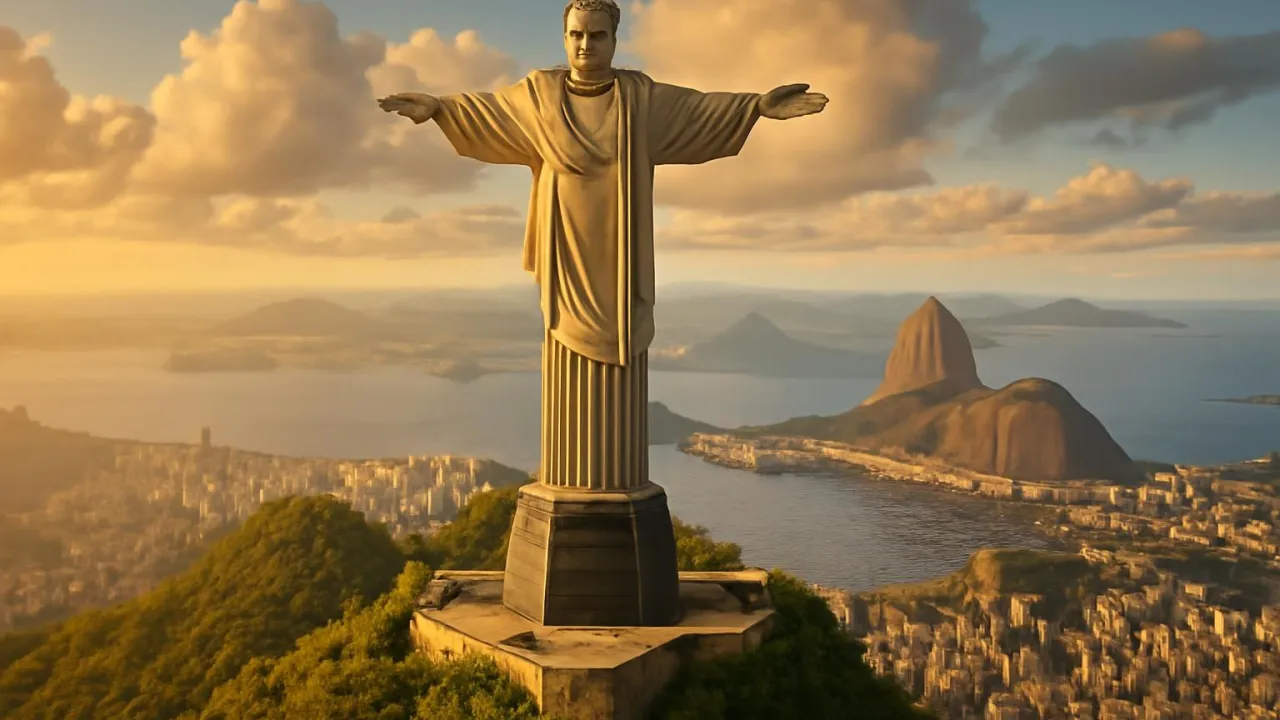
The statue’s arms stretch almost as wide as a blue whale is long!
✨ Word Sparks (Grade 2 Glossary)
Tap 🔊 to hear
visitor
Someone who comes to see a place
symbol
A thing that means something
ocean
A very big body of water
🪝
Have you ever seen a statue with arms as wide as a playground?
1
A Giant on the Mountain
Christ the Redeemer stands high above Rio de Janeiro. Its arms stretch out wide, almost like a hug. The statue is so tall, you can see it from far away. People come from all over the world to visit.
2
How People Reach the Top
ride a small train up the steep mountain. Some people climb hundreds of steps to reach the statue. The view from the top is amazing, with the city and below. Many take photos to remember their trip.
3
A Symbol for Many
The statue is special to many people in Brazil. It shines in sunlight and glows with lights at night. Sometimes, clouds cover its head, making it look magical. It stands for peace and welcome to all.
Lightning strikes Christ the Redeemer several times every year!
✨ Word Sparks (Grade 3 Glossary)
Tap 🔊 to hear
monument
A building to remember something important
erosion
When wind or rain wears things away
prototype
A test model built before the real thing
🪝
Imagine standing where clouds swirl around a giant stone figure’s hands!
1
High Above Rio
Christ the Redeemer rises atop Corcovado Mountain, watching over the busy city of Rio de Janeiro. The statue’s outstretched arms span nearly 92 feet, wider than a city bus is long. Visitors ride a train or climb 200 steps to reach the top. The view stretches from sparkling beaches to green forests and tall buildings.
2
Building a Monument
Workers built the statue between 1922 and 1931 using reinforced concrete and soapstone. They made a strong to test how the statue would stand against wind and rain. Its Art Deco style means the lines are smooth and simple, making it look both modern and timeless. The statue’s base is also a small chapel where people can visit and reflect.
3
Weather and Wonders
The statue faces strong winds and heavy rain, but its structure is designed to resist . Soapstone covers the outside, protecting the concrete inside from water. Sometimes, lightning strikes the statue, but repairs keep it shining bright. At night, special lights make the glow above the city.
4
A Symbol of Brazil
Christ the Redeemer is a symbol of welcome and peace for people everywhere. It was named one of the New Seven Wonders of the World in 2007. People from many countries visit to see its beauty and learn its story. The statue brings together art, engineering, and hope in one amazing place.
Christ the Redeemer’s construction used over 6 million small soapstone tiles!
✨ Word Sparks (Grade 4 Glossary)
Tap 🔊 to hear
reinforced concrete
Strong concrete with metal bars inside
Art Deco
A style with smooth, simple lines
erosion
Slow wearing away by wind or rain
🪝
What secrets help a colossal statue stand strong through storms on a mountain peak?
1
A Towering Marvel Above Rio
Christ the Redeemer stands 98 feet tall atop Corcovado Mountain, with arms stretching 92 feet wide. The monument overlooks Rio de Janeiro, offering breathtaking views of the city, coastline, and rainforest. Its construction began in 1922 and finished in 1931, marking Brazil’s 100th year of independence. Today, it welcomes millions of visitors who travel by train or climb over 200 steps to reach its base.
2
Engineering Against the Elements
Engineers designed the statue using , which gives it strength against powerful winds and storms. The outer layer is made of soapstone, chosen for its smooth texture and resistance to from rain. Lightning rods were installed to protect the statue from frequent strikes, and skilled workers regularly repair any damage. Its style, with clean lines and simple shapes, makes it one of the world’s most recognizable monuments.
3
A Chapel and a Symbol
Beneath the statue, a small chapel was built, allowing visitors to reflect or attend special ceremonies. Christ the Redeemer represents peace, hope, and welcome to people of all backgrounds. It has become a symbol not only of Brazil but also of kindness and unity around the globe. In 2007, it was named one of the New Seven Wonders of the World.
4
Global Impact and Inspiration
The statue has inspired artists, architects, and travelers for nearly a century. It appears in countless photographs, films, and artworks, helping people everywhere recognize Brazil’s culture. Its impressive engineering and peaceful message continue to attract millions, making it a true landmark of both art and science. The monument’s ongoing care ensures it will inspire future generations as well.
1. Why was soapstone chosen for the statue’s outer layer?
2. What special feature is found under the statue?
🤯 Mind-Blowing Fact • Grade 5
Each soapstone tile was hand-cut and set by workers, making every inch unique.
✨ Word Sparks (Grade 5 Glossary)
Tap 🔊 to hear
structural integrity
How well something holds together and stands strong
Art Deco
A design style with bold, simple shapes
preservation
Caring for something to keep it safe and lasting
🪝
How does a monumental statue balance wind, weight, and weather atop a steep mountain ridge?
1
An Icon in the Clouds
Perched 2,329 feet above sea level on Corcovado Mountain, Christ the Redeemer’s silhouette is visible from nearly every part of Rio de Janeiro. The statue itself stands 98 feet tall, with a 92-foot arm span, and rests on a 26-foot pedestal. Its commanding presence was designed to symbolize peace, openness, and the welcoming spirit of Brazil. The location was chosen for both its visibility and its dramatic natural backdrop, making the monument a fusion of art and landscape.
2
Engineering Feats and Art Deco Design
The construction of Christ the Redeemer required careful engineering to withstand the mountain’s harsh weather conditions, including frequent lightning storms and strong Atlantic winds. Engineers used reinforced concrete for the core structure, providing both strength and flexibility. The exterior is covered with millions of triangular soapstone tiles, each hand-laid for durability and smoothness. The style, popular in the early 20th century, is evident in the statue’s clean, geometric lines and stylized form.
3
Building Through Challenges
Construction began in 1922 to celebrate Brazil’s centennial of independence and took nine years to complete. Workers transported materials up the mountain by train and cable systems, assembling the statue in sections. A full-scale prototype arm was built and tested for wind resistance before final assembly. The statue’s internal framework, designed by engineer Heitor da Silva Costa and French sculptor Paul Landowski, ensures stability against both seismic activity and erosion.
4
Cultural and Global Significance
Christ the Redeemer is more than an architectural marvel; it is a global symbol of faith, unity, and hope. The statue attracts over two million visitors annually, many of whom climb the 220 steps to its base or attend services in the chapel beneath. In 2007, it was officially recognized as one of the New Seven Wonders of the World, further elevating its status as a cultural ambassador for Brazil. Artists, filmmakers, and musicians frequently feature the monument in works that celebrate Brazilian identity.
5
Preservation and Modern Challenges
Maintaining the statue’s requires ongoing restoration, especially after frequent lightning strikes and the effects of tropical weather. Teams of specialists inspect and replace damaged soapstone tiles, while advanced lightning rods and drainage systems protect the structure. Environmental changes, such as increased rainfall and pollution, present new challenges. Despite these obstacles, Christ the Redeemer endures as a testament to human ingenuity, engineering excellence, and the enduring power of symbols to unite people across cultures.