Central Park
A Green Wonderland in New York City
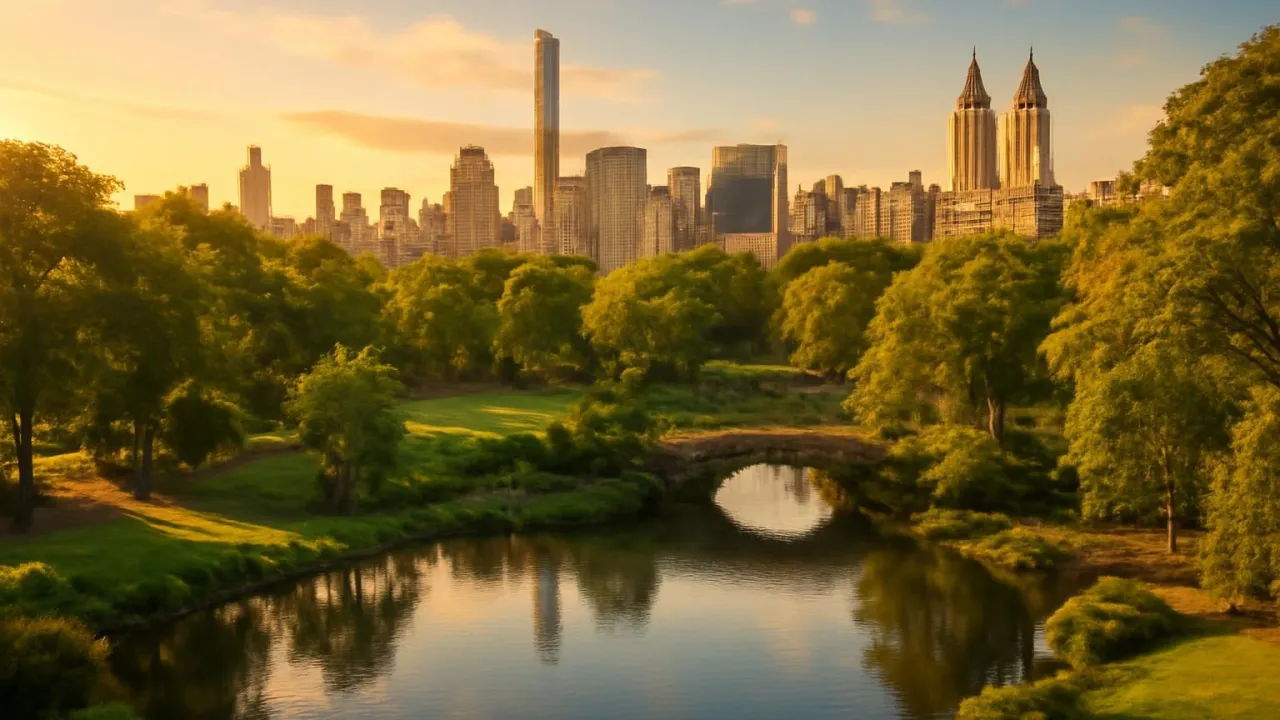
Over 42 million people visit Central Park every year from all around the world!
1 A Park Born from Imagination
In the mid-1800s, New York City leaders wanted a place where everyone could escape the crowded streets. Frederick Law Olmsted and Calvert Vaux won a competition to design Central Park, using their vision to transform swamps and rocky land into a lush, green . Their plan included winding paths, scenic bridges, and open meadows for all to enjoy. The park officially opened in 1858, but construction continued for nearly two decades.
2 Engineering a Natural Wonderland
Building Central Park was a huge engineering challenge, requiring the movement of millions of cubic yards of soil and rock. Workers created artificial lakes, rolling hills, and even planted over 500,000 trees and shrubs. The designers used curved walkways and sunken roads called '' to keep traffic hidden from park visitors. Bridges and arches made from stone and cast iron connect different areas, blending beauty with function.
3 A Living Habitat in the City
Central Park is home to over 230 species of birds, turtles, and many small mammals. Carefully planned habitats, such as the Ramble and the North Woods, provide shelter and food for wildlife. The park’s ponds and streams support aquatic life and help manage stormwater. Every season brings new colors and sounds, making the park a dynamic within the city.
4 A Cultural and Social Landmark
Central Park is more than just a park; it’s a gathering place for millions. People attend concerts at the Great Lawn, watch plays at the Delacorte Theater, and join marathons or festivals throughout the year. Its design inspired city parks around the world, showing how green spaces can improve city life. Central Park remains a symbol of creativity, community, and the power of public spaces.
1. How did Olmsted and Vaux hide city traffic from park visitors?
2. How does Central Park help wildlife?