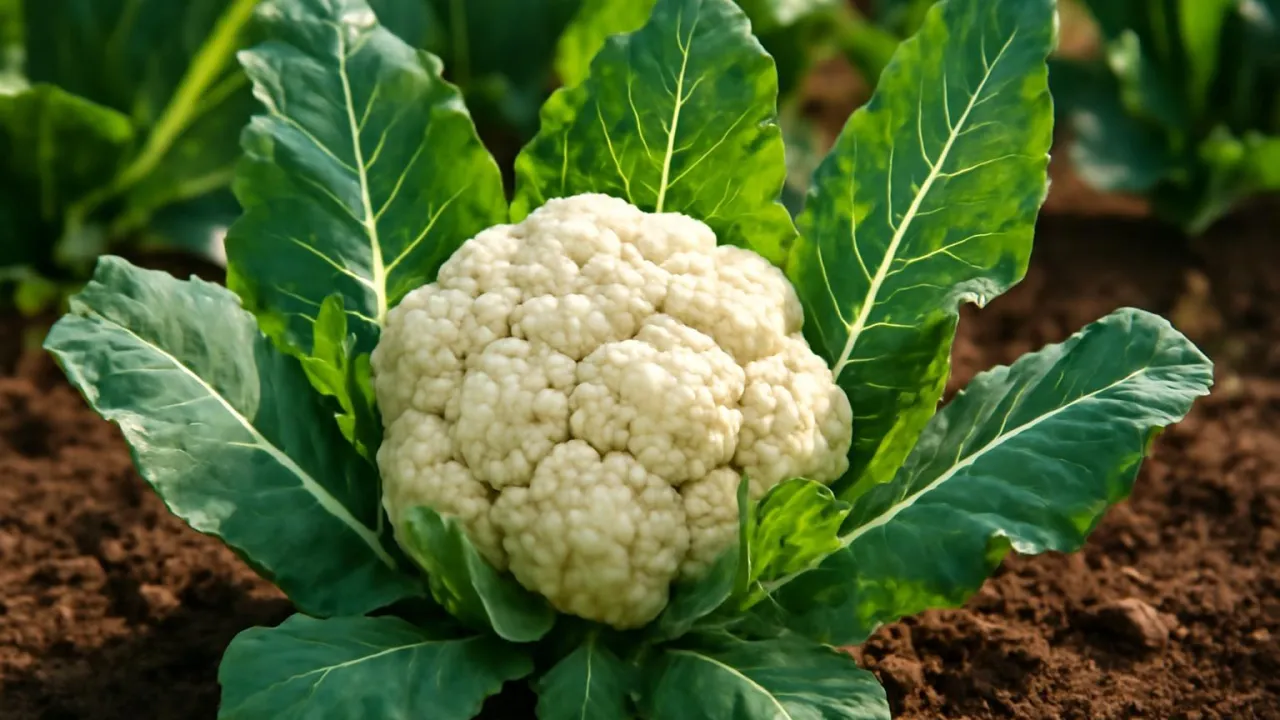
Cauliflower heads are actually clusters of tiny unopened flower buds!
✨ Word Sparks (Grade 2 Glossary)
Tap 🔊 to hear
buds
Tiny parts that can grow into flowers.
vitamins
Healthy things inside food that help your body.
fiber
Parts of plants that help your tummy feel good.
🪝
Have you ever seen a vegetable that looks like a white flower?
1
What Cauliflower Looks Like
Cauliflower has a big white head that looks like a flower. It grows surrounded by large green leaves. The head is made of many tiny flower packed tightly.
2
Where Cauliflower Grows
Cauliflower grows best in cool weather and needs plenty of sunlight. Farmers plant it in gardens and fields where the soil is rich. It takes a few months to grow big enough to pick.
3
Why Cauliflower Is Special
Cauliflower is full of and that help your body stay healthy. Its white color helps protect it from too much sun. People cook it in many tasty ways all around the world.
Cauliflower’s white curds are actually undeveloped flower clusters protecting the plant.
✨ Word Sparks (Grade 3 Glossary)
Tap 🔊 to hear
curds
Tightly packed tiny flower buds on cauliflower.
nutrients
Things plants and animals need to grow strong.
ecosystem
A place where plants and animals live together.
🪝
Did you know cauliflower is a vegetable made of tightly packed flower buds?
1
Cauliflower’s Unique Structure
Cauliflower’s white head is actually a cluster of tiny flower buds called . These curds are tightly packed to protect the plant from sun damage. The green leaves around the head help shade it and keep it cool. This adaptation helps cauliflower grow well in temperate climates.
2
Where Cauliflower Grows
Cauliflower thrives in cool, moist environments with rich soil full of . It is commonly grown in gardens and farms across the Mediterranean and temperate regions worldwide. The plant needs regular watering and full sunlight for healthy growth. These conditions help the develop their dense, white form.
3
Cauliflower’s Role in Nature
Cauliflower is part of the Brassica family, which includes broccoli and cabbage. It provides food for many insects and animals in its . The dense protect the developing flowers from predators and harsh weather. Humans harvest cauliflower for its nutritious edible head.
4
How People Use Cauliflower
People cook cauliflower in many ways, such as steaming, roasting, or eating it raw. It is rich in vitamins C and K, which support the immune system and bones. Cauliflower’s fiber helps with digestion and keeps the body healthy. This vegetable is a popular choice for healthy meals worldwide.
Cauliflower’s leafy cover blocks sunlight, keeping its head white and fresh longer.
✨ Word Sparks (Grade 4 Glossary)
Tap 🔊 to hear
ultraviolet
Invisible rays from the sun that can hurt plants.
antioxidants
Healthy substances that protect cells in your body.
crop rotation
Planting different crops to keep soil healthy.
🪝
Have you ever wondered how cauliflower stays white and fresh in the sun?
1
Cauliflower’s Protective Design
Cauliflower’s white head is formed by tightly packed flower buds called curds, which protect the plant from harsh sunlight and pests. The large green leaves wrap around the head, shading it and helping maintain its white color by blocking direct sun exposure. This adaptation reduces damage from rays and prevents the curds from turning green. As a result, cauliflower stays fresh and nutritious longer.
2
Growing Conditions and Distribution
Cauliflower grows best in cool, moist climates with rich, well-drained soil that provides essential nutrients for growth. It is widely cultivated in temperate regions worldwide, including parts of Europe, North America, and Asia. Regular watering and full sun exposure are crucial for healthy curd development. Farmers carefully monitor these conditions to ensure high-quality harvests.
3
Role in Ecosystems and Human Use
In natural ecosystems, cauliflower plants provide food and shelter for various insects and small animals, contributing to local food webs. Humans have cultivated cauliflower for thousands of years, valuing its nutritional benefits and versatility in cooking. It is rich in vitamins, , and fiber, which support human health. Agricultural practices impact cauliflower’s growth, and sustainable farming helps protect soil and water quality.
4
Cauliflower’s Impact on Agriculture
Cauliflower farming requires careful soil management to prevent nutrient depletion and pest damage. and organic fertilizers improve soil health and reduce chemical use. Because cauliflower is sensitive to temperature extremes, farmers plant it during seasons with moderate weather. These practices help maintain cauliflower production and support farmers’ livelihoods worldwide.
1. Why do cauliflower leaves cover its head tightly?
2. What farming practice helps keep soil healthy for cauliflower?
🤯 Mind-Blowing Fact • Grade 5
Cauliflower curds are immature flower clusters shielded by leaves to prevent chlorophyll growth.
✨ Word Sparks (Grade 5 Glossary)
Tap 🔊 to hear
inflorescence
A group of flowers growing closely together.
chlorophyll
Green pigment in plants that helps make food.
glucosinolates
Natural chemicals in plants that may protect health.
🪝
How does cauliflower’s unique biology protect its edible flower clusters from sun damage?
1
Taxonomy and Botanical Classification
Cauliflower (Brassica oleracea var. botrytis) belongs to the Brassicaceae family, which includes broccoli, cabbage, and kale. It is classified as a cultivar group within the species Brassica oleracea. Unlike many vegetables, cauliflower’s edible part is an immature called the curd, composed of densely packed flower meristems. This botanical classification highlights its close relation to other cruciferous vegetables valued for their nutritional and agricultural importance.
2
Physiological Adaptations and Growth Mechanics
The cauliflower curd develops from rapidly dividing floral meristematic cells that remain tightly clustered to form a compact head. Large, broad green leaves surround and fold over the curd, providing shade that prevents development, thus maintaining the curd’s white color. This physiological mechanism protects the curd from ultraviolet radiation and heat stress, enabling optimal nutrient accumulation. The plant requires cool temperatures between 60 and 70 degrees Fahrenheit for ideal growth.
3
Historical Cultivation and Conservation
Cauliflower was first cultivated in the Mediterranean region over 2,000 years ago and spread throughout Europe during the Middle Ages. Its selective breeding has enhanced curd size, texture, and flavor over centuries. Today, cauliflower cultivation faces challenges from climate change and soil depletion, prompting conservation efforts to preserve heirloom varieties and promote sustainable farming practices. These efforts aim to maintain genetic diversity and ensure future food security.
4
Nutritional Value and Human Health Benefits
Cauliflower is an excellent source of vitamin C, vitamin K, folate, and dietary fiber, which contribute to immune function, blood clotting, and digestive health. It contains antioxidants such as that may reduce inflammation and protect against certain cancers. Compared to other vegetables, cauliflower provides a low-calorie, nutrient-dense option for balanced diets. Its versatility in cooking supports various dietary preferences and culinary traditions worldwide.
5
Quantitative Comparisons and Agricultural Data
Typically, a mature cauliflower plant reaches 12 to 18 inches in height and produces a curd weighing between 1 and 2.5 pounds (0.5 to 1.1 kilograms). It grows best in temperatures ranging from 60 to 70 degrees Fahrenheit (15 to 21 degrees Celsius) and requires consistent soil moisture. Compared to broccoli, cauliflower’s curd develops more densely and lacks green pigmentation due to leaf shading. These factors influence harvest timing and market quality standards globally.