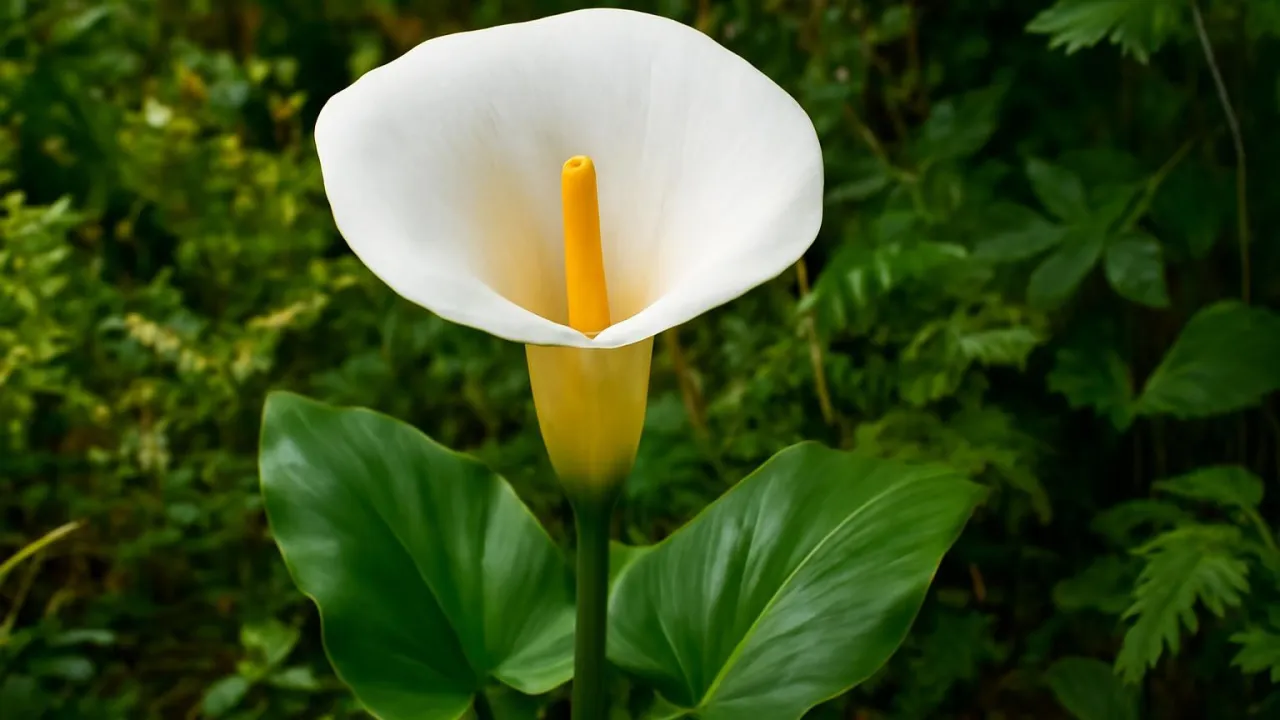
Calla lilies’ trumpet shape helps keep pollen safe from rain and wind.
✨ Word Sparks (Grade 2 Glossary)
Tap 🔊 to hear
petal
The pretty part of a flower that is often colorful
pollinator
An animal that helps flowers make seeds
moist
A little wet, not too dry or too wet
🪝
Have you ever seen a flower that looks like a trumpet?
1
What Does It Look Like?
Calla lilies have smooth white that curl like a trumpet. Their stems are tall and green. They look very elegant in gardens and bloom in spring.
2
Where Do They Grow?
These flowers grow in wet places like ponds and marshes. They need soil and some sunlight to grow well. People also plant them in gardens for decoration.
3
Why Are They Special?
Calla lilies attract bees and other with their shape. Their trumpet-like help protect the pollen inside. This helps the flower make seeds and grow new plants.
Calla lilies have a special spathe that protects pollen and attracts pollinators.
✨ Word Sparks (Grade 3 Glossary)
Tap 🔊 to hear
spathe
A big petal that covers the flower’s pollen
pollinator
An animal like a bee that helps flowers make seeds
adaptation
A special trait that helps a plant survive
🪝
Did you know the calla lily’s shape helps it survive in wet habitats?
1
Shape and Survival
The calla lily has a trumpet-shaped petal called a that protects its pollen. This shape helps keep rain from washing pollen away. It also attracts like bees and butterflies. This improves the flower’s chance to reproduce.
2
Where It Grows
Calla lilies grow in wetlands and near ponds where the soil is moist. These habitats provide the nutrients and water they need. Their roots soak up water to stay healthy. Wet environments help calla lilies thrive and bloom beautifully.
3
Life Cycle and Growth
Calla lilies start as bulbs underground. In spring, they sprout green stems and leaves. Then the trumpet-shaped flower blooms to attract . After pollination, the flower produces seeds to grow new plants.
4
Interesting Facts
Calla lilies are part of the Araceae family, which includes many tropical plants. Their smooth come in white and other colors. Some animals use calla lilies for shelter. These flowers play a role in their ecosystem by supporting .
2. Why do calla lilies grow near ponds and wetlands?
🤯 Mind-Blowing Fact • Grade 4
Calla lilies play an important role in wetlands by supporting pollinators and preventing soil erosion.
✨ Word Sparks (Grade 4 Glossary)
Tap 🔊 to hear
symbiotic
A helpful relationship between two living things
pollinator
An animal that moves pollen between flowers
invasive
A plant that spreads too much and harms others
🪝
How does the calla lily’s shape help it survive and support its ecosystem?
1
Shape Helps Protect Pollen
The calla lily’s trumpet-shaped spathe shields its pollen from rain and wind, which helps the flower reproduce successfully. This shape also attracts like bees, butterflies, and beetles that carry pollen to other flowers. Without this protection, the pollen could wash away or fail to reach other plants. This adaptation is crucial for the plant’s survival in wet environments.
2
Role in the Ecosystem
Calla lilies provide nectar and shelter for many , helping maintain healthy food webs in wetlands. In return, pollinators assist the flower by spreading pollen, which leads to seed production. This relationship supports biodiversity in their habitats. Additionally, calla lilies help stabilize wetland soil, preventing erosion and supporting other plants.
3
Where They Grow
Native to South Africa, calla lilies thrive in wetlands, marshes, and garden ponds worldwide. They prefer moist, nutrient-rich soil and partial sunlight, which allows them to grow tall and bloom vibrantly. Humans cultivate calla lilies globally for their beauty and use in floral arrangements. However, in some regions, they can become and affect native plants.
4
Human Impact and Care
Gardeners must provide consistent moisture and avoid dry soil to keep calla lilies healthy. Overwatering or poor drainage can harm their roots, so balanced care is essential. These flowers have been cultivated for centuries and hold cultural significance in weddings and art. Protecting their natural habitats ensures they continue to thrive in the wild.
1. How does the calla lily’s shape help it survive?
2. What role do calla lilies play in wetlands?
🤯 Mind-Blowing Fact • Grade 5
Calla lilies have evolved specialized structures that protect pollen and support diverse pollinators in wetlands worldwide.
✨ Word Sparks (Grade 5 Glossary)
Tap 🔊 to hear
spadix
A flower spike with many tiny flowers
rhizome
A thick root that stores water and nutrients
invasive
A plant that spreads quickly and harms others
🪝
What unique features allow the calla lily to thrive and impact ecosystems worldwide?
1
Scientific Classification and Origin
The calla lily, scientifically named Zantedeschia aethiopica, belongs to the Araceae family, which includes many tropical plants. It is native to the wetlands of South Africa, where it evolved to survive in moist, nutrient-rich soils. This species is one of several in the genus Zantedeschia, known for their distinctive spathes and spadices. Its botanical classification helps scientists understand its relationships to other flowering plants.
2
Physiological Adaptations and Mechanics
The calla lily’s large, trumpet-shaped spathe surrounds a central that holds tiny flowers producing pollen and nectar. This structure protects reproductive parts from rain and wind, ensuring pollination success. Its thick, rhizomatous roots store water and nutrients, allowing the plant to survive in fluctuating wetland conditions. The plant’s leaves are broad and glossy, maximizing photosynthesis in partial sunlight.
3
Ecological Role and Conservation
Calla lilies contribute to wetland ecosystems by providing nectar and shelter for diverse pollinators, including bees, butterflies, and beetles. Their presence supports complex food webs and promotes biodiversity. While widely cultivated worldwide for ornamental use, some regions consider calla lilies due to their rapid spread. Conservation efforts focus on protecting native wetland habitats and managing invasive populations to maintain ecological balance.
4
Botanical History and Human Uses
Humans have cultivated calla lilies for centuries, appreciating their elegant flowers in art, weddings, and gardens. The plant’s symbolism often represents purity and beauty. Historically, indigenous peoples used parts of the plant for medicinal purposes, though it is toxic if ingested improperly. Modern horticulture continues to develop hybrid varieties with diverse colors and sizes for decorative use.
5
Quantitative Comparisons and Growth
Calla lilies typically grow between two and three feet tall, with spathes measuring up to eight inches long. Their growth rate depends on water availability and temperature, thriving best in temperatures from 60 to 75 degrees Fahrenheit. Compared to other wetland plants, calla lilies have a moderate growth speed but produce large, showy flowers that attract many pollinators. Their ability to adapt to various environments makes them successful worldwide.