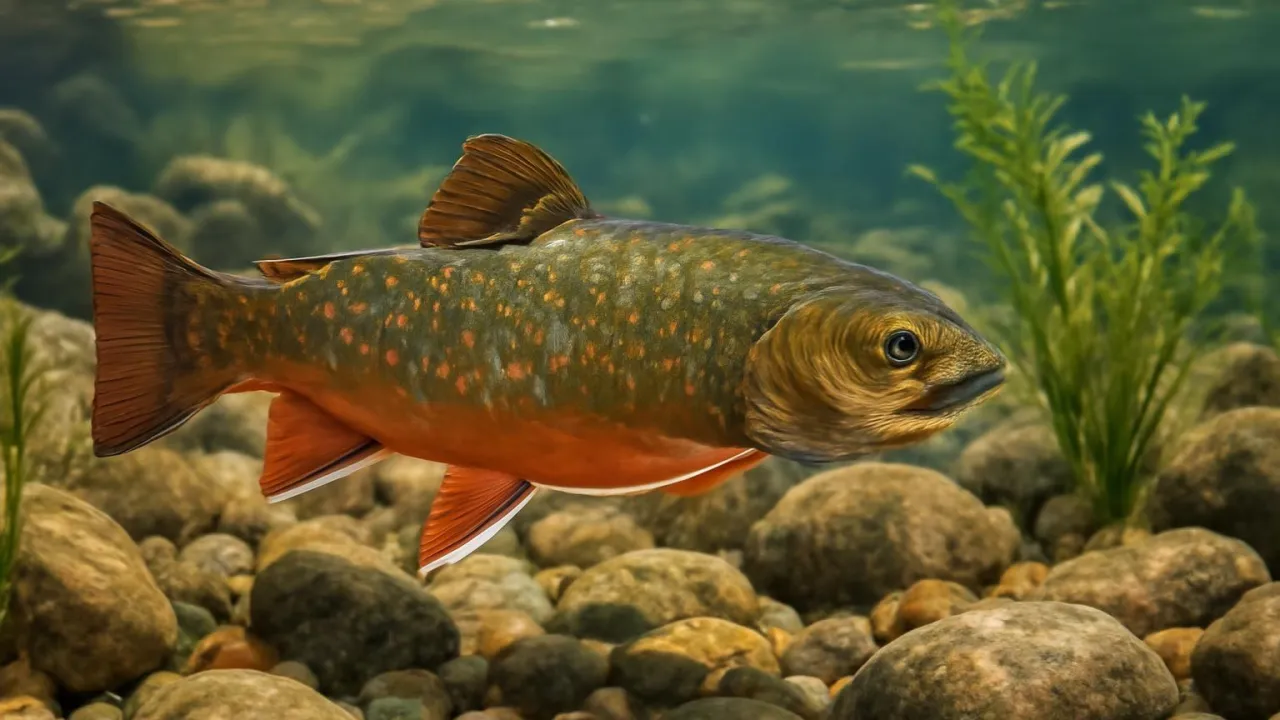
Brook trout can live in water as cold as 34 degrees Fahrenheit!
✨ Word Sparks (Grade 2 Glossary)
Tap 🔊 to hear
fins
Body parts fish use to swim
crustaceans
Small animals with hard shells
camouflage
Colors that help animals hide
🪝
Have you seen a fish with bright red and yellow spots hiding in a stream?
1
Colorful Fish with Spots
Brook trout have bright red and yellow spots all over their shiny body. Their have white edges that look like tiny flags. These colors help them hide from bigger fish that want to eat them.
2
Cold Water Home
They live in cold, clear streams and lakes where the water is clean and fresh. The brook trout swim quickly in these waters to find food and avoid danger. They need cool water to stay healthy and strong.
3
Eating Small Creatures
Brook trout eat insects, small fish, and tiny that live in the water. They have sharp teeth to catch their food easily. As they grow, they eat more to get the energy they need.
Brook trout can see colors underwater, which helps them find food and mates.
✨ Word Sparks (Grade 3 Glossary)
Tap 🔊 to hear
camouflage
Colors that help animals hide
predator
An animal that hunts others
redd
A nest where fish lay eggs
🪝
Did you know brook trout use camouflage to hide in rocky streams?
1
Camouflage and Coloration
Brook trout have bright red and yellow spots that help them blend into rocky stream beds. This protects them from like bigger fish and birds. Their fins have white edges that make them look like waving flags in the water. These colors also help them attract mates during spawning season.
2
Habitat and Adaptations
Brook trout live in cold, clear streams and lakes where oxygen levels are high. They need clean water to survive and avoid pollution. Their bodies are streamlined, allowing them to swim quickly to escape . They can also survive in water temperatures as low as 34 degrees Fahrenheit.
3
Diet and Feeding
These fish eat insects, small fish, and crustaceans found in their freshwater habitats. Their sharp teeth help them catch slippery prey easily. Brook trout play a role in controlling insect populations in their ecosystem. They must eat enough nutrients to grow and reproduce successfully.
4
Life Cycle and Growth
Brook trout begin life as eggs laid in gravel nests called . The eggs hatch into tiny fry that hide under rocks for protection. As they grow, they move to deeper parts of streams or lakes. They reach adult size around two years old and can live up to seven years.
Brook trout’s white-edged fins help break their outline, making them harder to spot by predators.
✨ Word Sparks (Grade 4 Glossary)
Tap 🔊 to hear
adaptation
A change that helps animals survive
ecosystem
All living things in one place
spawning
When fish lay eggs to make babies
🪝
How do brook trout’s bright spots help them survive in cold streams?
1
Camouflage and Survival
Brook trout’s bright red and yellow spots create effective camouflage that helps them avoid predators in rocky stream environments. This allows them to blend seamlessly with colorful stones and plants, reducing their chances of being eaten. Their white-edged fins also disrupt their outline, confusing predators further. Because of this, brook trout can live longer and reproduce more successfully.
2
Role in the Ecosystem
Brook trout play an important role in freshwater food webs by controlling insect populations and serving as prey for larger animals like birds and mammals. Their feeding habits help keep aquatic insect numbers balanced, which supports healthy stream . Humans also value brook trout for recreational fishing, which can impact their populations if not managed properly. Conservation efforts focus on protecting their cold, clean water habitats from pollution and warming.
3
Habitat and Geographic Range
Brook trout are native to eastern North America, especially in the Appalachian Mountains and Great Lakes regions. They thrive in cold, oxygen-rich streams and lakes with temperatures usually below 68 degrees Fahrenheit. Pollution, habitat destruction, and climate change threaten many brook trout populations. Some have been introduced to western states and other countries, where they sometimes compete with native fish species.
4
Life Cycle and Growth Patterns
Brook trout spawn in gravel nests called redds during fall, where females lay eggs that hatch in early spring. Fry remain hidden under rocks and vegetation to avoid predators as they grow. They reach maturity around two years old and can live up to seven years in the wild. Growth rates depend on water temperature, food availability, and habitat quality.
Brook trout are actually chars, not true trout, because of their unique genetics and body features.
✨ Word Sparks (Grade 5 Glossary)
Tap 🔊 to hear
Salvelinus
The genus name for char fish
mucus
Slimy skin coating that protects fish
redd
Gravel nest where fish lay eggs
🪝
Did you know brook trout belong to the char genus and have unique adaptations for cold waters?
1
Scientific Classification and Taxonomy
Brook trout, scientifically known as fontinalis, belong to the Salmonidae family and the genus Salvelinus, which includes chars. Unlike true trout in the genus Oncorhynchus, brook trout are technically chars due to their unique genetic and morphological traits. They are native to eastern North America but have been introduced worldwide for sport fishing. Their taxonomic classification helps scientists understand their evolutionary relationships and ecological roles.
2
Physiological Adaptations and Mechanics
Brook trout have streamlined bodies and muscular tails that enable swift swimming in fast-flowing streams. Their skin produces that reduces friction and protects against parasites. The bright red and yellow spots, combined with white-edged fins, provide camouflage by disrupting their outline in dappled light environments. Their gills efficiently extract oxygen from cold, well-oxygenated water, supporting high metabolic rates necessary for active predation.
3
Conservation and Environmental Challenges
Brook trout populations face threats from habitat degradation, pollution, and climate change, which raise water temperatures beyond their tolerance. Conservation programs focus on restoring cold-water habitats, controlling invasive species, and monitoring water quality. Some populations are considered indicators of stream health because they require pristine conditions. Efforts include public education and regulations to maintain sustainable fishing practices.
4
Ecological Role and Human Impact
As mid-level predators, brook trout regulate aquatic insect populations and serve as prey for larger fish, birds, and mammals, maintaining balanced food webs. Recreational fishing creates economic benefits but can lead to overharvesting if unmanaged. Introductions outside their native range sometimes disrupt local ecosystems by competing with native species. Understanding these impacts helps guide responsible environmental stewardship.
5
Quantitative Comparisons and Life History
Brook trout typically grow up to 20 inches (50 cm) in length and weigh up to 5 pounds (2.3 kg). They prefer water temperatures between 34 and 68 degrees Fahrenheit (1 to 20 degrees Celsius). Their spawning occurs in fall when females dig in gravel beds, laying hundreds to thousands of eggs. Growth rates vary with food availability and temperature, with individuals living up to seven years in the wild.