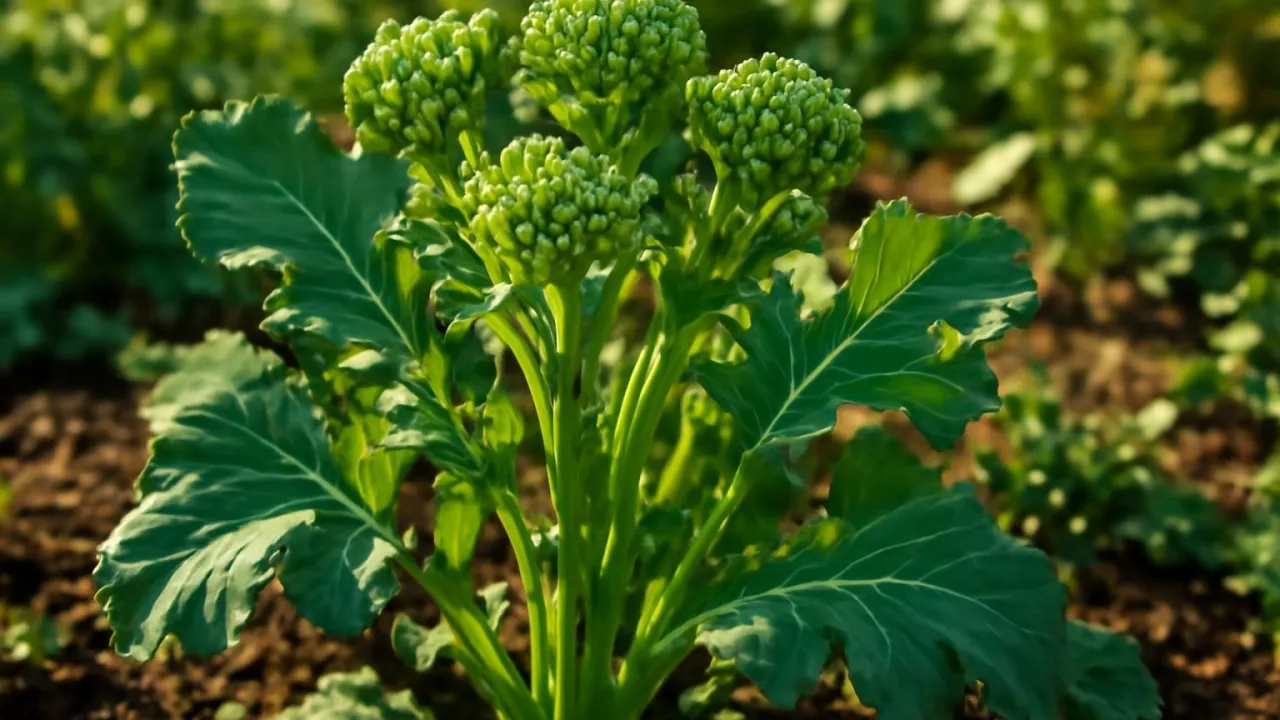
Broccoli rabe is full of vitamins that help your body stay strong and healthy!
✨ Word Sparks (Grade 2 Glossary)
Tap 🔊 to hear
bitter
A sharp taste that is not sweet
vitamins
Nutrients that help your body grow
garden
A place where plants are grown
🪝
Have you ever tried a vegetable that tastes a little bitter and fresh?
1
Where It Grows
Broccoli rabe grows in warm places with lots of sun and water. It thrives in and farms where the soil is soft and moist. This vegetable needs plenty of sunlight to grow healthy leaves and small flower buds.
2
How It Looks
This vegetable has long, thin green leaves and small buds that look like tiny trees. The leaves are slightly rough and have a strong smell when cooked. The plant grows about one to two feet tall and has thin stems.
3
A Special Taste
Broccoli rabe tastes but is very healthy and full of . People cook it in many tasty dishes to enjoy its unique flavor. Cooking can soften the bitterness and make it easier to eat.
1. What kind of places does broccoli rabe grow in?
2. What is special about broccoli rabe’s taste?
🤯 Mind-Blowing Fact • Grade 3
Broccoli rabe’s bitter taste helps protect it from animals that want to eat it!
✨ Word Sparks (Grade 3 Glossary)
Tap 🔊 to hear
predator
An animal that eats other animals or plants
pollinator
An insect that helps plants make seeds
nutrients
Food parts that help plants and animals grow
🪝
Did you know broccoli rabe uses its bitter taste to protect itself from hungry animals?
1
Broccoli Rabe’s Habitat
Broccoli rabe grows mainly in the Mediterranean region where the climate is warm and sunny. It thrives in gardens and farms with well-watered soil. This leafy vegetable prefers full sunlight to grow strong and healthy. It is often harvested before it flowers to keep its flavor mild.
2
Physical Features and Adaptations
The plant has long, narrow green leaves and small flower buds that look like tiny broccoli heads. Its bitter taste acts as a natural defense to keep from eating it. This adaptation helps broccoli rabe survive in the wild. The leaves also contain many that help the plant grow.
3
Role in the Ecosystem
Broccoli rabe is part of the food web, providing to insects and animals that can tolerate its bitterness. It also helps like bees when it flowers. The plant’s nutrients enrich the soil after it decomposes. Farmers grow broccoli rabe because it is healthy for people and the environment.
4
How It Grows and Grows
Broccoli rabe starts from seeds planted in spring or fall. It grows quickly in about 40 to 60 days. The plant needs regular watering and sunlight to develop its leaves and buds. Harvesting before flowering keeps its flavor less bitter and more tender for cooking.
Cooking broccoli rabe reduces its bitterness, making it a favorite in many dishes worldwide!
✨ Word Sparks (Grade 4 Glossary)
Tap 🔊 to hear
herbivore
An animal that eats only plants
ecosystem
A community of plants, animals, and environment
sustainable
Using resources without harming nature
🪝
How does broccoli rabe’s bitterness affect the animals and people around it?
1
Broccoli Rabe’s Growing Conditions
Broccoli rabe grows best in the Mediterranean region where warm temperatures and plenty of sunlight allow it to thrive. It prefers well-drained soil and regular watering to develop its tender leaves and flower buds. If the plant receives too little water or sun, its growth slows and bitterness can increase. Farmers carefully manage these conditions to produce the best-tasting vegetables.
2
Bitter Taste and Survival
The bitter compounds in broccoli rabe act as a natural defense against many that might otherwise eat it. This bitterness reduces damage from predators and helps the plant survive longer. However, some animals have adapted to tolerate the bitter taste and still feed on it. For people, cooking broccoli rabe can reduce bitterness and make it more enjoyable to eat.
3
Role in Ecosystems and Humans
Broccoli rabe plays an important role in food webs by providing nutrients to insects and animals that can tolerate its bitterness. It also supports pollinators like bees during flowering, which helps maintain healthy . Humans cultivate broccoli rabe for its nutritional benefits, including vitamins A, C, and K. farming practices help protect the environment while growing this vegetable.
4
Geographic Distribution and Farming
Originally from the Mediterranean, broccoli rabe is now grown worldwide in temperate climates. It is popular in Italian and Asian cuisines due to its distinctive flavor. Farmers plant broccoli rabe in spring or fall to avoid extreme heat, which can increase bitterness. Proper harvesting before flowering ensures tender leaves and buds for cooking.
1. Why do some animals avoid eating broccoli rabe?
2. How does cooking affect broccoli rabe’s taste?
🤯 Mind-Blowing Fact • Grade 5
Broccoli rabe contains natural compounds that both protect it and provide health benefits to people!
✨ Word Sparks (Grade 5 Glossary)
Tap 🔊 to hear
glucosinolates
Natural chemicals that give plants a sharp taste
cruciferous
Plants like broccoli and cabbage with cross-shaped flowers
biodiversity
Variety of plants and animals in nature
🪝
What makes broccoli rabe a unique leafy vegetable in both science and cooking?
1
Scientific Classification and Origins
Broccoli rabe, scientifically known as Brassica rapa subsp. ruvo, belongs to the Brassicaceae family, which includes cabbage and mustard. It is native to the Mediterranean basin, where it has been cultivated for centuries for its edible leaves and flower buds. Unlike common broccoli, broccoli rabe is harvested before flowering, emphasizing its leafy greens. Its botanical classification highlights its close relationship to other vegetables.
2
Physiological Features and Growth Mechanisms
This vegetable grows to about 12 to 24 inches tall and requires full sun exposure and consistent moisture for optimal development. The plant produces bitter compounds that act as natural pest deterrents and contribute to its sharp flavor. Its leaves are rich in vitamins A, C, and K, which support human health. The flowering buds resemble tiny broccoli heads but are harvested early to maintain tenderness and reduce bitterness.
3
Conservation, Cultivation, and Historical Use
Broccoli rabe has long been a staple in Mediterranean diets and is now cultivated worldwide, especially in temperate climates. Sustainable farming practices are important to preserve soil health and reduce pesticide use while growing this crop. Historically, it was valued for its medicinal properties and nutritional benefits. Today, it remains a popular vegetable in Italian, Chinese, and other cuisines, appreciated for its unique flavor and health benefits.
4
Quantitative Comparisons and Nutritional Value
Compared to common broccoli, broccoli rabe grows faster, maturing in about 40 to 60 days, and reaches heights up to 24 inches. It contains higher levels of vitamin K and iron per serving than many leafy greens. The bitter in broccoli rabe also provide antioxidant properties. Cooking methods like blanching reduce bitterness and enhance flavor, making it a versatile vegetable in many recipes.
5
Ecological and Agricultural Impact
Broccoli rabe supports pollinators such as bees during its flowering stage, contributing to . Its cultivation requires moderate water and nutrient inputs, making it suitable for sustainable agriculture. By integrating broccoli rabe into crop rotations, farmers can improve soil structure and reduce pest cycles. This leafy vegetable’s resilience and nutritional profile make it valuable both ecologically and economically.