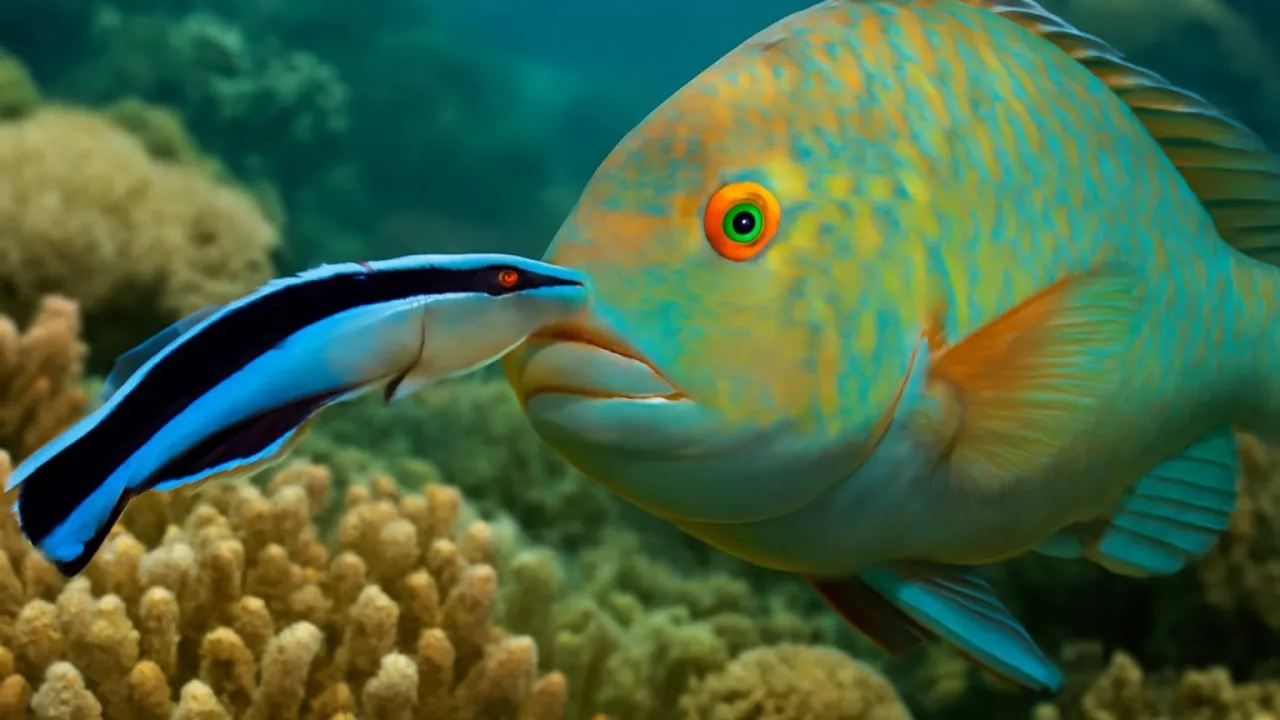
Cleaner wrasses can clean over 2,000 fish in one day!
✨ Word Sparks (Grade 2 Glossary)
Tap 🔊 to hear
coral
Tiny animals that build hard homes
station
A special place for a job
healthy
Feeling good and not sick
🪝
Did you know some fish act like underwater cleaners for other fish?
1
Blue Streaks in the Water
The bluestreak cleaner wrasse has a shiny blue stripe and a long thin body. It swims quickly around reefs, darting between rocks and coral. These fish are small, but their bright colors make them easy to spot.
2
A Special Cleaning Job
Wrasses eat parasites and dead skin off bigger fish, which helps keep everyone . The big fish wait patiently for their turn, even opening their mouths wide. The wrasse gets a meal, and the other fish feel better.
3
Life on the Reef
Cleaner wrasses live in warm ocean reefs, where many fish gather. They set up special cleaning where fish come for help. This teamwork keeps the reef community strong and .
Cleaner wrasses can remember different fish and greet their favorites first!
✨ Word Sparks (Grade 3 Glossary)
Tap 🔊 to hear
symbiotic
Two animals helping each other
adaptation
A special body part for survival
ecosystem
A place where living things interact
🪝
How does a tiny fish become the doctor of the coral reef?
1
A Colorful Little Cleaner
The bluestreak cleaner wrasse is famous for its bright blue stripe and slender body. It lives in the warm, shallow waters of coral reefs, where many sea creatures gather. This fish only grows to about five inches long, but it is easy to spot. Its striking colors signal that it is a special helper in the ocean.
2
How Cleaning Helps
The wrasse’s job is to eat parasites and dead skin from larger fish. These pests can make fish sick, so the wrasse helps keep them healthy. Fish often line up at 'cleaning stations' and wait their turn for a cleaning. This is called a relationship, because both animals benefit.
3
Amazing Adaptations
Cleaner wrasses have a long, narrow mouth that lets them pick tiny parasites off fish. They even swim into the open mouths and gills of bigger fish to clean inside! Their bold stripe acts as a signal, so other fish know not to eat them. This keeps the wrasse safe while it works.
4
Life in the Reef Community
Bluestreak cleaner wrasses are important to the coral reef . By cleaning other fish, they help keep the whole community healthy. Without them, parasites would spread quickly and harm many reef animals. These tiny fish play a big role in ocean life.
Cleaner wrasses can perform a special 'dance' to invite fish to their cleaning stations!
✨ Word Sparks (Grade 4 Glossary)
Tap 🔊 to hear
mutualistic
Both animals get something good
mucus
A slimy layer on skin or gills
infection
When germs make something sick
🪝
What if you could spot a fish spa just by its bright blue signal?
1
The Blue Stripe Signal
Imagine swimming through a coral reef and seeing a flash of electric blue weaving through the water. That bright stripe belongs to the bluestreak cleaner wrasse, a small fish with a huge job. Its color is not just for show—it tells bigger fish that it is safe to approach. These wrasses grow to about 4.7 inches (12 centimeters) and spend their lives darting among coral and rocks.
2
Cleaning for Survival
Cleaner wrasses set up cleaning stations where fish of all sizes gather to be cleaned. They remove parasites, dead skin, and from their clients, which helps prevent disease and . The wrasse gets a steady food supply, while the larger fish stay healthy and comfortable. This relationship is a key example of symbiosis in reef ecosystems.
3
Adaptations and Behavior
The bluestreak cleaner wrasse has a slender body and a pointed mouth, perfect for picking parasites from hard-to-reach places. It even swims into the mouths and gills of much bigger fish, which trust the wrasse not to harm them. Their bold blue stripe and unique dance-like swimming signal their cleaning role, reducing the risk of being eaten. Scientists have discovered that wrasses can recognize individual fish and may even provide better service to regular visitors.
4
A Vital Role in the Reef
These little fish are crucial to the health of coral reefs, as they help control parasite populations and keep fish healthy. Without cleaner wrasses, many reef fish would suffer from more diseases and stress, which could upset the entire reef ecosystem. Their work supports the balance of life in the reef, making them one of the most important small fish in the ocean.
2. What special adaptation helps the wrasse clean?
🤯 Mind-Blowing Fact • Grade 5
Cleaner wrasses can recognize themselves in a mirror, showing signs of self-awareness rare in fish!
✨ Word Sparks (Grade 5 Glossary)
Tap 🔊 to hear
mutualism
When two species both get benefits
keystone species
A species that holds its ecosystem together
parasite load
How many parasites an animal carries
🪝
What if your doctor, dentist, and spa therapist were all the same tiny fish?
1
Meet the Bluestreak Cleaner Wrasse
Labroides dimidiatus, known as the bluestreak cleaner wrasse, is a small ray-finned fish native to coral reefs in the Indian and Pacific Oceans. This species is easily identified by its vivid electric blue stripe running from snout to tail and its slender, elongated body. Adult cleaner wrasses typically reach a maximum length of 4.7 inches (12 centimeters), making them one of the smaller members of the wrasse family. Despite their size, their coloration and unique behavior make them highly visible on the reef. Scientists classify them in the family Labridae, a group known for their diverse shapes and ecological roles.
2
The Cleaning Mechanism
Cleaner wrasses perform a remarkable ecological service by removing parasites, dead skin, and excess mucus from larger 'client' fish. Their pointed snouts and specialized mouths allow them to pick parasites from gills, scales, and even inside open mouths without harming their clients. During cleaning events, some client fish adopt special postures, spreading their fins and opening their mouths wide to allow the wrasse access. A single cleaner wrasse may service up to 2,300 fish per day, consuming hundreds of parasites and skin flakes. This cleaning behavior is considered a classic example of , where both species benefit from the interaction.
3
Adaptations and Social Intelligence
The bluestreak cleaner wrasse has evolved not only physical adaptations but also impressive behavioral skills for survival. Its bold coloration and distinctive 'dance' movements signal to potential clients and deter would-be predators from eating them. Studies show that cleaner wrasses can recognize individual fish clients and may provide better or faster service to frequent visitors, demonstrating advanced social learning. Their ability to remember and prioritize clients helps maintain trust and reduces the risk of being eaten. In rare cases, wrasses may 'cheat' by nipping healthy tissue, but most quickly return to honest cleaning to keep their reputation.
4
Vital Role in Coral Reef Ecosystems
Cleaner wrasses are in coral reef ecosystems, meaning their presence greatly affects the health and balance of the community. By reducing , they improve the growth, survival, and reproductive success of many reef fish species. Without cleaner wrasses, parasite populations would rise, leading to more disease and potentially disrupting the entire food web. Their cleaning stations attract a wide variety of fish, from tiny damselfish to large groupers, making them central players in reef biodiversity. Human activities such as overfishing and reef destruction threaten their habitats, which could have ripple effects across the ecosystem.
5
Conservation and Scientific Discovery
Although bluestreak cleaner wrasses are not currently endangered, their dependence on healthy coral reefs makes them vulnerable to climate change and habitat loss. Coral bleaching and pollution can reduce the number of cleaning stations, affecting both the wrasses and the fish that rely on them. Scientists study cleaner wrasses to better understand , animal intelligence, and the importance of biodiversity in marine environments. Quantitative research shows that reefs with active cleaner wrasses have up to 50% fewer on fish compared to reefs without them. Protecting these tiny cleaners helps safeguard the health of entire coral reef systems.