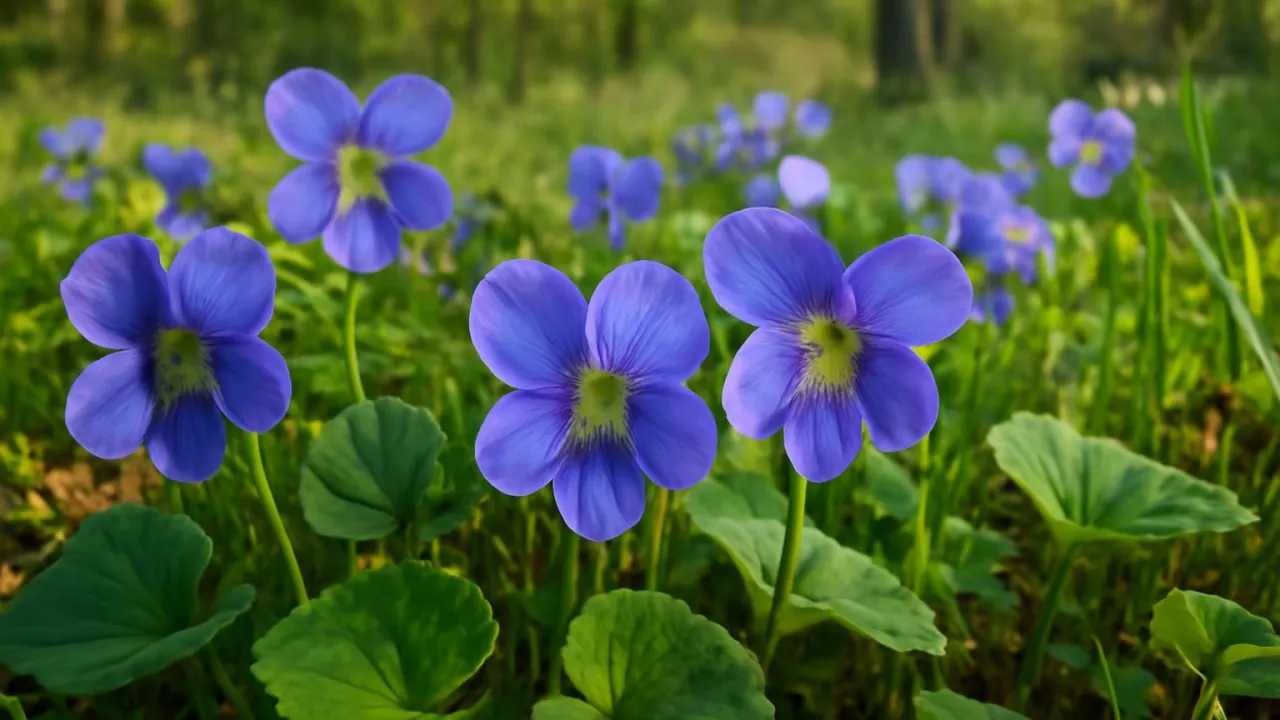
Blue violets can bloom even under snow or frost in early spring!
✨ Word Sparks (Grade 2 Glossary)
Tap 🔊 to hear
pollinate
When bees help flowers make seeds
moist
A little wet, not too dry or too wet
nectar
Sweet juice inside flowers that bees like
🪝
Have you ever seen a tiny flower with bright blue petals?
1
Bright Blue Flowers
Blue violets have petals that are blue and purple. They are small flowers that grow close to the ground. Their bright colors help them stand out to bees and butterflies.
2
Where They Grow
These flowers grow in shady places like forests and meadows. They like soil that stays and cool. Blue violets often bloom in early spring when it is still chilly outside.
3
How They Survive
Blue violets need water and some sunlight to grow well. Bees visit them to collect and help the flowers. This helps the plants make seeds to grow new flowers.
Blue violets can bloom through frost, making them one of the earliest spring flowers!
✨ Word Sparks (Grade 3 Glossary)
Tap 🔊 to hear
pollination
When pollen moves to help flowers make seeds
adaptation
A change that helps plants or animals survive
nutrients
Food and minerals plants get from soil
🪝
Did you know blue violets use bright colors to trick bees into visiting?
1
Bright Petals and Camouflage
Blue violets have bright blue-purple petals that attract pollinators like bees. Their color stands out against green leaves, helping bees find nectar easily. The petals also help the flower blend into shaded woodland areas, protecting it from some predators.
2
Where Blue Violets Live
These flowers grow mainly in eastern North America’s woodlands and meadows. They prefer moist, shaded soil that provides for growth. Their habitat helps them stay cool and safe from harsh sun or drought.
3
Life Cycle and Pollination
Blue violets bloom in early spring, sometimes even through frost or snow. Bees visit the flowers to collect nectar, which helps pollinate the plants. allows the flower to produce seeds for new violet plants to grow next year.
4
How They Survive Challenges
Blue violets adapt to shady environments by growing low to the ground where moisture is higher. Their leaves capture sunlight efficiently in low light. This helps the plant survive in forests where sunlight is limited.
Blue violets bloom early and help many pollinators start their spring work!
✨ Word Sparks (Grade 4 Glossary)
Tap 🔊 to hear
pollination
When pollen moves to help flowers make seeds
ecosystem
A community of plants and animals living together
adaptation
A change that helps plants or animals survive
🪝
How do blue violets survive cold springs and shady forests with bright colors?
1
Bright Petals and Ecosystem Roles
Blue violets have bright blue-purple petals that attract pollinators such as bees and butterflies, which are essential for . This pollination helps produce seeds, supporting the plant’s reproduction and the food web. Many small animals also feed on violet seeds, linking the plant to forest .
2
Habitat and Geographic Distribution
Blue violets grow mainly in eastern North America’s woodlands and meadows, thriving in moist, shaded environments. Their preference for partial shade and rich soil allows them to avoid harsh sunlight and drought stress. This distribution shows how plants adapt to different climates and .
3
Adaptations and Survival Strategies
These flowers bloom early in spring, sometimes even through frost, giving them a head start before many other plants. Their low growth helps maintain moisture and avoid damage from wind or animals. Their leaves efficiently capture sunlight in shaded areas, an important for survival.
4
Human Impact and Conservation
Blue violets often grow in natural forests but can be affected by habitat loss due to urban development. They are important for pollinators and local , so conserving woodland habitats helps protect these flowers. Gardening with native plants like blue violets supports biodiversity.
Blue violets use ants to carry their seeds, helping the plant spread far and wide!
✨ Word Sparks (Grade 5 Glossary)
Tap 🔊 to hear
myrmecochory
Seed spreading by ants carrying seeds to new places
pollination
Transfer of pollen to help flowers make seeds
understory
The shaded layer of plants under tall trees
🪝
What makes the blue violet a resilient early bloomer in eastern North American forests?
1
Scientific Classification and Habitat
The blue violet, scientifically named Viola sororia, belongs to the Violaceae family and is native to eastern North America. It thrives in temperate woodlands and meadows where partial shade and moist, nutrient-rich soils prevail. This species is well adapted to the environment, often blooming in early spring before tree leaves fully develop.
2
Physiological Adaptations for Survival
Blue violets have broad heart-shaped leaves with a waxy coating that reduces water loss in shaded habitats. Their low stature minimizes exposure to wind and conserves moisture near the soil surface. The flowers produce nectar and vibrant blue-purple petals that attract a variety of pollinators, including bees and butterflies, facilitating effective .
3
Reproductive Strategies and Life Cycle
Blooming as early as March, blue violets can withstand frost and even light snow, which extends their reproductive window. Pollinators transfer pollen between flowers, enabling seed production. Seeds are dispersed both by animals and a unique mechanism called , where ants carry seeds to new locations, enhancing plant spread.
4
Conservation and Human Impact
Although blue violets are common, urbanization and habitat fragmentation threaten their natural populations. Protecting woodland habitats and promoting native plant gardening can help conserve this species. Blue violets also serve as host plants for fritillary butterfly larvae, highlighting their ecological importance.
5
Quantitative Comparisons and Ecological Role
Blue violets typically grow 4 to 8 inches tall (10 to 20 centimeters), producing flowers about 0.5 to 1 inch wide (1.3 to 2.5 centimeters). Their early blooming period precedes many other wildflowers, allowing them to supply nectar when few other plants do. This timing supports pollinator populations crucial for ecosystem health.