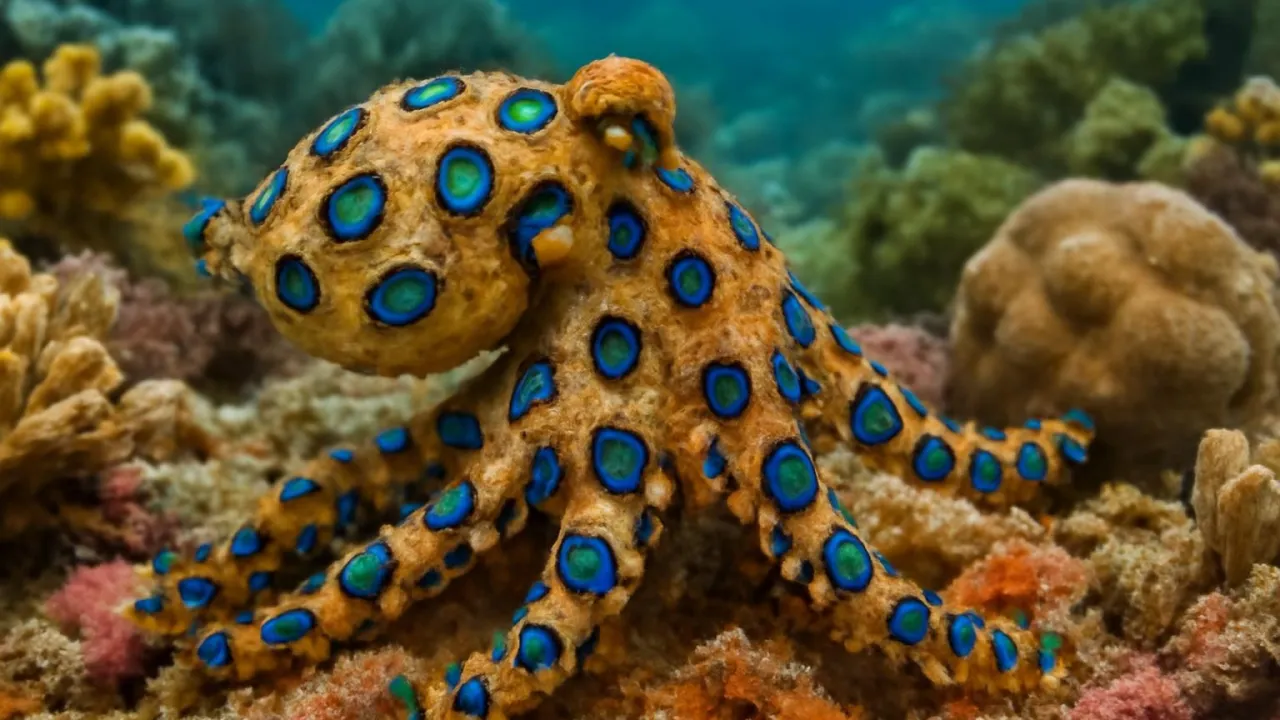
Despite its tiny size, the blue-ringed octopus has venom strong enough to stop a human’s breathing!
✨ Word Sparks (Grade 2 Glossary)
Tap 🔊 to hear
venom
Poison that can hurt or stop animals
habitat
The place where an animal lives
prey
Animals that other animals eat
🪝
Have you ever seen an octopus with glowing blue rings on its body?
1
Bright Warning Rings
The blue-ringed octopus shows bright blue rings when it feels scared or angry. These glowing rings warn other animals to stay away. The rings flash quickly to send a clear message.
2
Small Size and Habitat
This octopus is very small, about the size of a golf ball. It lives in coral reefs and tide pools in the Pacific Ocean. It hides in tiny cracks and shells to stay safe.
3
What It Eats
It eats small crabs, shrimp, and shellfish. The octopus uses its sharp beak to catch and eat its . It hunts mostly at night when it is harder to see.
1. Why does the blue-ringed octopus flash its blue rings?
2. Where does the blue-ringed octopus live?
🤯 Mind-Blowing Fact • Grade 3
The blue-ringed octopus’s venom contains tetrodotoxin, which is 1,000 times more toxic than cyanide!
✨ Word Sparks (Grade 3 Glossary)
Tap 🔊 to hear
camouflage
Colors that help animals hide from others
predator
An animal that hunts other animals
venom
Poison that animals use to defend or hunt
🪝
How does the blue-ringed octopus use its glowing rings to survive in the ocean?
1
Warning with Bright Blue Rings
The blue-ringed octopus uses bright blue rings as a warning sign to . These rings glow when the octopus feels threatened or scared. This form of helps it avoid being eaten by showing danger. The glowing rings are a special adaptation to protect itself.
2
Small Size and Camouflage
This octopus is very small, about eight inches long, and can hide well in coral reefs. Its body color changes to match its surroundings for . This helps it avoid by blending into rocks and sand. The octopus’s ability to change color is an important survival skill.
3
Hunting and Diet
The blue-ringed octopus hunts small crabs, shrimp, and shellfish at night. It uses its strong beak to catch and eat prey quickly. This octopus is a in its ecosystem, helping control crab and shrimp populations. Its also helps it capture prey safely.
4
Venom and Defense
The blue-ringed octopus produces that can stop a ’s breathing. This venom is powerful enough to be deadly to humans. The glowing blue rings warn others to stay away before the octopus uses its venom. This defense mechanism is very effective in keeping the octopus safe.
1. What does the octopus’s glowing rings warn about?
2. How does camouflage help the blue-ringed octopus?
🤯 Mind-Blowing Fact • Grade 4
Blue-ringed octopuses’ venom can cause paralysis in minutes, making them one of the ocean’s most dangerous animals.
✨ Word Sparks (Grade 4 Glossary)
Tap 🔊 to hear
ecosystem
All plants and animals living together
venomous
Animals that have poison to defend themselves
conservation
Saving nature and animals from harm
🪝
Why do blue-ringed octopuses flash their glowing rings, and how does this affect their ocean home?
1
Bright Rings as a Warning Signal
Blue-ringed octopuses flash their bright blue rings to warn predators that they are and dangerous. This warning helps prevent attacks and keeps the octopus safe in its coral reef habitat. The flashing rings are a clear cause-and-effect signal to other animals. This defense reduces the chance of harm and helps maintain balance in the .
2
Role in the Food Web
As a predator, the blue-ringed octopus helps control populations of small crabs and shrimp. By hunting these animals, it keeps their numbers balanced and supports coral reef health. The octopus also serves as prey for larger predators, creating a complex food web. Its defense influences how other animals interact with it and the reef community.
3
Habitat and Geographic Range
Blue-ringed octopuses live in tide pools and coral reefs across the Pacific Ocean, especially near Australia and Japan. They prefer shallow waters where they can hide in crevices and shells. Human activities like coastal development can threaten their habitats. Protecting coral reefs is important for the survival of this unique species.
4
Human Impact and Conservation
Although small, blue-ringed octopuses are important to marine and biodiversity. Pollution and habitat loss from human actions put pressure on their populations. Educating people about their venom and role in nature helps prevent harm to both humans and octopuses. efforts focus on protecting coral reefs and reducing pollution to keep their homes safe.
1. What happens when the octopus flashes its blue rings?
2. Why is protecting coral reefs important for the blue-ringed octopus?
🤯 Mind-Blowing Fact • Grade 5
The blue-ringed octopus’s venom is so powerful it can paralyze a human in minutes without any antivenom available.
✨ Word Sparks (Grade 5 Glossary)
Tap 🔊 to hear
tetrodotoxin
A poison that stops nerves from working
aposematic
Bright colors that warn of danger
biodiversity
Many different kinds of plants and animals
🪝
How do the blue-ringed octopus’s unique features and venom impact marine biology and human safety?
1
Taxonomy and Scientific Classification
The blue-ringed octopus belongs to the genus Hapalochlaena within the Octopodidae family. This genus includes several species known for their distinctive blue rings and potent venom. They are cephalopods, a class of mollusks characterized by bilateral body symmetry and a prominent head. Their evolutionary adaptations make them a fascinating subject in marine biology studies.
2
Physiological Mechanics of Venom and Defense
The venom of the blue-ringed octopus contains , a neurotoxin that blocks nerve signals to muscles. This toxin can cause paralysis and respiratory failure in seconds, making it highly effective for defense and prey capture. The octopus’s bright blue rings serve as signals to warn predators of its toxicity. This combination of chemical and visual defense is a remarkable evolutionary strategy.
3
Ecological Role and Conservation Challenges
Blue-ringed octopuses play a crucial role in coral reef ecosystems by regulating prey populations such as small crustaceans. Their presence helps maintain ecological balance and . However, habitat degradation due to pollution and climate change threatens their survival. Conservation efforts emphasize protecting coral reef habitats and raising public awareness about their ecological importance.
4
Botanical vs. Culinary Confusion and Human Interaction
Unlike some marine animals mistaken for food, the blue-ringed octopus is highly venomous and dangerous to humans. Its small size and bright warning rings help prevent accidental encounters. Educational programs highlight the importance of respecting marine wildlife and understanding the difference between edible seafood and venomous creatures. This knowledge promotes safer human interactions with ocean habitats.
5
Quantitative Comparisons and Remarkable Adaptations
Despite measuring only up to eight inches long, the blue-ringed octopus’s venom is 1,000 times more toxic than cyanide, making it one of the deadliest marine animals. Its rings can flash in less than a second to warn predators quickly. It can survive in water temperatures ranging from 68 to 82 degrees Fahrenheit. These adaptations demonstrate the octopus’s specialized niche in marine ecosystems.