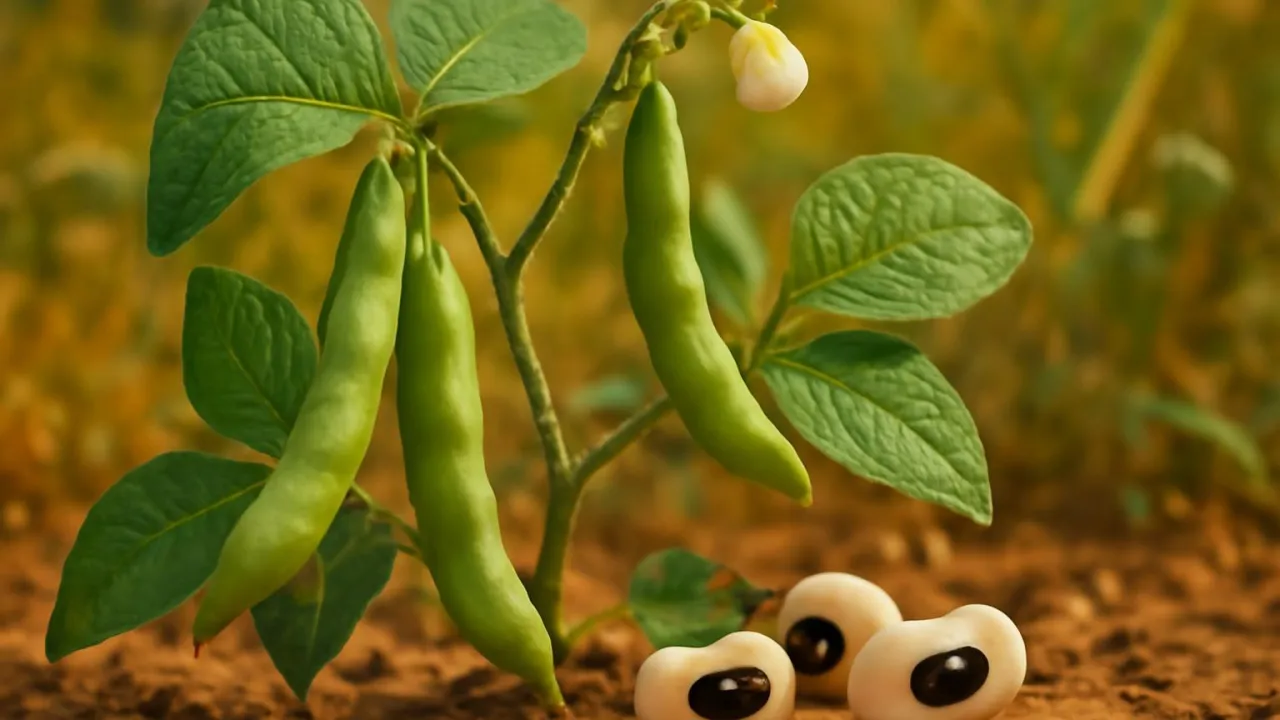
Black-eyed peas help the soil by adding nitrogen, which helps plants grow strong.
✨ Word Sparks (Grade 2 Glossary)
Tap 🔊 to hear
nitrogen
A nutrient that helps plants grow
habitat
The place where a plant lives
bean
A small seed that grows into a plant
🪝
Have you ever seen a bean with a black spot that looks like an eye?
1
What Are Black-Eyed Peas?
Black-eyed peas are small that have a black spot on their skin. They grow on green plants that can reach up to four feet tall. These beans are often cooked and eaten in many warm places around the world.
2
Where Do They Grow?
Black-eyed pea plants like warm weather and full sun to grow well. They need regular water but not too much. These plants are common in Africa, Asia, and parts of the southern United States.
3
A Special Feature
One cool thing about black-eyed peas is that their plants can help the soil. They add , a nutrient that helps other plants grow better nearby.
2. What special thing do black-eyed pea plants do for soil?
🤯 Mind-Blowing Fact • Grade 3
Black-eyed peas fix nitrogen in soil, making them natural helpers for other plants.
✨ Word Sparks (Grade 3 Glossary)
Tap 🔊 to hear
legume
A plant that grows beans or peas
nitrogen
A nutrient that helps plants grow strong
adaptation
A change that helps a plant survive
🪝
Did you know black-eyed peas have a tiny black spot that looks like an eye?
1
What Are Black-Eyed Peas?
Black-eyed peas are small with a distinctive black spot called an eye. These beans grow in pods on climbing plants that can reach several feet tall. The black spot helps people easily recognize these peas among other beans.
2
Where Do They Live and Grow?
Black-eyed pea plants thrive in warm, sunny habitats like Africa and southern parts of the United States. They need moderate water and well-drained soil to grow well. These plants are adapted to hot climates and can survive dry spells.
3
How Do They Help the Soil?
Black-eyed peas belong to a group of plants that fix in the soil through bacteria in their roots. This improves soil fertility by adding nutrients, which helps other plants grow better nearby.
4
Why Are They Useful to People?
People cook black-eyed peas in many dishes because they are nutritious and tasty. They provide protein and fiber, which help keep bodies healthy. The peas also play a role in food webs as a crop that supports farmers and animals.
1. What special ability helps black-eyed peas improve soil?
2. Why do people like to eat black-eyed peas?
🤯 Mind-Blowing Fact • Grade 4
Black-eyed peas naturally add nitrogen to soil, helping plants grow without extra fertilizer.
✨ Word Sparks (Grade 4 Glossary)
Tap 🔊 to hear
symbiotic
A helpful relationship between two living things
pollination
How plants make seeds with help from animals
fertilizer
A substance that helps plants grow better
🪝
How can tiny black-eyed peas help plants grow better in hot places?
1
Black-Eyed Peas and Their Habitat
Black-eyed peas grow best in warm climates with plenty of sunlight and moderate rainfall, such as parts of Africa and the southern United States. These plants have adapted to survive in hot, dry environments by developing deep roots that reach water below the surface. Their ability to tolerate drought makes them valuable in regions where water is scarce.
2
Nitrogen Fixation and Soil Health
The roots of black-eyed pea plants form a relationship with bacteria that fix nitrogen from the air into the soil. This natural process enriches the soil with nutrients, reducing the need for chemical and supporting sustainable farming practices. As a result, black-eyed peas improve soil quality for future crops.
3
Role in Ecosystems and Food Webs
Black-eyed peas serve as a food source for humans and animals, providing essential proteins and fibers. Their flowers attract pollinators like bees, which help other plants reproduce through , maintaining healthy ecosystems. These interactions support biodiversity and the balance of food webs.
4
Human Uses and Agricultural Impact
Farmers cultivate black-eyed peas as a valuable crop because they improve soil fertility and provide nutritious food. Their ability to grow in poor soils helps farmers in challenging environments produce food and earn income. Additionally, black-eyed peas are culturally significant in many communities worldwide.
Black-eyed peas fix nitrogen through bacteria in their roots, reducing fertilizer needs worldwide.
✨ Word Sparks (Grade 5 Glossary)
Tap 🔊 to hear
Fabaceae
The family of plants that grow beans and peas
Rhizobium
Bacteria that help plants get nitrogen
drought tolerance
Ability to survive with little water
🪝
Did you know black-eyed peas belong to a plant family that can improve soil health naturally?
1
Scientific Classification and Origins
Black-eyed peas, scientifically known as Vigna unguiculata, belong to the legume family . Originating in Africa, these plants have been cultivated for thousands of years and spread to Asia and the Americas due to their nutritional value and adaptability. Their long history shows how important they are to many cultures.
2
Physiological Mechanics of Nitrogen Fixation
The roots of black-eyed pea plants form nodules that house bacteria, which convert atmospheric nitrogen into ammonia usable by plants. This biological nitrogen fixation reduces the need for synthetic fertilizers and promotes sustainable agriculture. This process helps maintain soil health and supports crop growth naturally.
3
Botanical and Agricultural History
Historically, black-eyed peas have been a staple crop in warm regions, valued for their and ability to improve soil fertility. Their cultivation supports food security and has cultural significance in many societies, especially in southern United States cuisine. They are often eaten during celebrations for good luck.
4
Ecological Role and Food Web Contributions
Black-eyed peas provide essential proteins for humans and livestock, while their flowers attract pollinators such as bees, contributing to biodiversity. Their presence in crop rotations helps maintain soil health and reduces pest populations naturally. These ecological roles make them valuable beyond just food production.
5
Quantitative Comparisons and Growth Conditions
Black-eyed pea plants typically grow between 2 and 4 feet tall, producing pods containing 5 to 10 seeds each. They thrive in temperatures ranging from 77°F to 95°F (25°C to 35°C) and require moderate watering, making them suitable for semi-arid regions. Their seeds weigh about 0.1 grams each, making them lightweight but nutrient-rich.