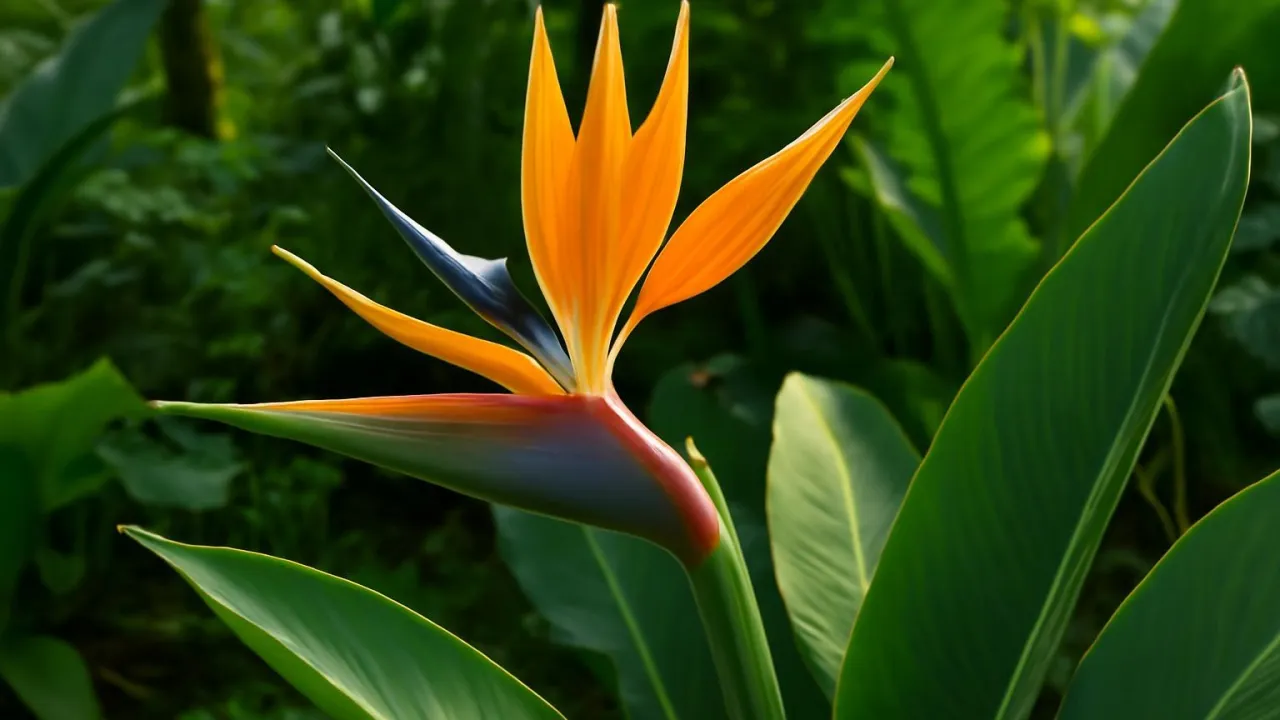
1. What colors does the Bird of Paradise flower have?
2. Where does the Bird of Paradise like to grow?
🤯 Mind-Blowing Fact • Grade 2
The Bird of Paradise flower is named because it looks just like a flying bird!
✨ Word Sparks (Grade 2 Glossary)
Tap 🔊 to hear
petals
The colorful parts of a flower
stem
The part that holds the flower up
sunny
A place with lots of sunlight
🪝
Have you ever seen a flower that looks like a bird flying?
1
Bright and Colorful Flower
The Bird of Paradise flower has bright orange and blue . It looks like a bird flying in the sky. The petals are sharp and pointy. This makes the flower very special and easy to spot.
2
Where It Grows
This flower grows best in warm, places with good water. It comes from South Africa where the weather is warm most of the year. People plant it in gardens to make them look beautiful and bright.
3
How It Grows Tall
The Bird of Paradise plant can grow up to five feet tall. It has big green leaves that help it catch sunlight. The strong holds the flower up high so birds and insects can see it well.
1. What makes the Bird of Paradise flower special?
2. Where does the Bird of Paradise flower come from?
🤯 Mind-Blowing Fact • Grade 3
The Bird of Paradise flower’s shape helps it attract special birds for pollination.
✨ Word Sparks (Grade 3 Glossary)
Tap 🔊 to hear
pollination
When pollen moves to help plants make seeds
adaptation
A change that helps plants survive better
nectar
Sweet liquid inside flowers that birds like
🪝
Did you know the Bird of Paradise flower uses bright colors to attract pollinators?
1
Bright Colors and Shape
The Bird of Paradise flower has bright orange and blue petals that look like a bird’s feathers. Its sharp petals help it stand out from other plants. This colorful shape helps attract pollinators like birds and insects to visit the flower.
2
Growing in Warm Places
This flower grows in subtropical climates such as South Africa. It needs plenty of sunlight and moderate water to thrive. The plant’s large green leaves help it absorb sunlight for photosynthesis, which provides nutrients for growth.
3
Adaptations for Survival
The flower’s shape helps protect its inside, so only certain birds can reach it. This helps the plant with by encouraging specific birds to visit. The strong stem holds the flower upright to make it easier for pollinators to land.
4
Pollination and Growth
When birds land on the flower, pollen sticks to their feet and beaks. The birds then carry pollen to other flowers, helping the plant reproduce. This process is called and is important for the plant’s life cycle.
1. Why does the Bird of Paradise flower have bright colors?
2. What helps the Bird of Paradise plant get sunlight?
🤯 Mind-Blowing Fact • Grade 4
The Bird of Paradise flower’s shape creates a special partnership with birds for pollination.
✨ Word Sparks (Grade 4 Glossary)
Tap 🔊 to hear
symbiosis
A helpful relationship between two living things
biodiversity
Many different kinds of plants and animals
horticulture
The art of growing plants and flowers
🪝
How does the Bird of Paradise flower’s unique shape help it survive in its ecosystem?
1
Bright Colors and Ecosystem Role
The Bird of Paradise flower’s bright orange and blue petals serve as a visual signal to attract specific pollinators, mainly birds. This cause-and-effect relationship helps ensure that pollination happens efficiently, allowing the plant to reproduce and thrive within its ecosystem. Bright colors are important for standing out among other plants.
2
Geographic Distribution and Habitat
Native to South Africa’s subtropical regions, the Bird of Paradise thrives in warm, sunny climates with moderate rainfall. Humans have also cultivated it worldwide in gardens and parks, where it contributes to local by supporting pollinators like sunbirds and bees. Its ability to adapt to new environments helps it spread.
3
Adaptations for Pollination
The flower’s shape acts as a perch for birds, which triggers the release of pollen onto their feet and beaks. This symbiotic interaction benefits both the plant and the birds, as the birds receive nectar while helping the plant reproduce through pollination. This mutualistic relationship is key to the flower’s survival.
4
Impact on Humans and Agriculture
Besides its ecological role, the Bird of Paradise is popular in and floral arrangements worldwide. Its unique appearance has cultural significance and economic value, but habitat loss in native regions could threaten wild populations if not conserved. Sustainable gardening practices help protect this beautiful flower.
1. What does the Bird of Paradise flower’s shape help birds do?
2. Where is the Bird of Paradise flower originally from?
🤯 Mind-Blowing Fact • Grade 5
The Bird of Paradise flower’s unique shape evolved to perfectly match the behavior of nectar-feeding birds.
✨ Word Sparks (Grade 5 Glossary)
Tap 🔊 to hear
monocotyledonous
A plant with one seed leaf when it grows
coevolutionary
Two species changing together over time
nectarivorous
Animals that eat nectar from flowers
🪝
Did you know the Bird of Paradise flower is a remarkable example of plant adaptation and pollination biology?
1
Taxonomy and Scientific Context
The Bird of Paradise flower, scientifically named Strelitzia reginae, belongs to the family Strelitziaceae. It is a flowering plant native to South Africa’s subtropical regions. This species is renowned for its unique floral morphology that mimics the shape of a bird in flight, aiding in specialized pollination.
2
Physiological Mechanics and Adaptations
The flower’s bright orange sepals and vivid blue petals form a beak-like structure that acts as a perch for nectar-feeding birds. When birds land, the flower’s specialized stamens release pollen onto their feet and beaks, facilitating cross-pollination. This adaptation enhances reproductive success in its native habitat.
3
Conservation and Botanical History
Although widely cultivated globally as an ornamental plant, wild populations of Strelitzia reginae face threats from habitat loss and invasive species. Conservation efforts focus on preserving native subtropical habitats and promoting sustainable horticultural practices. Historically, the flower was named after Queen Charlotte of England, reflecting its regal appearance.
4
Ecological Role and Human Impact
The Bird of Paradise flower plays a vital role in its ecosystem by supporting bird species such as sunbirds. Its presence contributes to local biodiversity and sustains pollination networks. Human cultivation has increased its range, but habitat destruction could reduce wild genetic diversity if not managed carefully.
5
Quantitative Comparisons and Growth
Typically, the Bird of Paradise plant grows between three to five feet tall, with leaves reaching up to two feet in length. It thrives in temperatures ranging from 50 to 77 degrees Fahrenheit and requires moderate watering. Compared to other tropical flowers, its striking morphology and pollination strategy are uniquely specialized.