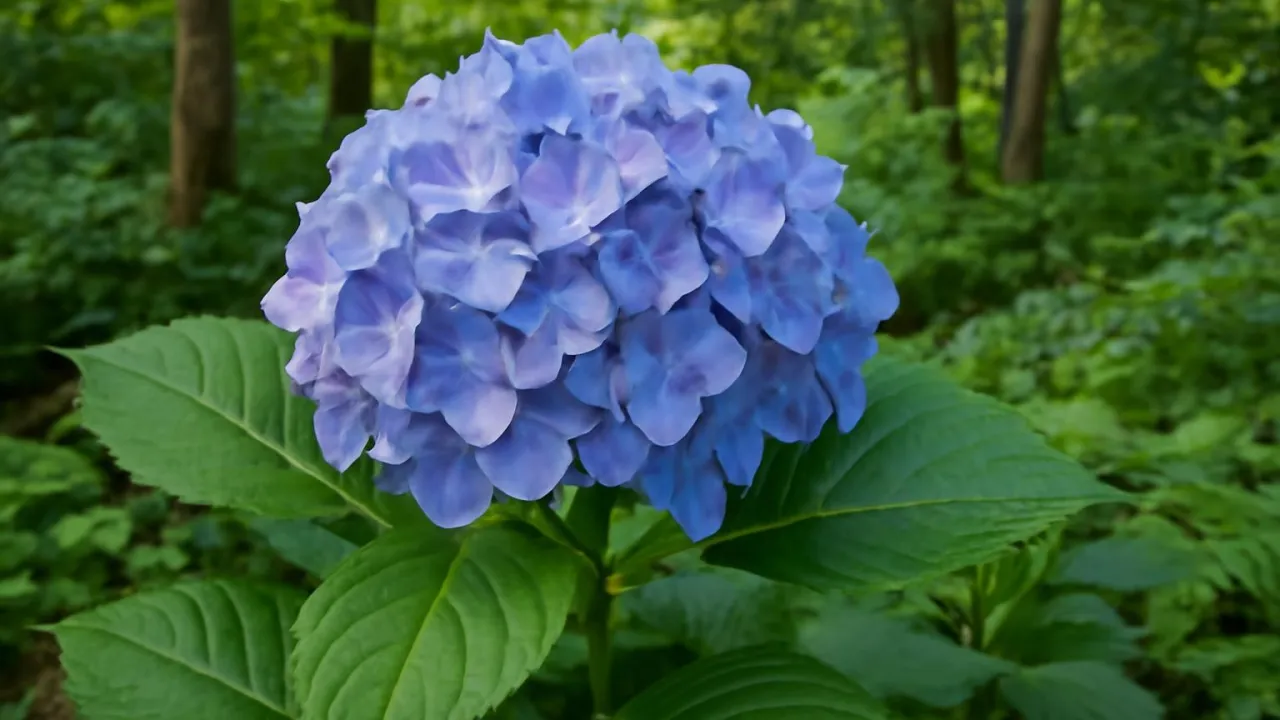
Bigleaf Hydrangea changes flower color because of the soil's acidity!
✨ Word Sparks (Grade 2 Glossary)
Tap 🔊 to hear
acidity
How sour or acidic the soil is
cluster
A group of flowers close together
native
Where a plant or animal grows naturally
🪝
Have you ever seen flowers that change color like magic?
1
Big Leaves and Flower Clusters
Bigleaf Hydrangea has large, smooth leaves that catch sunlight well. Its flowers grow in big round that attract many bees and butterflies. The plant can grow up to six feet tall in gardens or forests.
2
Color Changes in Flowers
The flowers change color depending on the soil's and nutrients. When the soil is acidic, the flowers turn blue. In alkaline soil, the flowers turn pink or even purple.
3
Where It Grows Best
Bigleaf Hydrangea grows in cool, shady places with moist soil. It is to East Asia but is popular in gardens worldwide. The plant needs regular watering and some sunlight to thrive.
1. What makes Bigleaf Hydrangea flowers change color?
2. Where is Bigleaf Hydrangea originally from?
🤯 Mind-Blowing Fact • Grade 3
Bigleaf Hydrangea uses soil chemicals to change flower colors and attract pollinators!
✨ Word Sparks (Grade 3 Glossary)
Tap 🔊 to hear
pollinator
An animal that helps flowers make seeds
photosynthesis
How plants make food using sunlight
adaptation
A change that helps plants survive better
🪝
How does Bigleaf Hydrangea change its flower colors so well?
1
Big Leaves Help the Plant Survive
Bigleaf Hydrangea has large leaves that help catch sunlight for . These leaves also protect the plant from drying out by shading the soil. The smooth surface helps water drip off during rain.
2
Flower Clusters and Color Change
The flowers grow in large clusters that attract many like bees. The flower color changes because of a chemical called aluminum, which the plant absorbs from the soil. Acidic soil makes aluminum available, turning flowers blue.
3
Adapting to Soil and Environment
Bigleaf Hydrangea adapts to different soil types by changing flower colors, which may help attract different . This is a survival strategy in diverse environments. It also grows well in shaded, moist forests.
4
Where Bigleaf Hydrangea Lives
This plant is native to temperate forests in East Asia, especially Japan and China. It prefers cool climates with moist, well-drained soil. Humans cultivate it worldwide for its beautiful, colorful flowers.
1. What chemical helps Bigleaf Hydrangea change flower colors?
2. Why does Bigleaf Hydrangea change flower colors?
🤯 Mind-Blowing Fact • Grade 4
Bigleaf Hydrangea’s flower color changes reveal secrets about soil chemistry and plant survival!
✨ Word Sparks (Grade 4 Glossary)
Tap 🔊 to hear
pH
A number that shows how acidic soil is
nectar
Sweet liquid flowers make to attract animals
ecosystem
All living things and their homes together
🪝
Why does Bigleaf Hydrangea change flower colors based on soil conditions?
1
How Big Leaves Support the Plant
Bigleaf Hydrangea’s large leaves capture sunlight efficiently for photosynthesis, which produces energy for growth and flowering. These leaves also shade the soil, reducing evaporation and helping the plant retain moisture in dry periods. Their smooth texture allows rainwater to flow off, preventing fungal diseases and keeping the plant healthy.
2
Flower Color and Soil Chemistry
The flower color changes because of aluminum availability in the soil, controlled by levels. Acidic soils make aluminum soluble, causing blue flowers, while alkaline soils block aluminum, resulting in pink or purple flowers. This chemical interaction influences pollinator attraction and the plant’s reproductive success in different environments.
3
Ecosystem Role and Human Impact
Bigleaf Hydrangea provides for pollinators like bees and butterflies, supporting local food webs and biodiversity. Gardeners cultivate it worldwide for ornamental beauty, but excessive fertilizer use can alter soil chemistry and flower colors. Protecting natural habitats helps maintain healthy populations and supports pollinator diversity.
4
Where Bigleaf Hydrangea Grows
Native to temperate forests of East Asia, especially Japan and China, Bigleaf Hydrangea thrives in moist, shaded environments. It prefers well-drained, slightly acidic to neutral soils. Its adaptability has allowed it to become popular in temperate gardens globally, where it continues to brighten landscapes.
1. What soil condition causes Bigleaf Hydrangea flowers to turn blue?
2. How can gardeners affect Bigleaf Hydrangea flower colors?
🤯 Mind-Blowing Fact • Grade 5
Bigleaf Hydrangea’s flower color shifts are a living indicator of soil pH and aluminum chemistry!
✨ Word Sparks (Grade 5 Glossary)
Tap 🔊 to hear
anthocyanins
Pigments that give flowers red, purple, or blue colors
deciduous
Plants that lose leaves in fall and grow new ones
hybridization
Crossbreeding plants to create new varieties
🪝
How does Bigleaf Hydrangea’s ability to change flower color demonstrate complex plant-soil interactions?
1
Taxonomy and Scientific Classification
Bigleaf Hydrangea, scientifically known as Hydrangea macrophylla, belongs to the family Hydrangeaceae. It is a shrub native to temperate regions of East Asia, including Japan and China. This species is widely studied for its unique flower color variation influenced by soil chemistry.
2
Physiological Mechanisms Behind Color Change
The flower color changes result from the plant’s uptake of aluminum ions, which become available in acidic soils due to lower pH levels. Aluminum binds with pigments called in the flower petals, shifting their color toward blue hues. In alkaline soils, aluminum is less soluble, causing pink or purple flowers.
3
Ecological and Conservation Significance
Bigleaf Hydrangea plays a role in temperate forest ecosystems by providing nectar for pollinators such as bees and butterflies. Its cultivation worldwide has increased genetic diversity but also risks soil chemistry disruption through excessive fertilizer use. Conservation efforts focus on preserving natural habitats and promoting sustainable gardening.
4
Botanical History and Human Use
Introduced to Europe in the 18th century, Bigleaf Hydrangea became popular for ornamental gardening due to its striking flower clusters. Its ability to change flower color fascinated botanists and gardeners alike, leading to extensive and breeding programs to enhance color range and plant hardiness.
5
Quantitative Comparisons and Growth Conditions
Bigleaf Hydrangea typically grows between 3 to 6 feet tall (0.9 to 1.8 meters) and prefers temperatures ranging from 50 to 70 degrees Fahrenheit (10 to 21 degrees Celsius). It thrives in partial shade with soil moisture maintained between 60% to 80%. Flower color shifts can occur within weeks after soil pH changes, showing how quickly the plant reacts.