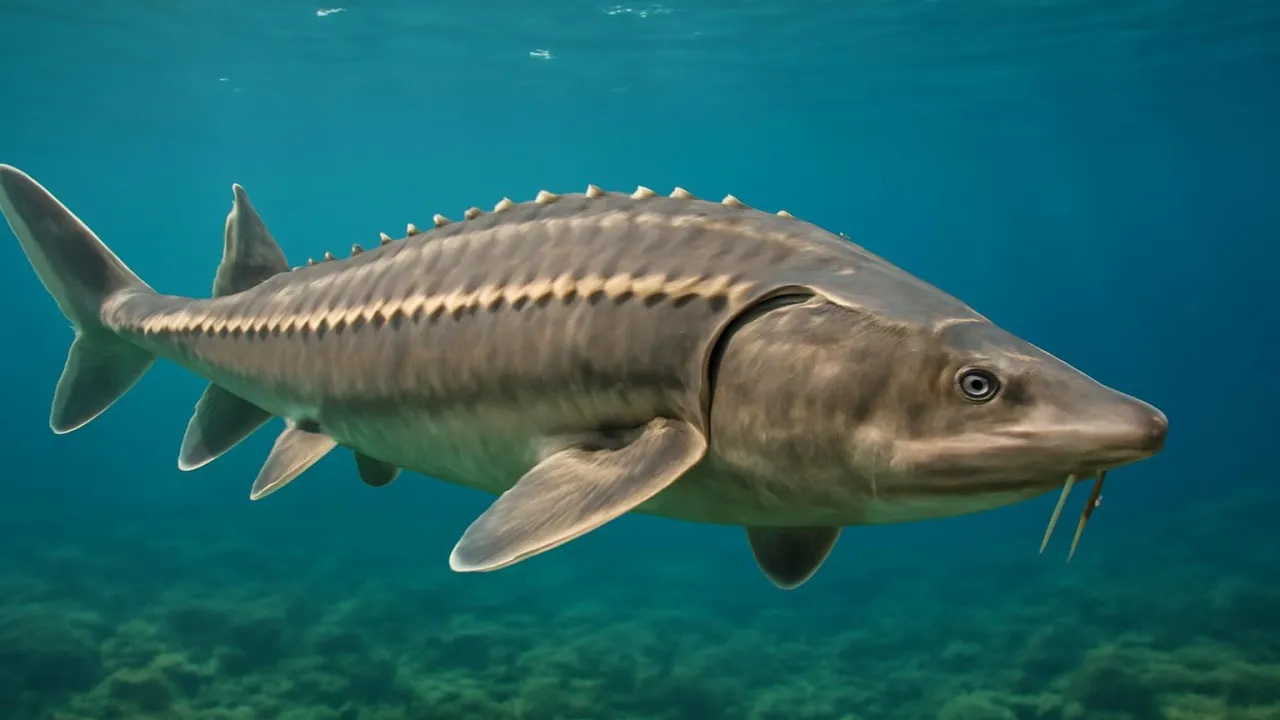
Beluga sturgeons can grow over 20 feet long, longer than many cars!
✨ Word Sparks (Grade 2 Glossary)
Tap 🔊 to hear
habitat
The place where an animal lives and grows
diet
The kinds of food an animal eats
fin
A body part that helps fish swim fast
🪝
Have you ever seen a fish that can grow longer than a car?
1
Where It Lives
Beluga sturgeons live in large rivers and seas near Europe and Asia. They swim in deep, cold water where food is easier to find. These fish move between rivers and seas during their life to survive. Their is full of oxygen and cool temperatures.
2
What It Eats and How It Grows
Beluga sturgeons eat small fish and other animals in the water. They grow very slowly and can live for many decades. Their slow growth helps them survive in cold water. Over time, they become some of the largest freshwater fish alive.
3
Special Features
Beluga sturgeons have bumpy skin called scutes that protect them. Their long tail helps them swim fast in strong currents. Their large mouths are on the underside to suck up food easily. These features help them live well in rivers and seas.
Beluga sturgeons can weigh over 3,500 pounds, heavier than a small car!
✨ Word Sparks (Grade 3 Glossary)
Tap 🔊 to hear
scutes
Hard bony plates that protect a fish’s body
migration
Moving from one place to another to live or breed
predator
An animal that hunts other animals for food
🪝
Did you know the beluga sturgeon is one of the largest freshwater fish alive today?
1
Habitat and Range
Beluga sturgeons live mostly in the Caspian and Black Sea basins. They swim between rivers and seas during their life cycle. This helps them find food and places to lay eggs. Their habitat includes deep, cold waters with plenty of oxygen.
2
Physical Adaptations
This fish has tough bony plates called covering its body for protection. Its long, streamlined shape helps it swim efficiently in strong currents. The beluga’s large mouth is located on the underside, allowing it to suck up prey from river bottoms. These adaptations help it survive and catch food.
3
Life Cycle and Growth
Beluga sturgeons grow very slowly and can live over 100 years. They reach sexual maturity after many years, sometimes over 15. Females lay thousands of eggs in freshwater rivers. The young fish then migrate to the sea to grow before returning to spawn.
4
Role in the Ecosystem
As a top , the beluga sturgeon controls populations of smaller fish. It helps keep the ecosystem balanced by eating weak or sick prey. Humans also value it for its roe, which becomes caviar. Overfishing threatens this ancient species.
1. Why do beluga sturgeons migrate between rivers and seas?
2. What do scutes do for the beluga sturgeon?
🤯 Mind-Blowing Fact • Grade 4
Beluga sturgeons can live over 100 years and weigh more than 3,500 pounds, making them true giants!
✨ Word Sparks (Grade 4 Glossary)
Tap 🔊 to hear
metabolism
How an animal uses energy to live and grow
roe
Fish eggs that people eat as caviar
spawning
When fish lay eggs in water to make babies
🪝
How does the giant beluga sturgeon survive in its watery world for over a century?
1
Habitat and Geographic Range
Beluga sturgeons inhabit the Caspian and Black Sea basins, including large rivers flowing into these seas. Their range extends across several countries in Eastern Europe and Western Asia. They prefer deep, oxygen-rich waters that support their large size and slow . Seasonal changes in water temperature influence their migration and feeding patterns.
2
Physical Adaptations and Survival
The beluga sturgeon’s tough scutes protect it from predators and rough riverbeds, while its streamlined body reduces water resistance for efficient swimming. Its large, downward-facing mouth helps it suck up prey from river bottoms, an adaptation for bottom feeding. These physical traits allow the fish to thrive in fast currents and murky waters where food is scarce.
3
Ecosystem Role and Human Impact
As a top predator, the beluga sturgeon regulates populations of smaller fish, maintaining balance in aquatic food webs. Its is highly prized as caviar, leading to overfishing and population declines. Conservation efforts aim to protect habitats and regulate fishing to ensure the species’ survival. The sturgeon’s role is vital for healthy river and sea ecosystems.
4
Life Cycle and Reproduction
Beluga sturgeons have a slow growth rate and late sexual maturity, sometimes taking up to 20 years to reproduce. Females lay thousands of eggs in freshwater rivers, where young sturgeons hatch and begin migrating to the sea. This complex life cycle depends heavily on clean rivers and unblocked migration routes. Environmental changes and dams threaten their reproduction success.
1. Why is the beluga sturgeon’s roe important to humans?
2. What threatens the beluga sturgeon’s ability to reproduce?
🤯 Mind-Blowing Fact • Grade 5
Beluga sturgeons can live more than 100 years and grow longer than most cars on the road!
✨ Word Sparks (Grade 5 Glossary)
Tap 🔊 to hear
Acipenseridae
The family name for sturgeon fish species
barbels
Whisker-like sensors that help fish find food
brackish
Water that is partly salty and partly fresh
🪝
What makes the beluga sturgeon one of the largest and longest-living fish in the world?
1
Taxonomy and Scientific Classification
The beluga sturgeon, scientifically named Huso huso, belongs to the family. It is one of the largest species within the order Acipenseriformes. This ancient fish lineage dates back over 200 million years, making it a living fossil. Its evolutionary adaptations have allowed it to survive drastic environmental changes over millennia.
2
Physiological Mechanics and Adaptations
Beluga sturgeons possess a cartilaginous skeleton that provides flexibility and strength in deep waters. Their slow metabolism supports survival in cold, oxygen-rich environments by conserving energy. The fish’s large body, covered with protective scutes, reduces predation risk. Their sensory help detect prey in murky river bottoms, enhancing feeding efficiency.
3
Conservation Status and Human Impact
Beluga sturgeons are critically endangered due to overfishing for their valuable roe, habitat loss, and pollution. International conservation programs focus on habitat restoration and regulated fishing quotas. Captive breeding and restocking efforts aim to rebuild wild populations. Protecting migration routes is essential for sustaining their complex life cycle.
4
Life Cycle and Reproductive Strategies
These fish mature sexually between 15 and 20 years, with females producing up to 3 million eggs per spawning event. Spawning occurs in freshwater rivers with specific temperature and flow conditions. Juveniles migrate to or marine environments to grow before returning to spawn. This extended life cycle requires stable ecosystems and clean waterways.
5
Quantitative Comparisons and Records
Beluga sturgeons can reach lengths of up to 20 feet (6 meters) and weigh as much as 3,500 pounds (1,600 kilograms). Their swimming speed can reach 15 miles per hour (24 kilometers per hour) during migration. They live over 100 years, making them among the longest-living fish species. These records highlight their unique ecological and biological significance.