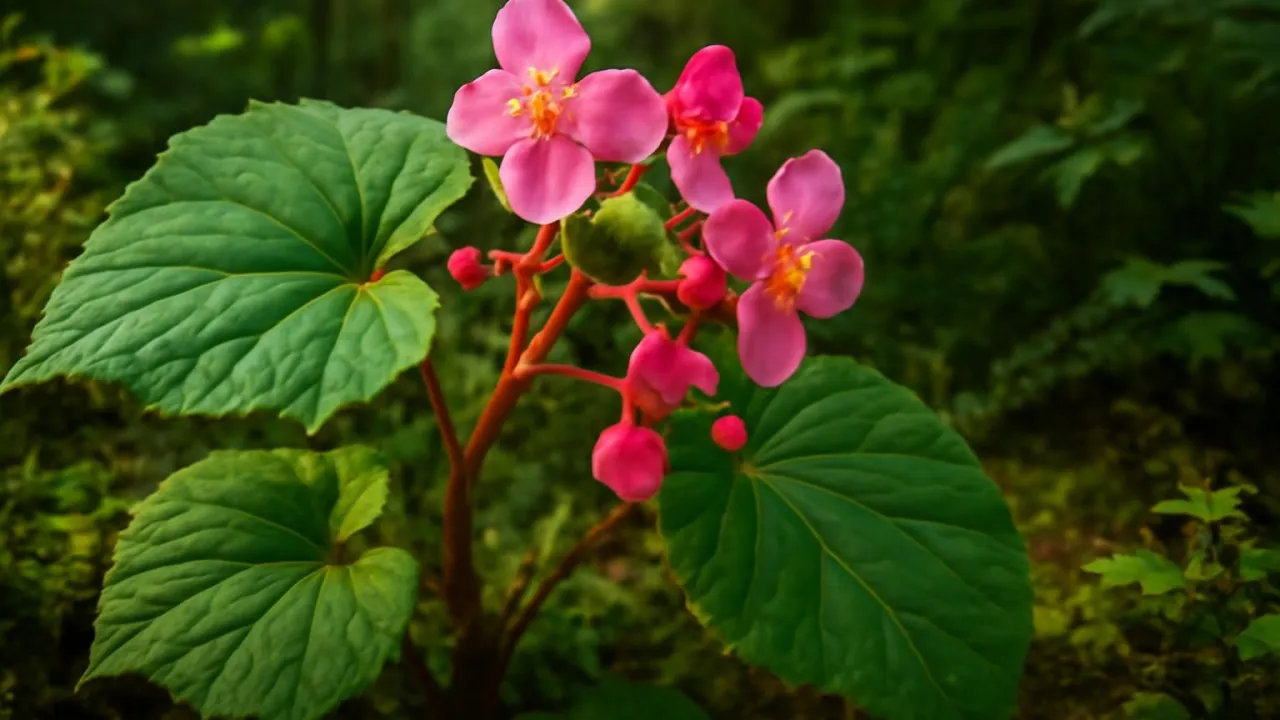
Begonia leaves can come in more than 1,800 different shapes and colors!
✨ Word Sparks (Grade 2 Glossary)
Tap 🔊 to hear
pollinate
When bees help flowers make seeds
moist
A little wet, not too dry or too wet
shady
Places with little sunlight or lots of shade
🪝
Have you ever seen a plant with leaves as bright as flowers?
1
Colorful Leaves and Small Flowers
Begonias have bright, colorful leaves that catch your eye. Their small flowers bloom in pink or white. These flowers attract bees and butterflies to help them.
2
Warm Homes and Growing Needs
Begonias grow best in warm, places with soil. They do not like too much sun or dry soil. Watering them regularly helps them stay healthy and grow strong.
3
Special Leaf Shapes
Begonia leaves come in many shapes and sizes, some are round, others are heart-shaped. Their shiny leaves help protect the plant by reflecting sunlight and keeping it cool.
2. What kind of place do begonias like to grow in?
🤯 Mind-Blowing Fact • Grade 3
Begonias belong to a huge plant family with over 1,800 species worldwide!
✨ Word Sparks (Grade 3 Glossary)
Tap 🔊 to hear
pollination
When pollen moves to help plants make seeds
adaptation
A special trait that helps plants survive
symbiotic
When two living things help each other
🪝
Did you know begonias use their colorful leaves to hide from hungry animals?
1
Bright Leaves and Pollination
Begonias have bright, colorful leaves that help them blend into their surroundings. Their small flowers attract pollinators like bees and butterflies to help spread pollen. This process is called , which helps the plant make seeds. The bright colors also warn some animals not to eat them.
2
Growing in Tropical Habitats
Begonias grow mostly in tropical and subtropical forests where it is warm and humid. They prefer shady areas under trees to protect themselves from too much sunlight. The moist soil provides important nutrients for their growth. These habitats help begonias survive and reproduce successfully.
3
Adaptations for Survival
Begonias have special leaf shapes and textures that help keep water from evaporating too fast. Their shiny leaves reflect light, which cools the plant and prevents damage. Some begonias can even store water in their leaves during dry times. These help them live in changing environments.
4
Begonias in Ecosystems
Begonias are part of food webs where insects eat their flowers and leaves. They provide shelter for small animals and insects. Some species have a relationship with ants that protect them from predators. Begonias also help keep soil healthy by preventing erosion with their roots.
Begonias’ colorful leaves can contain pigments that protect them from both too much and too little light.
✨ Word Sparks (Grade 4 Glossary)
Tap 🔊 to hear
photosynthesis
How plants use sunlight to make food
canopy
Tree tops that make shade below
herbivore
An animal that eats plants
🪝
How do begonias survive and thrive in tropical forests with so many other plants?
1
Begonias’ Bright Leaves and Photosynthesis
Begonias have brightly colored leaves that contain pigments helping them absorb sunlight efficiently for . This process turns sunlight into energy, allowing the plant to grow even in shaded forest areas. The colors also protect leaves from damage caused by too much light exposure. This adaptation helps begonias thrive in diverse light conditions.
2
Habitat and Geographic Distribution
Begonias are native to tropical and subtropical regions around the world, especially in Central and South America, Africa, and Asia. They grow mostly in humid forests where temperature and moisture levels support their growth. Because they prefer shade, begonias often grow under tree canopies, which shields them from harsh sunlight. Human cultivation has spread begonias to gardens worldwide.
3
Ecological Roles and Relationships
Begonias play important roles in their ecosystems by providing food and shelter for insects, birds, and small animals. Their flowers attract pollinators like bees and butterflies, which help with reproduction. Some begonias have symbiotic relationships with ants that protect them from . Additionally, their roots help prevent soil erosion, maintaining forest health.
4
Human Impact and Conservation
Begonias are popular ornamental plants worldwide, which has increased their cultivation and breeding. However, habitat destruction threatens some wild begonia species. Conservation efforts focus on protecting natural habitats and preserving genetic diversity. Botanical gardens and seed banks also help safeguard rare begonia species from extinction.
1. Why do begonias often grow under tree canopies?
2. What role do ants play with some begonias?
🤯 Mind-Blowing Fact • Grade 5
Begonias have over 1,800 species, making them one of the largest flowering plant genera worldwide.
✨ Word Sparks (Grade 5 Glossary)
Tap 🔊 to hear
anthocyanins
Pigments that give plants red and purple colors
cuticle
A waxy layer that protects leaves from drying out
mutualistic
A helpful relationship between two living things
🪝
What makes begonias a fascinating group of plants with over 1,800 species worldwide?
1
Taxonomy and Botanical Classification
Begonias belong to the genus Begonia within the family Begoniaceae, which includes over 1,800 species. They are dicotyledonous flowering plants native primarily to tropical and subtropical regions. The genus was named after Michel Bégon, a French governor and plant enthusiast. Begonias are divided into several sections based on leaf shape, flower structure, and growth habits.
2
Physiological Adaptations and Leaf Mechanics
Begonia leaves have specialized cells that contain pigments like and chlorophyll, which help regulate light absorption and protect against ultraviolet damage. Their thick, waxy reduce water loss, while some species have trichomes that trap moisture. These adaptations allow begonias to survive in fluctuating light and moisture conditions typical of forest understories.
3
Conservation and Botanical History
Many begonia species face threats from habitat loss due to deforestation and urbanization. Conservation programs include in situ protection of natural habitats and ex situ cultivation in botanical gardens. Begonias have been cultivated since the 17th century, becoming popular ornamental plants worldwide. Their genetic diversity makes them valuable for breeding programs targeting disease resistance and climate adaptability.
4
Ecological Role and Symbiotic Relationships
Begonias contribute to forest ecosystems by providing nectar and pollen to a variety of pollinators, including bees, butterflies, and hummingbirds. Some species form relationships with ants, which defend the plants against herbivores. Their root systems stabilize soil and prevent erosion, supporting forest health and biodiversity.
5
Quantitative Comparisons and Growth Characteristics
Begonias vary widely in size, from small ground covers about 6 inches tall to shrubby species reaching up to 3 feet. They grow best in temperatures ranging from 60 to 75 degrees Fahrenheit and require consistent moisture without waterlogging. Some begonias can produce flowers continuously for several months, while others bloom seasonally. Their leaf colors range from bright green to deep red, often shimmering under sunlight.