🏢 WorkplaceSunny apiaries, blooming orchards, berry farms, and wildflower meadows
⚡ Everyday Impact SparkKeeping millions of honeybees healthy so fruits, nuts, and veggies can grow
🤯 Mind-Blowing Fact • Grade 1
Honeybees must visit about two million flowers just to make one single pound of golden honey!
✨ Word Sparks (Grade 1 Glossary)
Tap 🔊 to hear
hive
A home where a bee colony lives
pollen
Fine yellow flower dust needed for seeds
veil
Fine mesh netting that protects the face
🪝
Who wears a white mesh hat and cares for thousands of buzzing bees?
1
Buzzing in the Sunshine
Bzzz! Thousands of golden bees fly out of painted wooden boxes. Nearby stands a beekeeper wearing a soft white suit and mesh hat. Moving slowly keeps the bees calm.
2
Checking the Honeycomb
Using a small metal tool, the beekeeper lifts out a wooden frame. Six-sided wax cells shine with sweet honey! The beekeeper checks that the queen bee is healthy.
3
Helping Flowers Make Fruit
Bees dust yellow from blossom to blossom. That helps apples, berries, and pumpkins grow! Pollination specialists bring to farms so harvests stay big.
1. Why does a beekeeper move slowly around wooden bee boxes?
2. How do bees and pollination specialists help apple and berry farms?
🤯 Mind-Blowing Fact • Grade 2
Every hexagonal cell in a honeycomb fits together with zero wasted space, holding the most honey using the least wax!
✨ Word Sparks (Grade 2 Glossary)
Tap 🔊 to hear
apiary
A yard where several beehives are kept
colony
A large family of bees living together
smoker
A tool puffing cool smoke near hives
🪝
Why does a beekeeper puff cool white smoke into a hive before opening the lid?
1
Gentle Puffs of Cool Smoke
Puff, puff! Cool scented smoke drifts from a tin as a beekeeper approaches a bee yard, called an . The gentle smoke masks bee alarm scents and encourages the bees to sip honey calmly while their home is inspected.
2
Inside the Living Box
Each hive holds one queen bee and thousands of busy worker bees. Lifting out wax frames, the beekeeper looks for tiny pearly eggs, healthy baby bees, and plenty of stored food for chilly weather.
3
Partnering with Farmers
Pollination specialists study when crops bloom across different regions. They bring healthy bee colonies to almond, blueberry, and watermelon farms right when flowers open, helping farmers grow one-third of the foods on our plates!
1. How does cool smoke from a bee smoker help during a hive check?
2. When do pollination specialists bring beehives to fruit and nut farms?
🤯 Mind-Blowing Fact • Grade 3
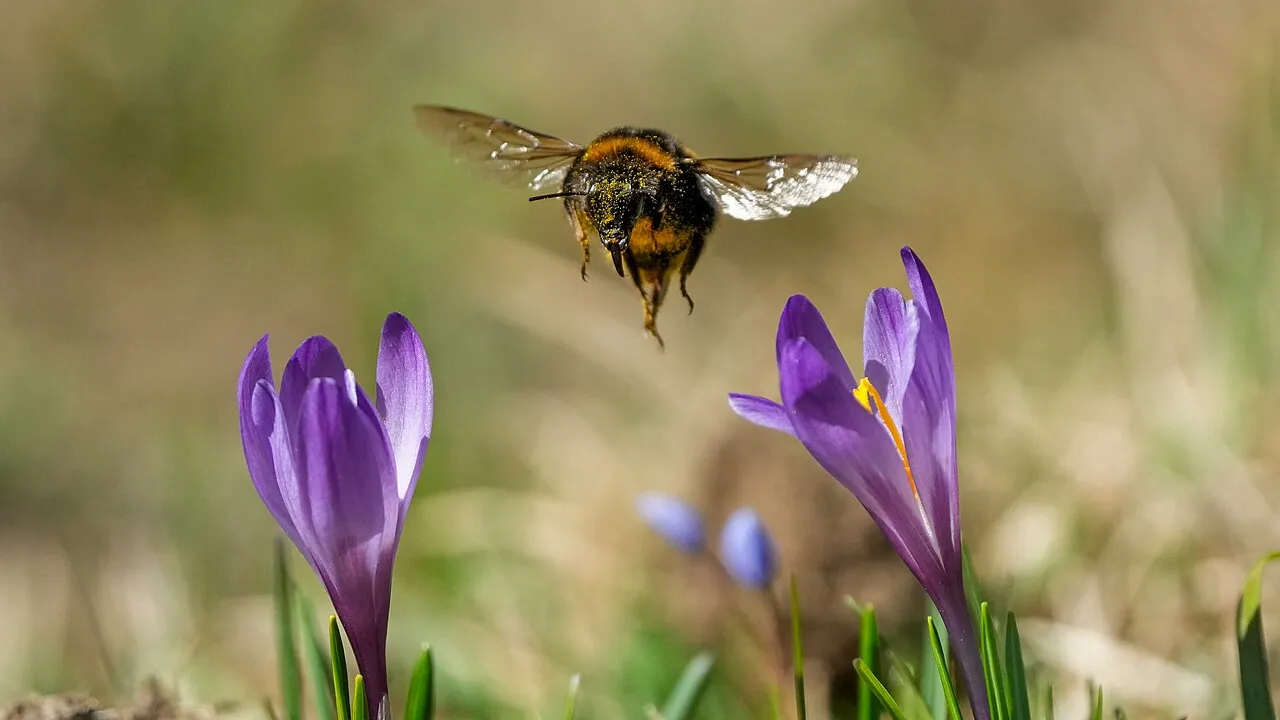
Blueberries, tomatoes, and cranberries love 'buzz pollination,' where bumblebees vibrate their flight muscles like tiny tuning forks to shake pollen loose!
✨ Word Sparks (Grade 3 Glossary)
Tap 🔊 to hear
extractor
A spinning drum that removes liquid honey
native
Naturally living and belonging in a region
forage
To search outdoors for nectar and pollen
🪝
How did one clever invention in 1852 let beekeepers harvest honey without harming a single honeycomb?
1
Morning in the Orchard
Pink apple blossoms blanket a Virginia hillside as a pollination specialist unlatches the roof of a wooden hive. Instantly, the warm scent of beeswax and clover fills the morning air while worker bees return with bright orange pollen baskets packed onto their hind legs.
2
The Magic of Bee Space
Long ago, harvesting honey damaged nests. Then in 1852, Lorenzo Langstroth discovered 'bee space'—a gap of about three-eighths of an inch that bees leave open as a hallway. Removable wooden frames spaced by that exact measure let modern beekeepers slide combs out smoothly and spin honey free in an .
3
Doctors for Tiny Pollinators
Dedicated beekeepers also protect colonies from tiny pests like Varroa mites, freezing winter winds, and summer flower shortages. They plant diverse wildflowers nearby so bees enjoy balanced nutrition from early spring through autumn.
4
Wild Bees Count Too
Pollination specialists don't just manage honeybees! They also help farmers build cozy nesting tubes and meadow habitats for bumblebees, orchard mason bees, and butterflies that pollinate tomatoes, squash, blueberries, and wildflowers.
1. What did Lorenzo Langstroth's discovery of 'bee space' allow beekeepers to do?
2. Why do pollination specialists also build habitats for native mason bees and bumblebees?
🤯 Mind-Blowing Fact • Grade 4
A single mason orchard bee doesn't make honey, yet she can pollinate as many fruit-tree blossoms in one day as 100 honeybees!
✨ Word Sparks (Grade 4 Glossary)
Tap 🔊 to hear
apiculturist
A specialist who raises and studies honeybees
brood
Developing bee eggs, larvae, and pupae
acoustic
Related to sound waves and hearing vibrations
🪝
How do pollination specialists coordinate millions of bees across thousands of miles of blooming farmland?
1
Reading the Story on Every Frame
Morning sunlight glints off golden wax as an —the scientific title for a beekeeper—holds a wooden frame gently at eye level. To an untrained visitor, the comb looks like a crowded blur of wings; to the trained specialist, tight oval rings of tan capped brood, glistening fresh nectar, and colorful stored 'bee bread' pollen reveal that the queen bee is healthy and laying up to 1,500 eggs a day.
2
Following the Blossom Calendar
More than 90 commercial fruit, vegetable, nut, and seed crops across North America depend on insect pollination to set fruit. Every February, California's vast almond orchards alone require over two million honeybee colonies right as white blossoms open! Commercial pollination specialists transport climate-ventilated hives safely at night—when all foraging bees have returned indoors—moving from winter almonds to spring Washington apples, Maine lowbush blueberries, and summer clover.
3
Protecting Pollinator Health
Modern specialists act as field ecologists and hive caretakers at the same time. They monitor colonies closely for parasitic Varroa destructor mites, coordinate carefully with orchard growers so pest sprays never touch open blossoms, and design streamside pollinator strips bursting with native coneflowers, milkweed, clover, and autumn goldenrod.
4
High-Tech Smart Hives
Today, innovative apiaries even attach solar-powered digital scales, temperature probes, and tiny microphones beneath hive boxes—tracking daily nectar weight gains, winter cluster warmth, and subtle shifts in colony hum from miles away on a tablet!
1. Why do commercial pollination specialists move beehives to new farms at night?
2. What can solar-powered scales and acoustic sensors under a hive reveal?
🤯 Mind-Blowing Fact • Grade 5
Honeybees communicate exact distance and compass angle relative to the sun for flower patches miles away by performing a figure-eight 'waggle dance' in complete darkness inside the hive!
✨ Word Sparks (Grade 5 Glossary)
Tap 🔊 to hear
superorganism
Many individuals acting like one living body
solitary
Living independently rather than inside large colonies
pathogen
A tiny germ that causes illness
🪝
Why does global food security depend on the partnership between entomologists, beekeepers, and pollination specialists?
1
Inside a Coordinated Superorganism
Press your ear gently against the cedar wall of a thriving Langstroth hive on a warm July afternoon and you will hear a steady 250-hertz hum generated by 50,000 Apis mellifera worker bees fanning their wings in unison. By evaporating excess water from floral nectar until moisture drops below 18 percent and regulating brood-nest temperature within one degree of 94°F (34.5°C), the entire colony functions like a single warm-blooded .
2
The Economics and Ecology of Pollination
While staple cereal grains like wheat, rice, oats, and corn rely on wind-blown pollen, the nutrient-dense crops supplying most agricultural vitamins, minerals, and antioxidants—apples, almonds, cherries, avocados, pumpkins, berries, and alfalfa seed grown to feed dairy cattle—require animal pollinators. Agricultural economists calculate that insect pollination contributes more than $18 billion annually to U.S. farm harvests and over $235 billion to global food systems.
3
Integrated Crop Pollination Management
Relying exclusively on a single managed species creates real ecological vulnerability. Forward-thinking pollination specialists practice Integrated Crop Pollination, pairing managed honeybee apiaries with wild habitat restoration for native North American bees—nearly 4,000 wild species including gentle Osmia orchard mason bees, ground-nesting Peponapis squash bees, and fuzzy bumblebees! Diverse bee body sizes and cool-morning flight habits ensure blossoms get thoroughly pollinated even on breezy, overcast spring days when honeybees stay cozy indoors.
4
Genetics, Floral Nutrition, and Hive Pathology
In university entomology labs and breeding apiaries, apicultural scientists select gentle, hygienic queen lines whose workers detect and remove mite-infested brood cells before viral spread. Specialists also examine pollen grains under microscopes to verify that foraging bees gather all ten essential amino acids and beneficial lipids needed for resilient immune systems.
5
Stewards of Rural and Urban Landscapes
From rooftop botanical gardens in bustling cities to sprawling Shenandoah Valley apple orchards across Virginia, beekeepers and pollination specialists educate communities, guide pollinator-safe farming schedules, and safeguard the intricate ecological web linking wildflowers directly to human nutrition.