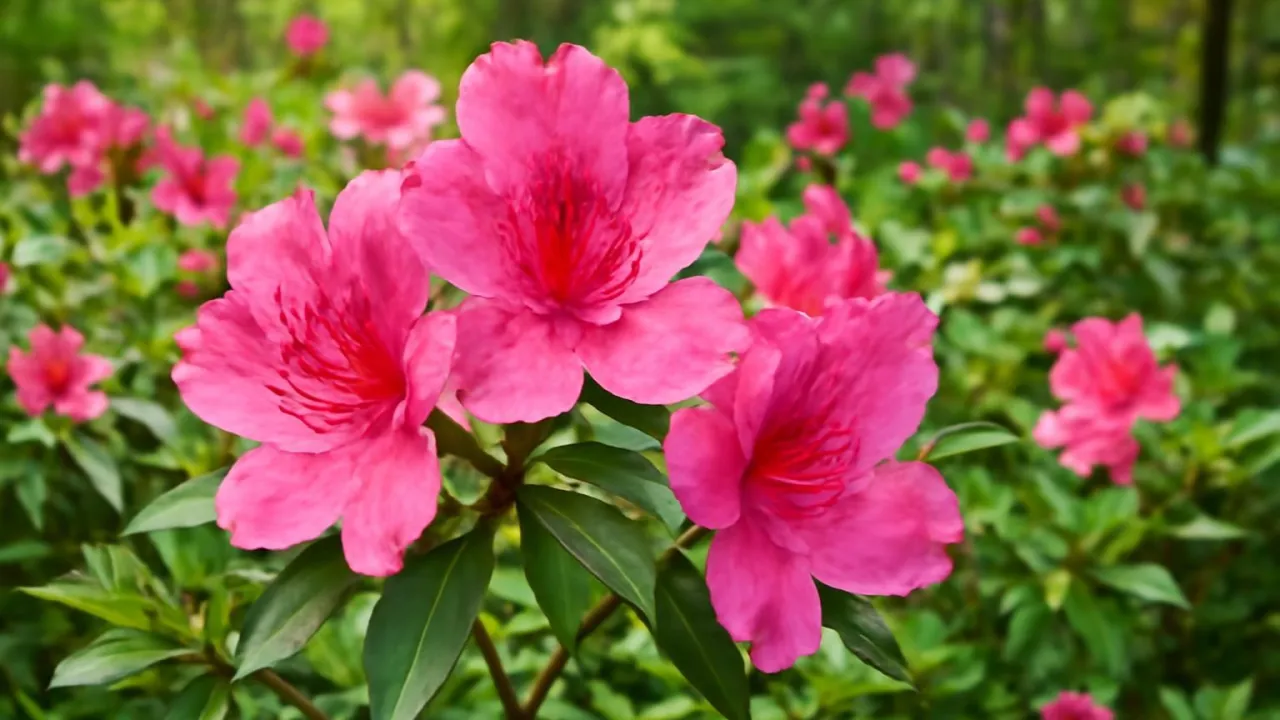
Some azalea bushes can have hundreds of flowers blooming at the same time!
✨ Word Sparks (Grade 2 Glossary)
Tap 🔊 to hear
nectar
Sweet juice inside flowers for bees.
pollinate
To help flowers make seeds by moving pollen.
moist
A little wet, not too dry or too wet.
🪝
Have you ever seen a bush full of bright, colorful flowers?
1
Azalea Flowers
Azaleas bloom with many bright flowers that can be pink, red, or white. They bloom mostly in springtime when the weather is cool and . Bees and butterflies visit the flowers to collect and help them.
2
Growing Places
Azaleas grow best in shady areas where they get some sunlight but not too much. They like soil that stays but drains well so their roots do not get too wet. These plants often grow in forests or gardens where the air is fresh and cool.
3
Special Features
The leaves of azaleas are soft and green, and their flowers have five petals that look like little trumpets. Their bright colors help attract pollinators, which helps the plants make seeds and grow new bushes.
Azaleas can live for over 50 years in the wild, blooming every spring!
✨ Word Sparks (Grade 3 Glossary)
Tap 🔊 to hear
pollination
When pollen moves to help flowers make seeds.
adaptation
A change that helps a plant survive better.
camouflage
Colors or shapes that help hide from danger.
🪝
Did you know azaleas use bright colors to hide from danger and attract friends?
1
Azalea’s Bright Blooms
Azaleas produce vibrant flowers in shades of pink, red, white, and sometimes purple. These bright colors attract pollinators like bees and butterflies that help with . Pollination is the process that allows azaleas to produce seeds for new plants. The flowers have five petals shaped like trumpets to help guide pollinators.
2
Where Azaleas Live
Azaleas grow in temperate forests and gardens where they find partial shade and moist soil. They prefer cool environments that protect them from harsh sun and drying winds. This helps azaleas keep their leaves healthy and prevents water loss. Their roots absorb nutrients and water from the soil to support growth.
3
How Azaleas Survive
Azalea leaves are covered with tiny hairs that reduce water loss and protect against insects. This helps azaleas survive in their environment. The plant’s bright flowers also provide by blending with other colorful plants. Azaleas are part of a food web where insects feed on nectar and birds eat insects around the plant.
4
Life Cycle and Growth
Azaleas start as small seedlings that grow slowly over several years. They bloom each spring, producing flowers that last for weeks. After , azaleas develop seed pods that release seeds to grow new plants. This cycle helps azaleas spread and thrive in many areas.
Azaleas support many forest animals by providing both food and shelter in their habitats!
✨ Word Sparks (Grade 4 Glossary)
Tap 🔊 to hear
ecosystem
A community of plants and animals living together.
symbiotic
A helpful relationship between two living things.
pollinator
An animal that moves pollen between flowers.
🪝
Have you ever wondered how azaleas brighten forests and support many animals?
1
Azaleas’ Role in Nature
Azaleas play a vital role in forest by providing nectar for like bees and butterflies, which helps maintain biodiversity. Their bright flowers attract these insects, which in turn pollinate many other plants, supporting the food web. Additionally, azaleas offer shelter and food for small birds and insects, creating relationships that benefit both.
2
Growing Conditions and Adaptations
Azaleas thrive in temperate forests and gardens where they receive partial shade and moist, well-drained soil, which prevents root rot. Their hairy leaves reduce water loss, and their trumpet-shaped flowers help guide efficiently. These adaptations allow azaleas to survive seasonal changes and compete with other plants for sunlight and nutrients.
3
Human Impact and Gardening
People have cultivated azaleas for hundreds of years because of their beautiful flowers and ability to brighten gardens and parks. However, habitat destruction and pollution threaten wild azalea populations, making conservation important. Gardeners help protect azaleas by planting them in suitable environments and avoiding harmful chemicals. These efforts help maintain healthy populations.
4
Geographic Distribution
Azaleas are native to temperate regions of Asia, Europe, and North America, where they grow in forests and mountainous areas. Different species adapt to various climates, from cool mountainous zones to warmer forest edges. This wide distribution shows azaleas’ remarkable ability to thrive in diverse and climates across the world.
1. How do azaleas help other plants in the forest?
2. Why do gardeners plant azaleas?
🤯 Mind-Blowing Fact • Grade 5
Azaleas’ flower shapes and colors have evolved to attract specific pollinators, showing remarkable plant-animal coevolution!
✨ Word Sparks (Grade 5 Glossary)
Tap 🔊 to hear
trichomes
Tiny hairs on leaves that protect plants.
deciduous
Plants that lose leaves in fall.
genetic diversity
Variety of genes in a plant group.
🪝
Did you know azaleas belong to a large family of plants with unique flower structures and ecological roles?
1
Scientific Classification and Diversity
Azaleas belong to the genus Rhododendron within the Ericaceae family, which includes over 1,000 species worldwide. They are divided into two groups: evergreen and azaleas, each adapted to different climates and environments. Their classification helps botanists understand their evolutionary relationships and ecological importance.
2
Physiological Adaptations and Flower Mechanics
Azaleas have specialized flower structures with five fused petals forming a funnel shape that guides pollinators efficiently. Their leaves contain tiny hairs called that reduce water loss and protect against herbivores. These adaptations allow azaleas to thrive in temperate climates with varying moisture and sunlight levels.
3
Conservation and Botanical History
Azaleas have been cultivated in Asia and Europe for over 300 years, valued for their ornamental beauty and cultural significance. However, habitat loss and invasive species threaten some wild azalea populations. Conservation efforts include habitat protection and cultivating native species to preserve .
4
Ecological Role and Food Web Connections
Azaleas contribute to forest ecosystems by providing nectar to a variety of pollinators, including bees, butterflies, and hummingbirds, which supports biodiversity. Their flowers’ bright colors and scents attract these animals, facilitating pollination and seed production. Azaleas also offer shelter for insects and small birds, playing a vital role in food webs.
5
Quantitative Comparisons and Growth
Azaleas typically grow between 1 and 6 feet tall (0.3 to 1.8 meters), with some species reaching up to 10 feet in ideal conditions. Their flowers can last from one to three weeks, depending on climate and care. Azaleas prefer soil pH between 4.5 and 6.0 and require consistent moisture without waterlogging to maintain healthy growth.