👷 CAREERS
💼 Transportation Technology • Mechanical, Diagnostic & Electric Vehicle Systems
VA Economics, Civics & Career Readiness SOL K.8, 1.8, 2.8, 3.9
Automotive Mechanic
High-Tech Vehicle Doctors Keeping Cars, Trucks, and EVs Rolling
Grade 1 • Early Reader • 67 words
🧭 Career FieldAutomotive Service, Electrified Mobility & Fleet Maintenance
🏢 WorkplaceClean service bays, dealership tech centers, bus depots, and race pits
⚡ Everyday Impact SparkReads hidden car computer codes and mechanical clues to fix brakes, engines, and EV batteries
🤯 Mind-Blowing Fact • Grade 1
A single everyday family car is put together from about 30,000 separate parts—from tiny spark plugs and microchips down to every wheel bolt!
✨ Word Sparks (Grade 1 Glossary)
Tap 🔊 to hear
Lift
Strong garage machine raising cars safely off floors
Brakes
Pads and discs pressing wheels to stop cars
Tire Tread
Bumpy rubber grooves helping tires grip wet roads
🪝
Who acts like a smart doctor for family cars, school buses, and fire trucks?
1
Up Goes the Car!
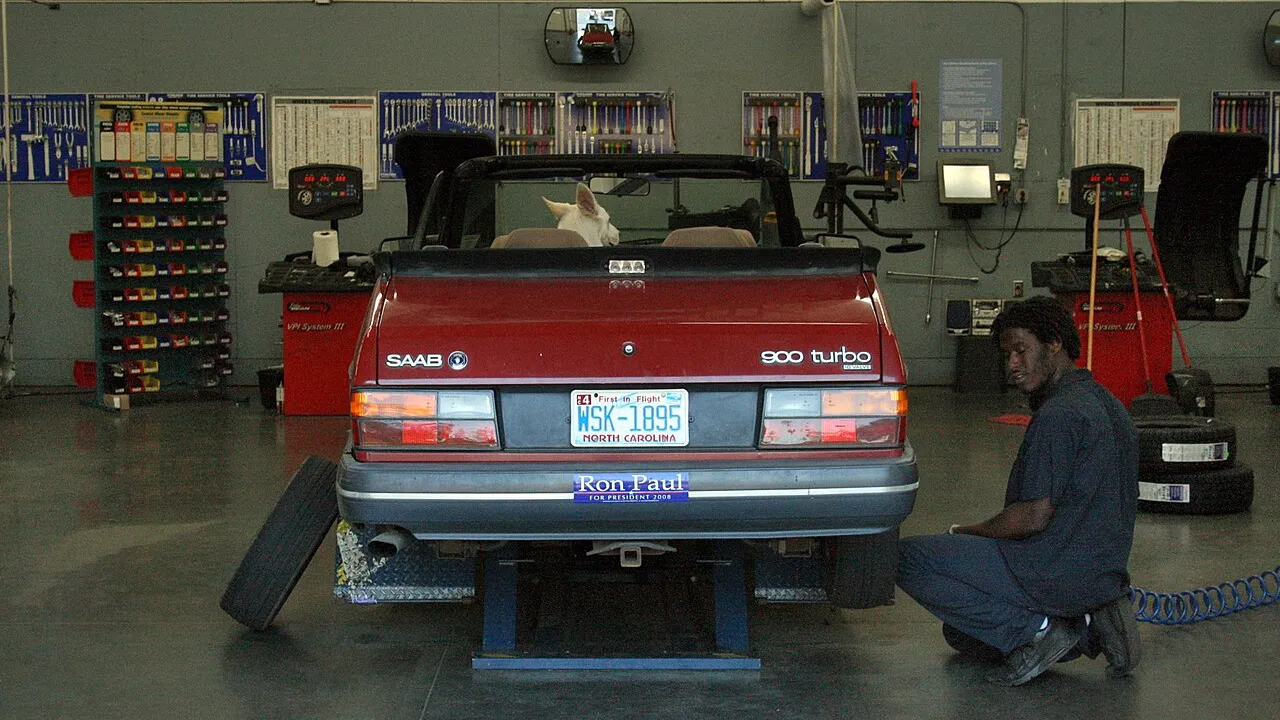
Whirrrr! A strong metal raises a family car right up into the air! Underneath, wearing safety glasses, an automotive mechanic shines a bright light at the wheels and .
2
Keeping Rides Safe
Cars have thousands of moving parts! Mechanics change slippery motor oil, put on grippy new tires, and test so cars stop fast.
3
Computer Clues
Modern mechanics even plug tablet computers into cars to find out what needs fixing!
1. Why does an automotive mechanic raise a car up on a hydraulic lift?
2. What tool helps a modern mechanic read secret clue messages from a car's brain?
🤯 Mind-Blowing Fact • Grade 2
Modern cars carry up to 100 tiny computers and sensors—more computing power than the Apollo spacecraft that landed astronauts on the Moon!
✨ Word Sparks (Grade 2 Glossary)
Tap 🔊 to hear
Piston
Moving metal cylinder pumping inside an engine
Coolant
Liquid flowing through engines to carry away heat
Hybrid
Vehicle combining a gas engine and electric motor
🪝
Why does a car engine need slippery oil—and what happens when a dashboard warning light blinks on?
1
Detective Work Under the Hood
Ding! A little orange 'Check Engine' light glows on a family car's dashboard. Instead of guessing what went wrong, a skilled automotive mechanic plugs a digital scan tool under the steering wheel and reads a secret clue code in seconds!
2
Fighting Friction and Heat
Inside gasoline engines, metal pump up and down thousands of times every single minute! Fresh, slippery motor oil stops fast metal parts from grinding together, while green or pink radiator keeps the hot engine from overheating.
3
Gas, Hybrid, and Electric
Today's versatile mechanics care for gas cars, fuel-saving , and whisper-quiet electric vehicles powered by big rechargeable battery packs!
1. Why does an automotive mechanic change a car's motor oil regularly?
2. What powers an all-electric vehicle (EV) instead of a gasoline tank?
🤯 Mind-Blowing Fact • Grade 3
On hybrid and electric vehicles, bright orange cables under the hood always signal 'High Voltage!'—telling certified technicians to wear special insulated safety gloves before servicing!
✨ Word Sparks (Grade 3 Glossary)
Tap 🔊 to hear
Torque Wrench
Precision wrench clicking at an exact bolt tightness
Adjusting wheel angles so cars roll straight smoothly
🪝
How does pressing one foot lightly on a brake pedal stop a 4,000-pound rolling SUV?
1
Friction That Saves Lives
Press your foot gently on a car's brake pedal, and pressurized hydraulic fluid shoots through thin steel tubes out to all four wheels! Strong metal clamps called squeeze tough brake pads against spinning wheel discs, using friction to turn forward motion into heat and stop the car smoothly.
2
Click Goes the Torque Wrench
Whenever mechanics bolt a wheel back onto an axle, they never just guess how tight to twist the lug nuts. Instead, they pull a calibrated '' that gives a crisp click at the exact pound-foot tightness tested by engineers!
3
Wheel Alignment With Lasers
Bumping into a deep winter pothole can knock front wheels slightly crooked. Using bright laser reflectors clipped onto all four rims, mechanics align steering angles straight again so rubber tire treads wear evenly.
4
Annual Safety Inspections
Across Virginia and many other states, licensed mechanics conduct annual vehicle safety inspections—testing headlights, wipers, steering joints, tires, and brakes to keep neighborhood roads safe for everyone.
1. How do disc brakes slow down a fast-moving car?
2. What do bright orange cables under the hood of an electric or hybrid car warn a mechanic about?
🤯 Mind-Blowing Fact • Grade 4
Inside a car's exhaust pipe sits a 'catalytic converter' coated with microscopic specks of precious platinum and rhodium that chemically transform harmful exhaust gases into harmless nitrogen, water vapor, and carbon dioxide!
✨ Word Sparks (Grade 4 Glossary)
Tap 🔊 to hear
Combustion
Controlled burning of fuel and air releasing energy
Catalytic Converter
Exhaust device using precious metals to cut pollution
ASE Certified
Tested national badge proving expert automotive technician skill
🪝
Why are today's automotive mechanics often called 'Automotive Service Technicians'—and how do they calibrate radar bumpers?
1
Half Mechanical Engineer, Half Computer Whiz
Step into a modern dealership or town fleet garage today, and you will find bright LED lighting, spotless floors, wireless oscilloscopes, and rolling laptop stations. Because twenty-first-century cars weave mechanical gears together with dozens of networked microchips, modern pros often carry the title 'Automotive Service Technician' and pass national ASE (Automotive Service Excellence) exams across eight distinct vehicle systems.
2
The Four-Stroke Cycle vs. Electric Drive
On gasoline and diesel vehicles, technicians troubleshoot the four-stroke engine cycle—intake, compression, , and exhaust—testing fuel injectors, oxygen sensors, and exhaust that scrub smog-forming gases out of tailpipes. Right in the next service bay, EV-certified technicians inspect 400-to-800-volt lithium-ion battery modules and regenerative electric motors that recharge the battery pack every time a driver slows down on a hill!
3
Calibrating Smart Safety Sensors
Many newer vehicles rely on hidden front-bumper radar and windshield cameras for automatic emergency braking and lane-keeping assistance. Even replacing a stone-chipped glass windshield requires a skilled technician to set up checkerboard optical targets and aim those safety cameras within fractions of a single degree!
4
Keeping Communities Moving
From hospital rescue ambulances and fire engines to yellow school buses and delivery vans, skilled automotive technicians keep essential community vehicles safe, clean, and reliable in every season.
1. Why must an automotive technician recalibrate windshield cameras after replacing a modern car's windshield?
2. What job does a 'catalytic converter' perform underneath a gasoline car?
🤯 Mind-Blowing Fact • Grade 5
An Anti-Lock Braking System (ABS) monitored by automotive technicians can pump hydraulic brake pressure up to 15 times per second—far faster than any human foot—keeping tires rolling right at the threshold of maximum grip on icy roads!
✨ Word Sparks (Grade 5 Glossary)
Tap 🔊 to hear
Mechatronics
Engineering blend of mechanics, electronics, and computer control
Oscilloscope
Screen graphing rapid electrical voltage waves over time
ADAS
Radar and camera systems helping drivers avoid crashes
🪝
How do Master Automotive Technicians diagnose CAN-bus digital networks, thermodynamic engine efficiency, and 800-volt EV power electronics?
1
Systems Engineering on Four Wheels
Contemporary automobiles operate as rolling mechatronic laboratories where internal-combustion thermodynamics, high-pressure fluid hydraulics, 800-volt power electronics, and real-time software intersect. An ASE Master Automotive Technician diagnoses complex cause-and-effect chains across eight core disciplines—spanning variable-valve-timing engines, computer-shifted planetary transmissions, anti-lock stability braking (ABS), suspension geometry, and high-voltage battery thermal loops.
2
CAN-Bus Networks and Oscilloscope Diagnostics
Rather than bundling miles of heavy copper wire behind dashboards, modern vehicles connect up to 100 Electronic Control Units (ECUs) over multiplexed Controller Area Network (CAN-bus) data twisted pairs flashing thousands of digital packets every second. Instead of swapping costly components by trial and error, master technicians attach digital storage to inspect millisecond voltage waveforms—distinguishing a frayed ground wire, faulty solenoid, or sluggish fuel-rail pressure sensor with scientific certainty.
3
800-Volt Electrification and Battery Thermal Science
As passenger cars, delivery vans, and school buses electrify across America, technicians earn specialized high-voltage credentials (such as ASE L3 and L4) to lock out and verify zero-volt safety on traction battery packs, test silicon-carbide DC-to-AC three-phase inverters, and service heat-pump coolant plates that keep lithium-ion cells near an ideal 70°F during rapid highway DC charging.
4
ADAS Radar, Lidar, and Heavy-Duty Fleets
Advanced Driver Assistance Systems () merge millimeter-wave bumper radar, ultrasonic parking sonar, and stereo optical cameras—requiring laser-leveled calibration bays after suspension or glass repairs. Related specialist career tracks maintain heavy-duty municipal transit buses, hydraulic fire-rescue ladder trucks, agricultural tractors, and precision motorsport race cars.
5
Education and Career Progression
Launching through high-school Career and Technical Education (CTE) garages, community college associate degrees, and manufacturer factory academies, master technicians build indispensable, well-compensated careers powering clean, safe community mobility.