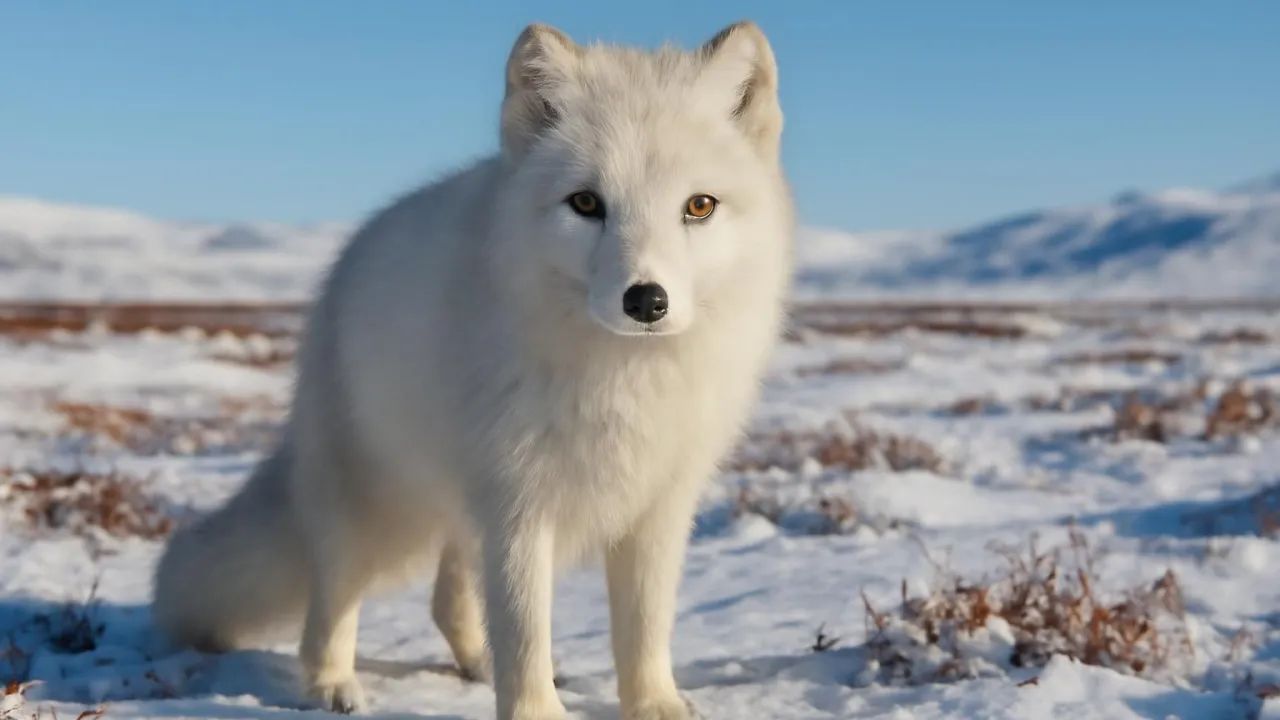
Arctic foxes can survive temperatures as low as -58 degrees Fahrenheit!
✨ Word Sparks (Grade 2 Glossary)
Tap 🔊 to hear
predator
An animal that hunts other animals for food
tundra
A cold, treeless place where some animals live
den
A cozy home where animals have their babies
🪝
Have you ever seen an animal change colors like a chameleon?
1
Coat That Changes Colors
The arctic fox has a thick coat that changes colors with the seasons. In winter, its fur is white to hide in snow. When summer comes, the fur turns brown or gray to blend with rocks and plants. This helps the fox stay safe from .
2
Where It Lives and Grows
Arctic foxes live in cold places called near the North Pole. They make in the ground where they raise their babies. The babies are called pups, and they grow quickly to learn how to hunt. The foxes stay active all year long.
3
What It Eats and Needs
The arctic fox eats small animals like lemmings, birds, and fish. It also eats berries and seaweed when food is scarce. The fox needs to find enough food to keep its energy in the cold weather. Its sharp nose helps it find food under the snow.
The arctic fox can smell prey hidden under 6 feet of snow!
✨ Word Sparks (Grade 3 Glossary)
Tap 🔊 to hear
camouflage
Colors that help animals hide in their homes
adaptation
A body change that helps animals survive
prey
Animals that other animals hunt for food
🪝
How does the arctic fox survive the freezing cold and find food in snow?
1
Amazing Camouflage
The arctic fox uses to blend into its snowy environment. Its white fur in winter hides it from predators and . In summer, the fur changes to brown or gray to match rocks and plants. This helps the fox stay safe and hunt successfully.
2
Life in the Tundra
Arctic foxes live in the tundra, a cold, treeless region with icy winds. They build dens underground to protect themselves from harsh weather. These dens also provide shelter for their pups. The foxes rely on their thick fur and fat to keep warm during winter.
3
Hunting and Diet
Arctic foxes are skilled hunters that eat lemmings, birds, fish, and insects. They can smell under deep snow and dig quickly to catch it. When food is scarce, they eat berries and seaweed. This varied diet helps them survive in a tough environment.
4
Adaptations for Survival
Their small ears reduce heat loss, and their furry paws act like snowshoes for walking on ice. The arctic fox’s thick tail helps keep it warm when curled up. These physical are vital for surviving the cold Arctic climate.
2. What helps the arctic fox find food under snow?
🤯 Mind-Blowing Fact • Grade 4
The arctic fox’s fur insulates so well it can survive in temperatures as low as -58°F (-50°C)!
✨ Word Sparks (Grade 4 Glossary)
Tap 🔊 to hear
ecosystem
A place where plants and animals live together
scavenger
An animal that eats leftover food or dead animals
insulate
To keep heat from escaping or coming in
🪝
What makes the arctic fox a key player in its cold ecosystem?
1
Seasonal Camouflage and Survival
The arctic fox changes its fur color from white in winter to brown in summer, which provides excellent camouflage against predators and prey. This seasonal color change is a vital adaptation that helps the fox avoid danger and hunt effectively in different environments. Without this ability, the fox would be more visible and vulnerable in the tundra's changing landscapes.
2
Role in the Food Web
As a predator, the arctic fox helps control populations of small animals like lemmings and birds, maintaining balance in the tundra . It also serves as prey for larger predators such as wolves and eagles, fitting into a complex food web. The fox’s scavenging habits help recycle nutrients by consuming leftover carcasses, contributing to ecosystem health.
3
Habitat and Geographic Range
Arctic foxes inhabit the Arctic tundra regions across North America, Greenland, and northern Eurasia. They thrive in cold climates where few other animals can survive. Human activities like climate change and industrial development threaten their habitats, causing shifts in their geographic range and food availability.
4
Adaptations and Human Impact
Their thick fur, small ears, and furry paws are physical adaptations that reduce heat loss and allow efficient movement on snow and ice. However, warming temperatures reduce snow cover, making camouflage less effective and exposing the fox to predators. Conservation efforts focus on protecting tundra habitats to support arctic fox populations.
1. How does the arctic fox help the tundra ecosystem?
2. What threatens the arctic fox’s habitat?
🤯 Mind-Blowing Fact • Grade 5
The arctic fox’s fur changes color twice a year, a rare mammal adaptation for survival.
✨ Word Sparks (Grade 5 Glossary)
Tap 🔊 to hear
physiological
How an animal’s body works and stays alive
opportunistic
Eating whatever food is available to survive
camouflage
Colors that help animals blend into their homes
🪝
How does the arctic fox’s biology and behavior allow it to thrive in extreme Arctic conditions?
1
Scientific Classification and Habitat
The arctic fox, scientifically named Vulpes lagopus, belongs to the Canidae family and inhabits Arctic tundra regions across North America, Greenland, and northern Eurasia. This species is uniquely adapted to survive in some of the coldest environments on Earth, where temperatures can drop below -50 degrees Celsius. Its geographic range is closely tied to the presence of snow and ice, which influence its hunting and strategies.
2
Physiological Adaptations for Cold
Arctic foxes possess a dense, multi-layered fur coat that provides exceptional insulation against freezing temperatures. Their compact body shape, small ears, and short muzzle reduce surface area and minimize heat loss. Additionally, their paws are covered with thick fur that acts like natural snowshoes, enabling silent movement across ice and snow. These traits are critical for conserving body heat in extreme cold.
3
Behavioral Adaptations and Diet
Behaviorally, arctic foxes exhibit seasonal fur color changes to maintain , shifting from white in winter to brown or gray in summer. They have an acute sense of smell, allowing them to detect prey beneath several feet of snow. Their diet is , including lemmings, birds, fish, insects, berries, and carrion, which helps them survive fluctuating food availability. They also cache food to eat later during scarce periods.
4
Conservation Status and Human Impact
Currently, the arctic fox is classified as Least Concern, but climate change poses significant threats by reducing snow cover and altering prey populations. Industrial development and habitat disturbance further challenge their survival. Conservation efforts focus on monitoring populations and protecting tundra habitats to mitigate these impacts and preserve this iconic Arctic species.
5
Quantitative Comparisons and Survival Skills
The arctic fox weighs between 6 and 10 pounds (2.7 to 4.5 kilograms) and measures 18 to 27 inches (46 to 68 centimeters) in length. It can survive temperatures as low as -58 degrees Fahrenheit (-50 degrees Celsius) and uses its keen sense of smell to locate prey under up to 6 feet (1.8 meters) of snow. Its fur changes color twice a year, a rare adaptation among mammals, enhancing survival in a harsh environment.