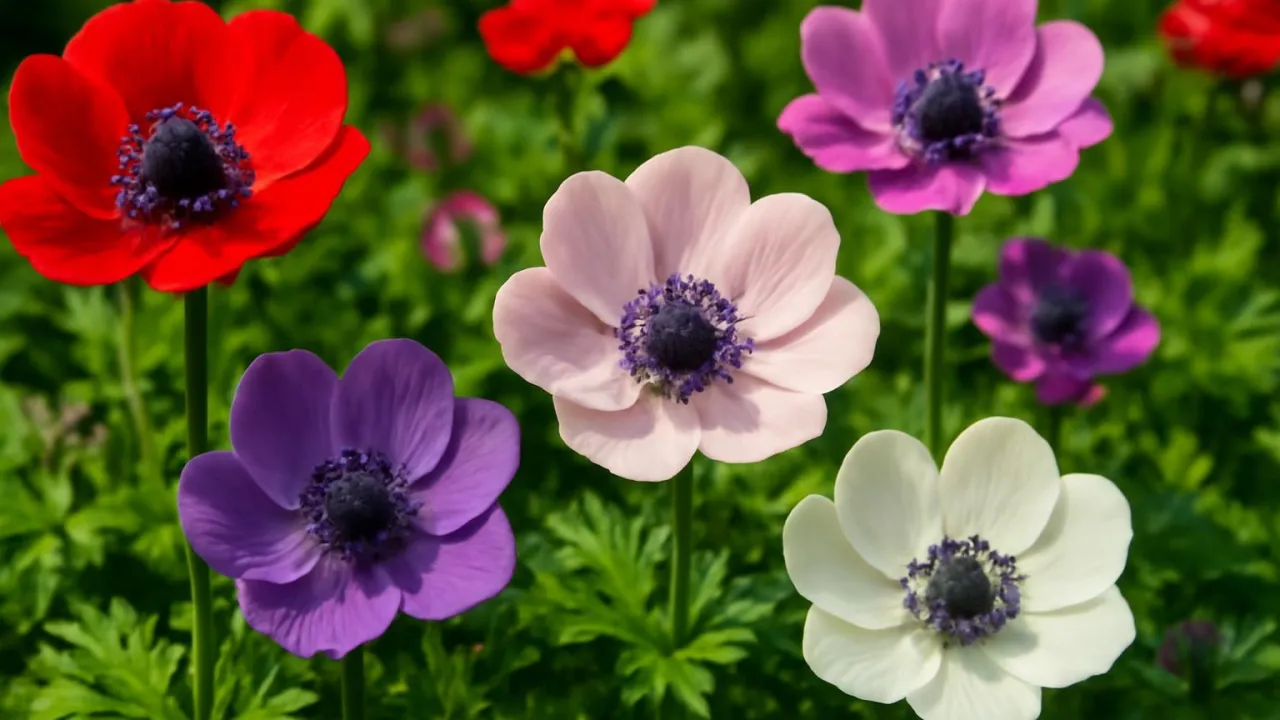
Anemones share their name with colorful sea creatures called sea anemones!
✨ Word Sparks (Grade 2 Glossary)
Tap 🔊 to hear
petals
Colorful parts that make flowers pretty
bulbs
Parts under the ground that grow plants
moist
A little wet, like damp soil
🪝
Have you ever seen a flower named after a sea creature?
1
Colors and Shapes
Anemones have bright that can be red, pink, or white, and they attract bees and butterflies. Their petals are soft and spread out like a star. The flowers bloom in spring and summer when the weather is warm.
2
Where They Live
These flowers grow in gardens, meadows, and forests around the world. They prefer places with full or partial sunlight and soil that helps them grow strong. Anemones can survive in many climates but need water regularly.
3
How They Grow
Anemones grow from planted in the ground, which store food for the plant. The bulbs sprout leaves first, and then flowers bloom above the ground. Gardeners often plant bulbs in fall for spring flowers.
Anemones are called windflowers because their petals move gently in the wind!
✨ Word Sparks (Grade 3 Glossary)
Tap 🔊 to hear
pollination
When pollen moves to make new seeds
nutrients
Food and minerals plants get from soil
adaptation
A trait that helps plants survive well
🪝
Did you know anemones use bright colors to attract pollinators?
1
Bright Colors and Adaptations
Anemones have brightly colored petals that help attract pollinators like bees and butterflies. This increases their chances of , which is needed to make seeds. The petals’ shape and color also protect the flower from some predators.
2
Where Anemones Grow
These flowers live in temperate and tropical regions, often in gardens and wild meadows. They prefer moist soil and need sunlight to perform photosynthesis, which helps them make food. Their roots absorb and water from the soil.
3
Life Cycle and Growth
Anemones grow from underground bulbs that store for the plant. The bulbs sprout leaves first, then flower stalks grow and bloom in spring. After , flowers produce seeds to grow new plants.
4
Fun Flower Facts
The name anemone comes from the Greek word for wind, because their petals can sway in the breeze. They are sometimes called windflowers. Some species have flowers that close at night to protect pollen.
2. What part of the plant stores nutrients underground?
🤯 Mind-Blowing Fact • Grade 4
Anemones help pollinators and nearby crops by attracting helpful insects with bright flowers.
✨ Word Sparks (Grade 4 Glossary)
Tap 🔊 to hear
symbiosis
When two living things help each other
camouflage
Colors or shapes that hide plants or animals
photosynthesis
How plants use sunlight to make food
🪝
How do anemones help other living things in their ecosystem?
1
Anemones’ Role in Nature
Anemones play an important role in their ecosystems by providing nectar and pollen to pollinators like bees and butterflies, which helps these insects survive and reproduce. This relationship is called because both plants and pollinators benefit. When pollinators visit, they help anemones reproduce by spreading pollen to other flowers.
2
Growing Conditions and Distribution
Anemones are found in temperate and tropical regions worldwide, growing in gardens, meadows, and forest edges. They prefer moist, well-drained soil and full to partial sunlight, which helps them perform efficiently. Human activities like gardening and farming have spread anemones to many new areas.
3
Physical Adaptations
The bright colors and star-shaped petals of anemones attract pollinators and protect the flowers from some herbivores by camouflaging with other plants. Some species close their flowers at night to protect pollen from moisture or predators. These adaptations increase their chances of survival and reproduction.
4
Impact on Agriculture and Humans
Anemones are popular garden plants because of their beauty and ability to attract pollinators, which can help nearby crops produce more fruit. However, some species can spread quickly and compete with native plants, so gardeners must manage them carefully. Their bright flowers also inspire art and culture in many societies.
Anemones can increase crop pollination success by up to 40 percent when planted nearby.
✨ Word Sparks (Grade 5 Glossary)
Tap 🔊 to hear
rhizomes
Underground stems that help plants grow new shoots
anthocyanins
Pigments that give flowers red and purple colors
biodiversity
Many different plants and animals living together
🪝
Did you know anemones belong to a large family of flowering plants with fascinating biology?
1
Scientific Classification and Diversity
Anemones belong to the genus Anemone in the Ranunculaceae family, which includes over 200 species worldwide. These species vary widely in size, color, and habitat preference, ranging from alpine meadows to temperate woodlands. Their taxonomic classification helps scientists understand evolutionary relationships among flowering plants and their adaptations.
2
Physiological Mechanics and Growth
Anemones grow from underground tuberous roots or that store carbohydrates, enabling rapid spring growth. Their leaves perform photosynthesis efficiently due to a high concentration of chlorophyll. Flower petals contain pigments called , which produce vivid reds, pinks, and purples that attract specific pollinators to ensure reproduction.
3
Ecological Roles and Conservation
Anemones contribute to ecosystem stability by supporting pollinator populations, which in turn assist in the reproduction of many plant species. Some species are threatened by habitat loss and climate change, prompting conservation efforts focused on protecting native habitats and controlling invasive populations. Their role in food webs is vital for maintaining and ecosystem health.
4
Botanical History and Human Uses
Historically, anemones have been used in traditional medicine and as ornamental plants in gardens worldwide. Their striking flowers have inspired art and folklore across cultures. Modern horticulture has developed many hybrids and cultivars to enhance flower size and color for commercial sale and garden beauty.
5
Quantitative Comparisons and Facts
Anemone plants typically grow between 10 and 60 centimeters tall, with flowers measuring 2 to 5 centimeters in diameter. They thrive in temperatures ranging from 50 to 75 degrees Fahrenheit and require soil moisture levels of 20 to 30 percent for optimal growth. Pollination success rates can increase by up to 40 percent when anemones grow near agricultural crops, benefiting food production.