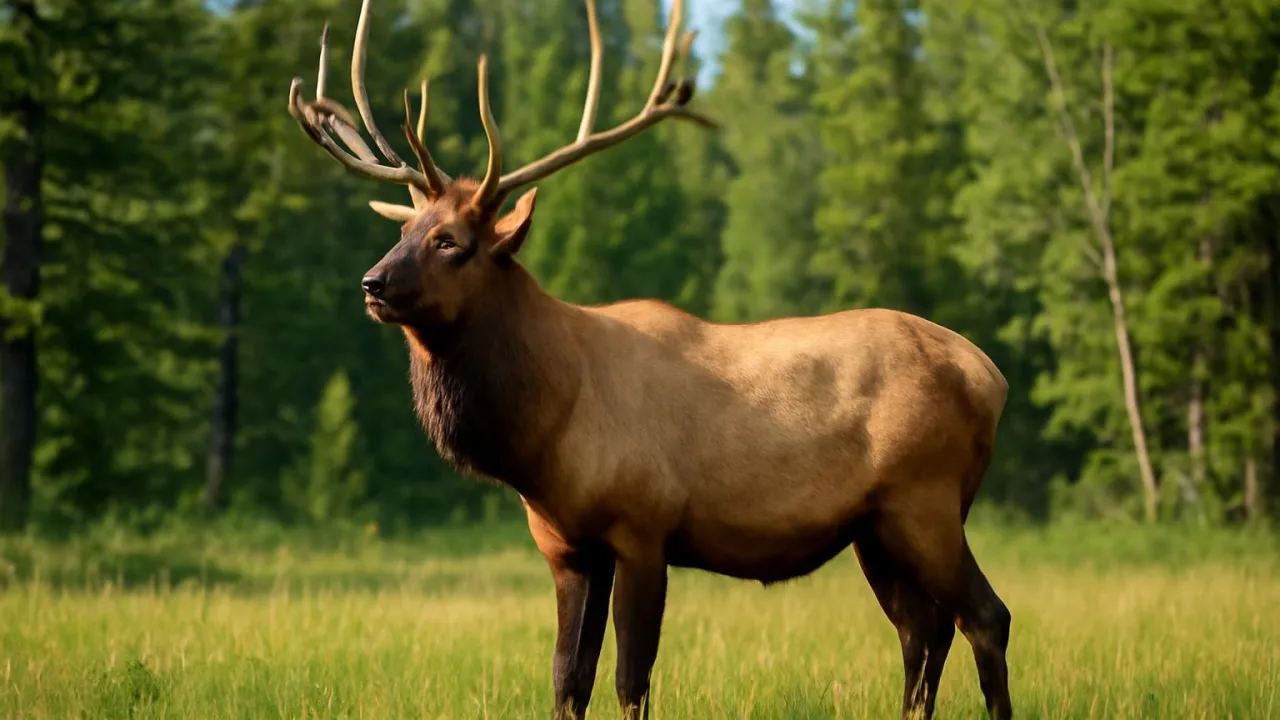
Elk can run up to 45 miles per hour to escape danger quickly.
✨ Word Sparks (Grade 2 Glossary)
Tap 🔊 to hear
antlers
Large branches that grow on male elk heads
herbivore
An animal that eats only plants
habitat
The natural home where animals live
🪝
Have you ever wondered how elk use their large antlers?
1
Antlers and Fighting
Male elk grow large every year to fight other males for mates. Antlers fall off in winter and regrow in spring. They use antlers to show strength and win battles. This helps elk find a partner.
2
Where Elk Live
Elk live in forests and open grasslands across North America. They prefer cool, shady places near water. Elk rest in tall grass to hide from predators. Their gives them food and shelter.
3
What Elk Eat
Elk are , eating grasses, leaves, and tree bark. They use their teeth to chew tough plants. Elk need water every day to stay healthy. Their diet helps them grow big and strong.
An elk’s antlers can weigh up to 40 pounds and grow back every year!
✨ Word Sparks (Grade 3 Glossary)
Tap 🔊 to hear
camouflage
Colors that help animals hide from others
antlers
Bony branches on male elk heads
herbivore
An animal that eats only plants
🪝
Did you know elk use their antlers to show strength and protect themselves?
1
Antlers and Adaptation
Elk grow large each year to attract mates and defend territory. These antlers are made of bone and can grow up to four feet long. When winter comes, elk shed their antlers to save energy. This adaptation helps elk survive seasonal changes.
2
Habitat and Camouflage
Elk live in forests and grasslands where their brown fur blends with trees and grass. This helps elk hide from predators like wolves and bears. They also use tall grass to stay hidden during the day. Their habitat provides food, water, and shelter.
3
Diet and Nutrition
Elk are that eat grasses, leaves, and tree bark. They use their strong teeth to chew tough plants and get nutrients. In winter, elk eat more bark when grass is scarce. This diet gives elk energy to run and stay warm.
4
Survival and Speed
Elk can run up to 45 miles per hour to escape predators quickly. Their strong legs help them jump over obstacles in forests. This speed is a key survival skill in the wild. Elk also use loud bugle calls to warn others of danger.
Elk antlers can grow up to 4 feet long and weigh 40 pounds, shedding yearly.
✨ Word Sparks (Grade 4 Glossary)
Tap 🔊 to hear
ecosystem
A community of plants and animals living together
migration
Animals moving to find food or better weather
dominance
Being the strongest or most important animal
🪝
How do elk’s antlers and habitat help them survive in North America?
1
Antlers and Mating Battles
Male elk grow enormous antlers each year to battle rivals during mating season, which helps determine and breeding rights. These antlers, made of bone, are shed annually to conserve energy during harsh winters. Strong antlers also serve as a visual signal to females and other males. This cycle supports elk reproduction and survival.
2
Ecosystem Role and Food Web
Elk play an important role in their by grazing on grasses and shrubs, which helps shape plant communities and supports other animals. They are prey for predators like wolves and mountain lions, forming a vital part of the food web. Elk also help spread seeds through their droppings, aiding plant growth. Human activities like hunting and habitat change affect elk populations.
3
Habitat and Geographic Range
Elk primarily inhabit forests and grasslands across western North America, from Canada to northern Mexico. They prefer areas with abundant water sources and shelter from harsh weather. Seasonal help elk find food and avoid deep snow. Human development and climate change impact their natural habitats and movement patterns.
4
Physical Features and Adaptations
Elk have thick fur that insulates them from cold temperatures and strong legs for running up to 45 miles per hour to escape predators. Their large eyes provide wide vision to detect danger early. Elk use loud bugle calls during mating season to communicate and warn others. These adaptations increase their chances of survival in diverse environments.
An elk’s antlers can weigh 40 pounds and regrow every year, showcasing remarkable regeneration.
✨ Word Sparks (Grade 5 Glossary)
Tap 🔊 to hear
taxonomy
How scientists group and name living things
physiology
How an animal's body works and functions
conservation
Protecting animals and their homes
🪝
What fascinating scientific facts explain how American elk thrive in diverse North American habitats?
1
Taxonomy and Scientific Classification
The American elk, scientifically named Cervus canadensis, belongs to the Cervidae family, which includes deer and moose. This species is closely related to the European red deer but adapted uniquely to North American environments. Elk are classified as large herbivorous mammals with complex social structures. Understanding their helps scientists study their evolution and ecological roles.
2
Physiological Mechanics and Adaptations
Elk possess powerful leg muscles enabling speeds up to 45 miles per hour, which is crucial for escaping predators. Their antlers, composed of bone, regenerate annually and can weigh up to 40 pounds, serving in dominance displays and combat. Thick winter fur insulates against cold temperatures, while their wide-set eyes provide a broad field of vision to detect threats early. Vocalizations like bugling facilitate communication during mating season.
3
Conservation and Human Impact
Historically, elk populations declined due to overhunting and habitat loss but have rebounded through efforts and regulated hunting. Protected areas and wildlife corridors support migration and genetic diversity. Human development continues to fragment habitats, posing challenges for elk movement and survival. Conservation programs focus on balancing human interests with maintaining healthy elk populations.
4
Ecological Role and Food Web Dynamics
As large herbivores, elk influence vegetation patterns by grazing on grasses, shrubs, and tree bark, which affects plant community composition and forest regeneration. They serve as prey for apex predators like wolves and mountain lions, maintaining balanced ecosystems. Elk also facilitate seed dispersal through their droppings, contributing to biodiversity. Their interactions exemplify complex food web relationships in North American ecosystems.
5
Quantitative Comparisons and Habitat Range
Adult male elk typically stand between 4.5 to 5 feet tall at the shoulder and weigh up to 700 pounds, making them one of the largest deer species. Their antlers can span up to 4 feet and weigh as much as 40 pounds. Elk inhabit diverse environments from Canadian boreal forests to southwestern grasslands, adapting to temperatures ranging from below freezing in winter to over 90 degrees Fahrenheit in summer. Seasonal migrations can cover distances over 30 miles.