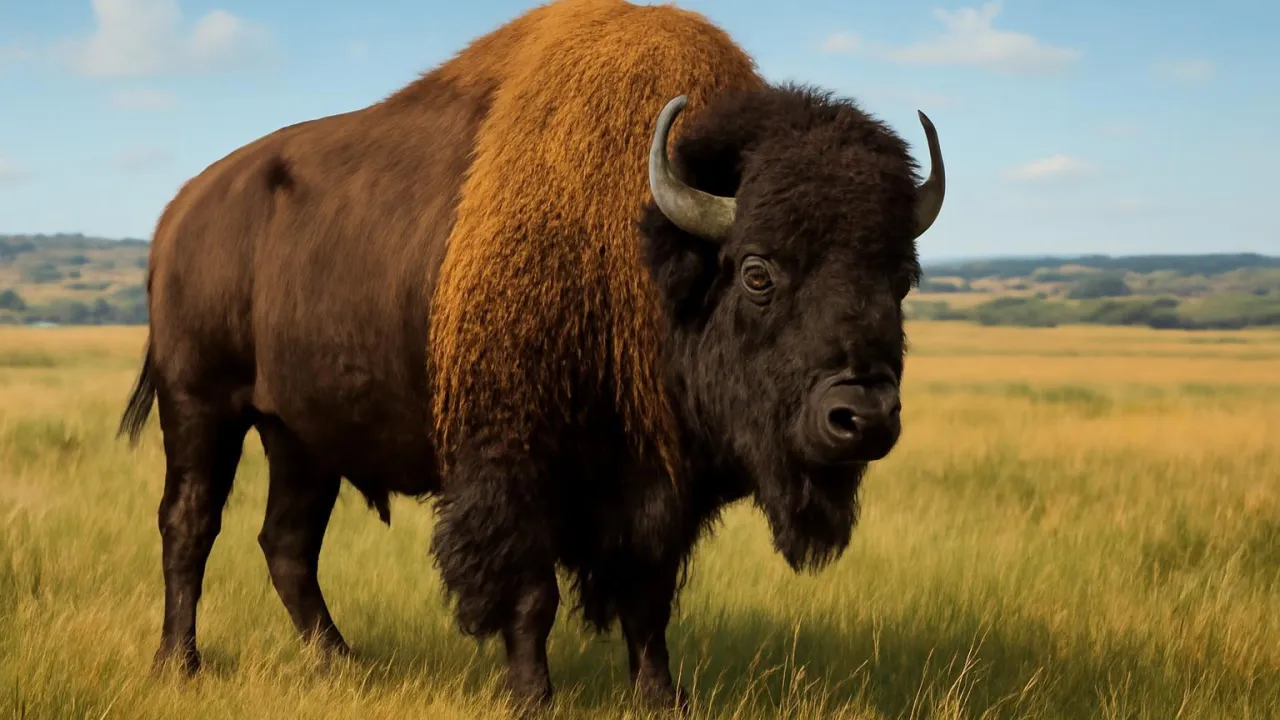
The American bison can run faster than most cars in a school zone!
✨ Word Sparks (Grade 2 Glossary)
Tap 🔊 to hear
plains
Flat land with lots of grass and few trees
calf
A baby bison or cow
hump
A raised bump on an animal's back
🪝
Have you ever wondered how fast a huge bison can run?
1
Big Animals on the Plains
American bison live on wide grasslands and in North America. They are very large animals that can weigh over a ton. Their thick brown fur helps them stay warm in cold weather. Bison use their strong legs to walk and run across the land.
2
Eating and Growing
Bison eat mostly grasses and plants found on the . They chew their food slowly to help digestion. Baby bison are called calves and they grow quickly in their first year. Bison need water every day to stay healthy and strong.
3
A Special Physical Feature
Bison have a large on their shoulders made of muscle and bone. This hump helps them push snow aside in winter to find food. Their sharp horns protect them from predators. Bison can also run very fast, up to 35 miles per hour.
1. What helps bison find food under snow in winter?
2. What is a baby bison called?
🤯 Mind-Blowing Fact • Grade 3
Bison can run up to 35 miles per hour, faster than many wild animals!
✨ Word Sparks (Grade 3 Glossary)
Tap 🔊 to hear
herbivore
An animal that eats only plants
adaptation
A body part that helps animals survive
ecosystem
A place where plants and animals live together
🪝
Did you know the American bison has a special hump to survive winter?
1
Habitat and Size
The American bison lives mostly in North American grasslands and plains. These large can grow up to six feet tall at the shoulder. Their thick, brown fur provides insulation against cold weather. Bison are important animals in their .
2
Adaptations for Survival
The bison’s large shoulder hump contains strong muscles that help it move heavy snow. This allows the bison to find grass beneath the snow during winter. Its sharp horns serve as defense against predators like wolves and bears. These features help the bison survive harsh conditions.
3
Diet and Growth
Bison are that mainly graze on grasses and other plants. They chew their food carefully to extract nutrients needed for energy. Calves, or baby bison, grow quickly during their first year of life. Water is essential for bison to stay hydrated and healthy.
4
Role in the Ecosystem
Bison help maintain grassland by grazing and spreading seeds. Their movement creates trails used by other animals. Bison also serve as prey for large predators, fitting into the food web. Their presence supports biodiversity and healthy habitats.
1. What does the bison’s hump help it do in winter?
2. Why are bison important to grassland ecosystems?
🤯 Mind-Blowing Fact • Grade 4
A bison can run faster than a car driving in a school zone, reaching speeds of 35 mph!
✨ Word Sparks (Grade 4 Glossary)
Tap 🔊 to hear
keystone species
An animal that helps keep its environment healthy
conservation
Protecting animals and plants from harm
habitat
The natural home where an animal lives
🪝
How does the American bison shape its environment and survive tough winters?
1
Habitat and Physical Traits
The American bison inhabits grasslands and plains throughout North America, where it thrives in open spaces. It stands up to six feet tall and weighs over a ton, making it one of the largest land mammals on the continent. Its thick fur and large hump provide insulation and strength to survive harsh winters. These physical traits are vital for its survival in cold climates.
2
Survival Adaptations
The bison’s muscular hump allows it to push away deep snow to reach grasses beneath, ensuring a steady food supply during winter months. Its sharp horns serve as effective defense mechanisms against predators such as wolves and bears. Additionally, its powerful legs help it run at speeds up to 35 miles per hour, enabling quick escapes from danger.
3
Role in the Ecosystem
Bison play a crucial role in maintaining grassland ecosystems by grazing on plants, which promotes new growth and prevents overgrowth. Their movement creates trails that other animals use, enhancing connectivity. Bison also contribute to seed dispersal, helping various plant species reproduce. As a , their presence supports biodiversity and ecosystem health.
4
Human Impact and Conservation
Historically, bison populations declined drastically due to hunting and loss caused by human expansion. efforts have helped restore bison herds in protected areas and national parks. These programs aim to maintain genetic diversity and support ecosystem balance. Understanding human impact is essential to ensure the bison’s survival for future generations.
2. What role do bison play in grassland ecosystems?
🤯 Mind-Blowing Fact • Grade 5
The American bison can run up to 35 miles per hour, faster than many wild predators like wolves!
✨ Word Sparks (Grade 5 Glossary)
Tap 🔊 to hear
keystone species
An animal that helps keep its environment healthy
physiology
How an animal's body works and functions
genetic diversity
Different inherited traits in a group of animals
🪝
What makes the American bison a keystone species vital to North American grasslands?
1
Taxonomy and Scientific Classification
The American bison, scientifically named Bison bison, belongs to the Bovidae family and is native to North American grasslands. It is classified as a large herbivorous mammal known for its robust build and distinctive shoulder hump. This species is divided into two subspecies: the plains bison and the wood bison, each adapted to specific habitats.
2
Physiological Adaptations and Mechanics
Bison have a thick coat of fur that insulates them against extreme temperatures, allowing survival in harsh winters. Their large shoulder hump consists of powerful muscles supported by elongated vertebrae, enabling them to push aside snow to access food. Additionally, their strong legs and hooves support running speeds up to 35 miles per hour, which aids in predator evasion.
3
Ecological Role and Conservation History
As a , the American bison shapes grassland ecosystems by grazing, which promotes plant diversity and soil health. Historically, overhunting and habitat destruction reduced their numbers from millions to less than a thousand by the late 1800s. Conservation initiatives, including protected reserves and breeding programs, have helped restore populations and maintain .
4
Quantitative Comparisons and Physical Facts
Adult bison can weigh up to 2,000 pounds (900 kilograms) and stand about 6 feet (2 meters) tall at the shoulder. They can run at speeds reaching 35 miles per hour (56 kilometers per hour), faster than many large predators. Their lifespan in the wild averages 15 to 20 years, and they consume approximately 1.5% to 2% of their body weight in grasses daily.
5
Human Interaction and Future Challenges
Modern conservation efforts focus on habitat restoration and preventing genetic bottlenecks caused by small population sizes. Bison also hold cultural significance for many Indigenous peoples, who rely on them for food and materials. Climate change and land development continue to pose challenges, making ongoing protection essential for their survival.