1. What helps winter flounders hide from predators?
2. Where do winter flounders live?
🤯 Mind-Blowing Fact • Grade 2
Winter flounders have both eyes on one side of their head to see better!
✨ Word Sparks (Grade 2 Glossary)
Tap 🔊 to hear
predator
An animal that hunts other animals
camouflage
Changing color to hide from others
coastal
Near the edge of the land and ocean
🪝
Have you ever seen a fish that looks like the ocean floor?
1
A Fish That Lies Flat
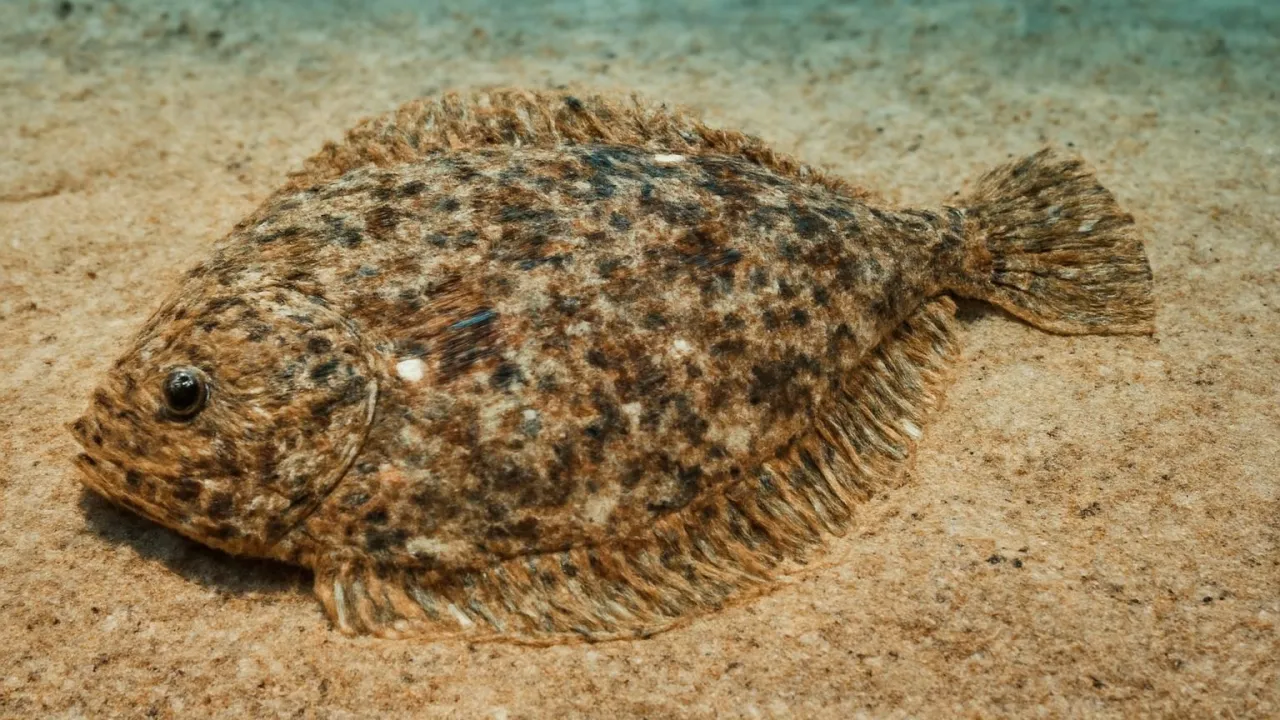
Winter flounders are flat fish that lie on the ocean floor. They have both eyes on one side of their body. This helps them watch for food and danger. Their flat shape helps them hide in the sand.
2
Changing Colors to Hide
They can change their color to match the sand and rocks around them. This helps them avoid and sneak up on prey. Birds and bigger fish find it hard to see them. Their colors can be brown, gray, or sandy.
3
What They Eat and Where They Live
Winter flounders eat small fish, worms, and tiny crabs. They live in cold waters along the Atlantic Ocean. They like sandy or muddy bottoms where they can hide easily. They grow up to two feet long.
Winter flounders can change their color to match the ocean floor perfectly!
✨ Word Sparks (Grade 3 Glossary)
Tap 🔊 to hear
camouflage
Changing color to blend with surroundings
predator
An animal that hunts other animals for food
ecosystem
All living and nonliving things in one place
🪝
How does the winter flounder use its body to survive in the ocean?
1
Unique Flat Shape and Eyes
The winter flounder has a flat body that helps it lie on the ocean floor. Both its eyes are on the same side, allowing it to watch for and prey while staying hidden. This adaptation helps it avoid danger and catch food. Its shape also helps it blend with the sand.
2
Camouflage and Color Change
Winter flounders can change their skin color to match their surroundings. This protects them from by making them almost invisible. Their colors range from brown to gray, matching sand or mud. This adaptation is important for survival in shallow coastal waters.
3
Diet and Feeding Habits
These fish eat small crustaceans, worms, and tiny fish found on the ocean floor. They use their to sneak up on prey without being seen. Their diet provides the nutrients they need to grow and stay healthy. They are important in their .
4
Habitat and Ecosystem Role
Winter flounders live in cold coastal waters of the Northwest Atlantic Ocean. They prefer sandy or muddy bottoms where they can hide easily. They play a key role in the food web, both as and prey for larger fish and birds. Their presence helps keep the balanced.
1. Why is the winter flounder’s flat body important?
2. What role does camouflage play for the winter flounder?
🤯 Mind-Blowing Fact • Grade 4
Winter flounders’ camouflage helps keep coastal ecosystems balanced and healthy by aiding survival.
✨ Word Sparks (Grade 4 Glossary)
Tap 🔊 to hear
symbiosis
Different species living and working together
ecosystem
A community of plants, animals, and environment
conservation
Protecting plants and animals from harm
🪝
How does the winter flounder’s camouflage affect its survival and ecosystem?
1
Camouflage and Survival
Winter flounders use their ability to change color to match the ocean floor, which helps them avoid predators. This camouflage is a cause-and-effect relationship where blending in causes fewer attacks. Their flat bodies and eye placement also increase their chances of survival by allowing them to watch for danger while remaining hidden. These adaptations help them live longer and reproduce.
2
Role in the Food Web
As both predator and prey, winter flounders play an important role in coastal food webs. They feed on small crustaceans and worms, controlling those populations, while larger fish and seabirds rely on them as food. This symbiotic balance helps maintain healthy along the Atlantic coast. Their presence influences many other species.
3
Habitat and Geographic Range
Winter flounders live in cold, shallow waters along the Northwest Atlantic coast, from Canada to the mid-Atlantic United States. They prefer sandy or muddy bottoms where they can easily camouflage. Human activities like fishing and pollution can impact their habitats and population sizes. Protecting their environment is important for their survival.
4
Human Impact and Conservation
Overfishing has reduced winter flounder numbers in some areas, leading to efforts to protect them. Sustainable fishing practices and habitat protection help maintain their populations. Understanding their role in the encourages better human stewardship of coastal environments. These efforts aim to keep winter flounders thriving for future generations.
1. How does camouflage help winter flounders survive?
2. What is one way humans impact winter flounder populations?
🤯 Mind-Blowing Fact • Grade 5
Winter flounders can change their skin color quickly using special cells called chromatophores!
✨ Word Sparks (Grade 5 Glossary)
Tap 🔊 to hear
demersal
Fish that live near the ocean floor
chromatophores
Skin cells that change color for camouflage
benthic
Living on or near the bottom of water
🪝
What scientific adaptations allow the winter flounder to thrive in cold coastal waters?
1
Taxonomy and Scientific Classification
The winter flounder, scientifically named Pseudopleuronectes americanus, belongs to the family Pleuronectidae. This family includes flatfish species known for their unique eye migration during development. The winter flounder is a fish, living on or near the seabed in temperate coastal waters of the Northwest Atlantic Ocean.
2
Physiological Adaptations for Survival
Winter flounders have evolved a flattened body with both eyes on the left side, allowing them to lie flat and watch their surroundings simultaneously. Their skin contains that enable rapid color changes for camouflage, which is crucial for avoiding predators and ambushing prey. They also have a slow metabolism suited for cold water temperatures ranging from 32 to 55 degrees Fahrenheit.
3
Ecological Role and Conservation Status
As predators, winter flounders feed on small crustaceans, polychaete worms, and juvenile fish, helping regulate benthic community populations. They are prey for larger fish and marine mammals, making them integral to coastal food webs. Overfishing and habitat degradation have led to population declines, prompting conservation measures including fishing quotas and habitat restoration.
4
Comparative Size and Growth
Winter flounders can reach lengths up to 24 inches (61 centimeters) and weigh approximately 3 to 5 pounds (1.4 to 2.3 kilograms). They grow more slowly in colder waters, often taking 3 to 4 years to reach maturity. Compared to other flatfish like summer flounder, winter flounders tolerate colder temperatures and have a more northerly distribution.
5
Historical and Human Interactions
Historically, winter flounders have been important to commercial fisheries along the Atlantic coast since the 1800s. Their populations have fluctuated due to fishing pressure and environmental changes. Modern conservation efforts emphasize sustainable fishing and monitoring to ensure the species remains a vital part of coastal ecosystems and fisheries.