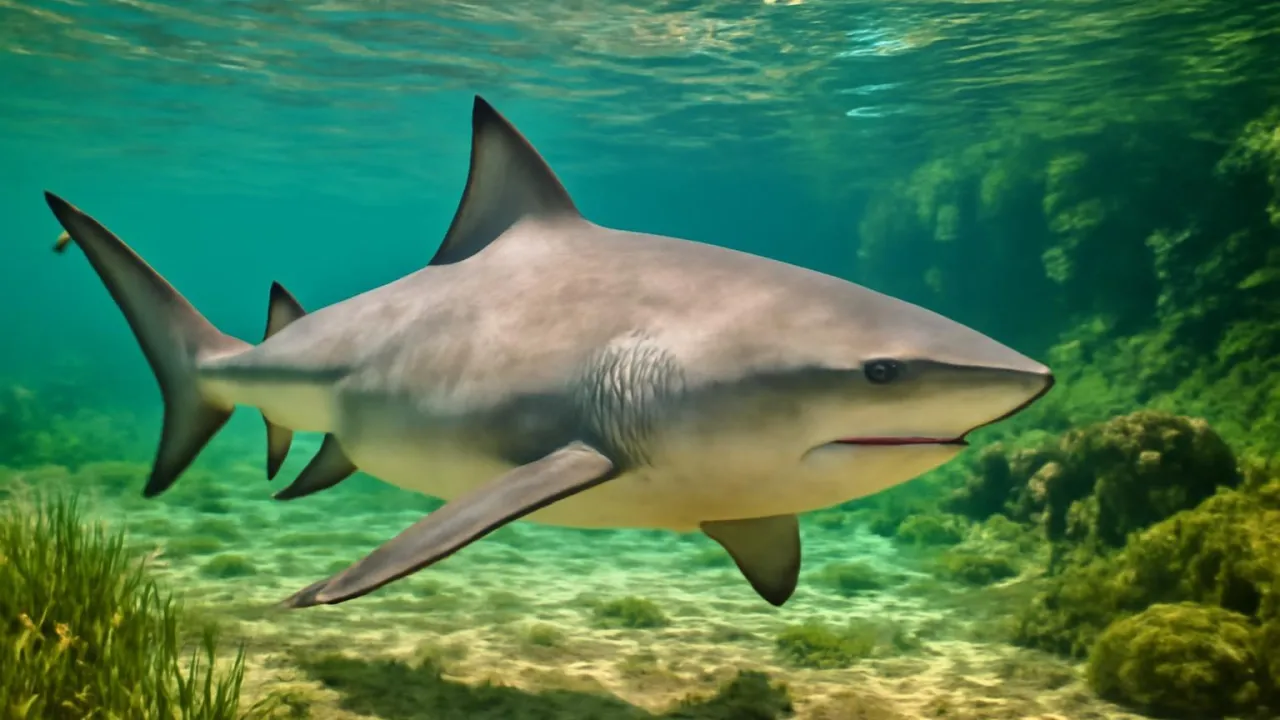
Bull sharks can swim far up rivers, even living in fresh water for months!
✨ Word Sparks (Grade 2 Glossary)
Tap 🔊 to hear
predator
An animal that hunts other animals for food.
fresh water
Water without salt, like in rivers or lakes.
prey
An animal that is hunted and eaten.
🪝
Have you ever heard of a shark that swims in rivers and oceans?
1
Strong and Big Shark
The bull shark is strong and big, growing up to eleven feet long. It has gray skin and a wide mouth full of sharp teeth. This shark can swim very fast in water to catch its .
2
Living in Two Waters
Bull sharks live in warm oceans and rivers near coasts. They can survive in both salty ocean water and fresh river water. This ability helps them hunt in many places where other sharks cannot go.
3
Hungry Hunter
Bull sharks eat many animals like fish, turtles, and even dolphins. They use their strong teeth to bite and catch food quickly. Their hunting skills make them one of the ocean’s top .
Bull sharks can travel thousands of miles up rivers, even reaching freshwater lakes.
✨ Word Sparks (Grade 3 Glossary)
Tap 🔊 to hear
osmoregulation
How animals keep water and salt balanced inside their bodies.
estuary
Where river water meets the ocean water.
predator
An animal that hunts other animals to eat.
🪝
Did you know the bull shark can live in both salty oceans and fresh rivers?
1
Powerful Hunter
Bull sharks are powerful with strong jaws and sharp teeth. Their wide mouths help them catch large prey like fish and turtles. They swim quickly to surprise their prey before biting. This shark is one of the most dangerous in shallow waters.
2
Unique Adaptation
Bull sharks have a special adaptation called that lets them live in fresh and salt water. This ability helps them survive in rivers where other sharks cannot. It allows them to hunt in many different habitats, increasing their chances of finding food.
3
Habitat and Range
Bull sharks live in warm coastal waters around the world and travel far up rivers. They are often found near estuaries where fresh and salt water mix. This wide range helps them find food and avoid . Their presence affects local ecosystems.
4
Role in Ecosystem
As top , bull sharks help keep fish populations balanced by eating weak or sick animals. They play an important role in the food web by controlling prey numbers. Their hunting behavior influences the health of marine and river ecosystems.
1. What special ability helps bull sharks live in rivers?
2. Why are bull sharks important in ecosystems?
🤯 Mind-Blowing Fact • Grade 4
Bull sharks’ osmoregulation lets them swim thousands of miles up freshwater rivers worldwide.
✨ Word Sparks (Grade 4 Glossary)
Tap 🔊 to hear
apex predator
The top hunter in an ecosystem.
migration
Animals moving from one place to another.
conservation
Protecting animals and their homes.
🪝
How does the bull shark survive in both salty oceans and fresh rivers?
1
Adaptations for Dual Habitats
Bull sharks have a unique physiological adaptation called osmoregulation that allows them to regulate salt levels in their bodies, enabling survival in both saltwater and freshwater environments. This adaptation lets them travel far up rivers where few other sharks can go, giving them access to new food sources and less competition from other predators.
2
Ecosystem Role and Food Web
As , bull sharks play a critical role in maintaining balanced food webs by preying on a variety of fish, turtles, and marine mammals. Their hunting controls prey populations, which helps prevent overgrazing of aquatic vegetation and supports ecosystem health. Additionally, their presence influences the behavior of other animals in their habitat.
3
Geographic Distribution and Migration
Bull sharks are found in warm coastal waters worldwide, including the Atlantic, Pacific, and Indian Oceans, and they frequently migrate into freshwater rivers and lakes. Their ability to tolerate different salinities allows them to exploit diverse habitats, increasing their survival chances. This wide distribution makes them one of the most adaptable shark species.
4
Human Impact and Conservation
Human activities such as fishing, habitat destruction, and pollution threaten bull shark populations in some areas. Because they sometimes enter rivers near human settlements, encounters with people can increase, leading to negative perceptions. efforts focus on protecting habitats and educating the public about their ecological importance.
1. What adaptation helps bull sharks live in fresh water?
2. Why do bull sharks help ecosystems?
🤯 Mind-Blowing Fact • Grade 5
Bull sharks can swim over 2,500 miles upriver, adapting to both fresh and salt water environments.
✨ Word Sparks (Grade 5 Glossary)
Tap 🔊 to hear
homeostasis
Keeping the body’s inside balanced and steady.
apex predator
The top hunter in an ecosystem.
osmoregulation
Controlling salt and water inside the body.
🪝
What makes the bull shark one of the most adaptable and powerful sharks on Earth?
1
Scientific Classification and Taxonomy
The bull shark, scientifically named Carcharhinus leucas, belongs to the family Carcharhinidae, which includes many requiem sharks. It is distinguished by its robust body, blunt snout, and aggressive behavior. This species is notable for its ability to thrive in diverse aquatic environments, unlike most other sharks limited to saltwater.
2
Physiological Mechanics of Osmoregulation
Bull sharks possess advanced osmoregulatory mechanisms that actively control salt and water balance through specialized kidneys and rectal glands. This physiological process allows them to maintain internal when moving between freshwater and saltwater, preventing dehydration or salt overload. This unique adaptation supports their survival in estuaries and rivers.
3
Conservation Status and Human Interaction
Despite their adaptability, bull sharks face threats from overfishing, habitat degradation, and pollution. Their tendency to enter freshwater systems near human populations increases the risk of negative encounters. Conservation efforts emphasize habitat protection, sustainable fishing practices, and public education to reduce conflicts and preserve populations.
4
Ecological Role and Food Web Dynamics
As , bull sharks regulate populations of fish, turtles, and small marine mammals, maintaining ecosystem balance. Their predation influences prey behavior and distribution, which indirectly affects aquatic vegetation and nutrient cycling. This trophic regulation is vital for healthy marine and freshwater ecosystems.
5
Quantitative Comparisons and Habitat Range
Bull sharks can grow up to 11.5 feet (3.5 meters) and weigh over 500 pounds (227 kilograms). They have been recorded swimming over 2,500 miles (4,000 kilometers) upriver in freshwater. Their preferred water temperature ranges from 70 to 85 degrees Fahrenheit (21 to 29 degrees Celsius), enabling survival in tropical and subtropical regions worldwide.