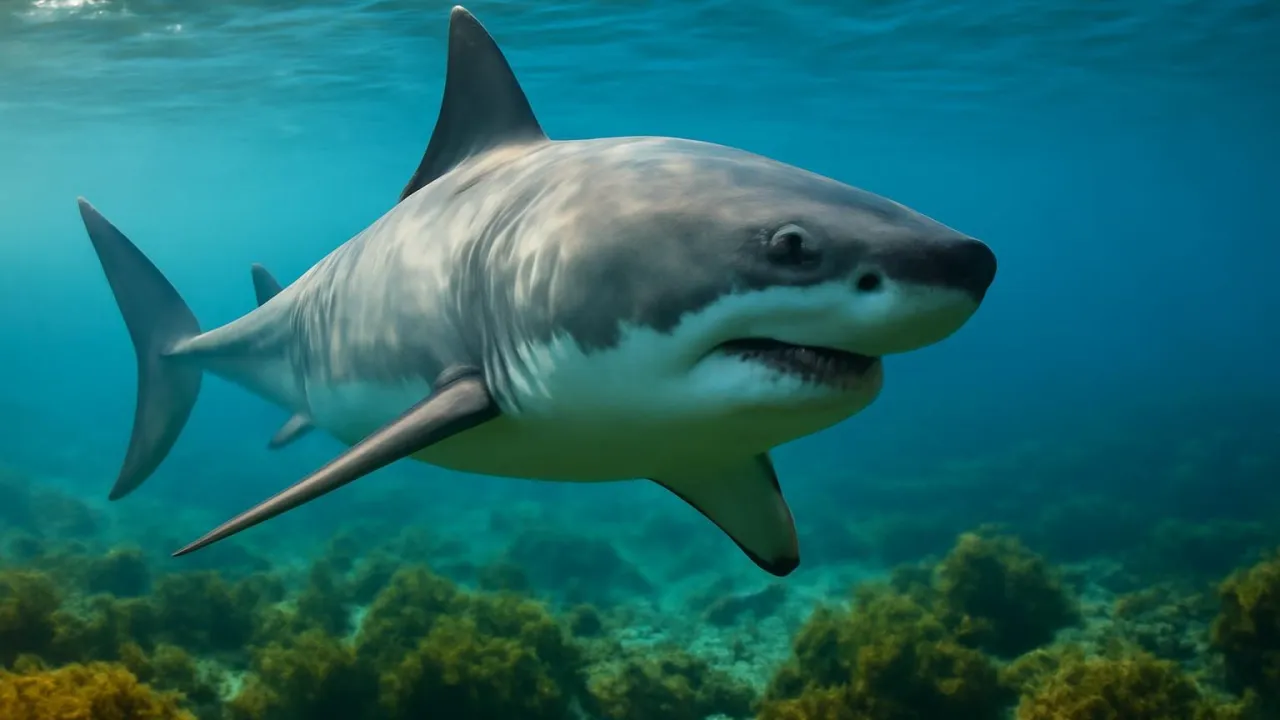
Great white sharks can leap out of the water to catch seals in mid-air!
✨ Word Sparks (Grade 2 Glossary)
Tap 🔊 to hear
prey
Animals that sharks eat for food.
coastal
Near the edge of the ocean and land.
rough
Not smooth; feels bumpy or scratchy.
🪝
Have you heard how great white sharks hunt in the ocean?
1
Strong and Fast Swimmers
Great white sharks are strong and swim very fast in the ocean waters. They can jump out of water to catch . Their sharp teeth help them bite through tough skin easily.
2
What They Eat and Where
They eat seals, fish, and sea mammals near the shore. Great white sharks live in cool waters all around the world. They often hide near rocks and reefs to surprise their .
3
Cool Shark Features
Their noses can smell one drop of blood in 25 gallons of water. This helps them find food far away. Their bodies are strong, and their skin feels like sandpaper.
1. What helps great white sharks find food far away?
2. Where do great white sharks often hide to catch prey?
🤯 Mind-Blowing Fact • Grade 3
Great white sharks can detect a single drop of blood in 25 gallons of water from miles away!
✨ Word Sparks (Grade 3 Glossary)
Tap 🔊 to hear
camouflage
Colors that help animals hide from others.
apex predator
Top animal that no other hunts.
dermal denticles
Tiny scales that make shark skin rough.
🪝
Did you know great white sharks use camouflage to sneak up on prey?
1
Master of Camouflage
Great white sharks have white bellies and gray backs to blend with the ocean. This helps them hide from prey below and above. Their body shape is streamlined for fast swimming. This adaptation allows them to surprise their prey easily.
2
Powerful Predators
They are , meaning they have no natural enemies. Their sharp teeth are perfect for gripping slippery prey like seals. Great whites use their keen sense of smell to detect blood from miles away. This helps them find injured or weak animals to eat.
3
Life in the Ocean
Great white sharks live mostly in coastal waters where food is plentiful. They are solitary hunters but sometimes gather near seal colonies. Their skin has tiny tooth-like scales called that reduce drag. This feature improves swimming speed and energy efficiency.
4
Hunting and Survival
They use a sudden burst of speed to catch prey by surprise. Great whites often attack from below, using the ocean floor as cover. Their powerful muscles help them leap out of the water during hunting. This technique is called breaching and is very effective.
1. What helps great white sharks swim faster and save energy?
2. Why do great white sharks use camouflage?
🤯 Mind-Blowing Fact • Grade 4
Great white sharks can swim at speeds up to 25 miles per hour to catch fast prey!
✨ Word Sparks (Grade 4 Glossary)
Tap 🔊 to hear
ecosystem
All living things and their homes together.
migration
Moving long distances to find food or mates.
conservation
Protecting animals and places from harm.
🪝
How does the great white shark’s hunting skill affect ocean ecosystems?
1
Role as Apex Predator
Great white sharks are apex predators that control populations of seals and fish, maintaining balance in ocean food webs. Their hunting keeps prey populations healthy by removing weak or sick animals. This cause-and-effect relationship supports diverse marine . Without sharks, some species might overpopulate and harm habitats.
2
Adaptations for Hunting
Their streamlined bodies and powerful tails enable fast swimming to catch prey quickly. Sharp teeth and strong jaws allow them to bite through tough skin and bones. Their excellent sense of smell detects blood from miles away, guiding them to injured animals. These adaptations increase their hunting success in coastal waters.
3
Distribution and Habitat
Great white sharks live in temperate coastal waters worldwide, especially near seal colonies. They prefer cooler waters but can travel long distances during . Human activities like fishing and pollution affect their habitats and food sources. efforts help protect these sharks and their important role in marine .
4
Human Impact and Conservation
Overfishing and habitat loss have reduced great white shark numbers in some areas. Shark finning and bycatch are major threats to their survival. Marine protected areas and fishing regulations aim to conserve shark populations. Educating people about sharks’ ecological role helps reduce fear and promote coexistence.
1. Why is the great white shark important to ocean ecosystems?
2. What threatens great white sharks today?
🤯 Mind-Blowing Fact • Grade 5
Great white sharks can detect electrical signals from prey using special sensors called ampullae of Lorenzini.
✨ Word Sparks (Grade 5 Glossary)
Tap 🔊 to hear
cartilaginous
Skeleton made of flexible, light cartilage.
ampullae of Lorenzini
Special sensors that detect electric signals.
vulnerable
At risk of becoming endangered or lost.
🪝
What unique features make the great white shark a top ocean predator worldwide?
1
Scientific Classification and Evolution
The great white shark, scientifically named Carcharodon carcharias, belongs to the family Lamnidae. It has evolved over millions of years with adaptations suited for predation in marine environments. Fossil records show ancestors dating back 16 million years. This species is closely related to mako sharks, sharing similar hunting traits.
2
Physiological Mechanics and Sensory Abilities
Great white sharks possess a skeleton that reduces body weight for swift swimming. Their muscular bodies and crescent-shaped tails generate powerful thrusts reaching speeds up to 25 miles per hour. Their detect electric fields from prey, and their olfactory bulbs can sense one drop of blood in 25 gallons of water.
3
Conservation Status and Human Impact
Classified as by the IUCN, great white sharks face threats from overfishing, bycatch, and habitat degradation. Shark finning and accidental capture in fishing gear reduce populations worldwide. Conservation programs include marine protected areas, fishing limits, and public education to promote shark protection and ecosystem health.
4
Ecological Role and Quantitative Comparisons
As apex predators, great white sharks regulate marine food webs by preying on seals and large fish species. Adults can weigh over 2,400 pounds (1,100 kilograms) and measure up to 20 feet (6 meters) long. Their hunting speed of 25 miles per hour surpasses most prey, enabling successful ambushes. This balance maintains biodiversity in ocean ecosystems.
5
Historical and Cultural Significance
Great white sharks have fascinated humans for centuries, featuring in folklore and marine biology studies. Early research helped reveal their role in ocean health and inspired conservation efforts. Today, they are symbols of ocean power and resilience, encouraging scientific interest and protection policies worldwide.