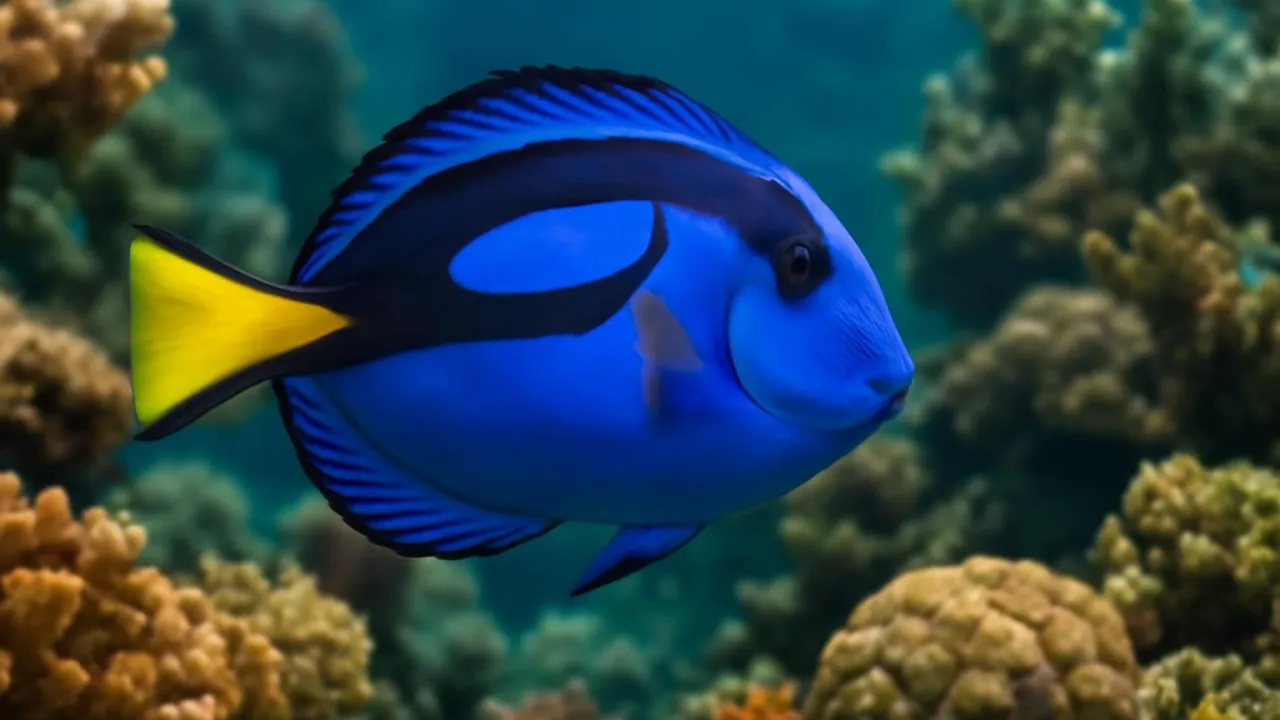
When scared, the regal blue tang can turn a darker shade of blue!
✨ Word Sparks (Grade 2 Glossary)
Tap 🔊 to hear
algae
Tiny plants that grow in water
coral reef
Underwater home made of coral
tail
Back fin that helps fish swim
🪝
Have you ever seen a fish as blue as the sky on a sunny day?
1
Bright and Beautiful
The regal blue tang has a bright blue body with black markings. It swims quickly through . Its is yellow and helps it steer well.
2
Living in Coral Reefs
This fish lives in warm ocean waters near . It hides among coral branches to stay safe. The reefs provide food and shelter for many fish.
3
Eating Tiny Plants
The regal blue tang eats , which are tiny plants on rocks and coral. Eating algae helps keep the reef clean and healthy. It uses its small mouth to nibble carefully.
The regal blue tang’s sharp tail spines can defend against bigger fish trying to attack it!
✨ Word Sparks (Grade 3 Glossary)
Tap 🔊 to hear
camouflage
Colors that help hide from enemies
predator
Animal that hunts other animals
nutrients
Food parts that help living things grow
🪝
Did you know the regal blue tang uses its bright colors to hide from predators?
1
Color and Camouflage
The regal blue tang has bright blue skin with black markings that help it blend into coral reefs. This protects it from . When stressed, it can darken its color to hide better.
2
Habitat in Coral Reefs
This fish lives in the Indo-Pacific coral reefs, where it finds food and shelter. Coral reefs provide and safe places to hide. The fish uses the reef’s complex shapes to avoid .
3
Eating Algae for Survival
The regal blue tang feeds on algae growing on coral and rocks, which provides essential . Eating algae helps prevent overgrowth that can harm the reef. This feeding behavior supports the reef’s health.
4
Body Adaptations
Its sharp spines near the tail protect it from . The fish’s flat body helps it swim quickly through narrow coral spaces. These adaptations increase its chances of survival in a busy reef.
Without regal blue tangs, coral reefs can become overrun with algae, harming many sea creatures.
✨ Word Sparks (Grade 4 Glossary)
Tap 🔊 to hear
symbiosis
Two living things helping each other
ecosystem
All plants and animals in one place
pollution
Harmful waste that hurts nature
🪝
How does the regal blue tang’s bright color help it survive in coral reefs?
1
Color and Survival
The regal blue tang’s bright blue and black colors serve as camouflage among coral reefs, helping it avoid predators. When stressed, the fish darkens its color, which further aids in hiding from threats. This color change is a cause-and-effect survival strategy that helps it stay safe in a dangerous environment.
2
Role in the Ecosystem
By feeding on algae, the regal blue tang helps control algae growth, which maintains coral health. This symbiotic relationship supports the reef’s food web, benefiting many organisms that rely on the coral and fish. Without this fish, algae could overgrow and damage the reef , harming many sea creatures.
3
Habitat and Distribution
This species inhabits coral reefs throughout the Indo-Pacific Ocean, including areas near Australia, Japan, and East Africa. Warm water temperatures and healthy coral structures are essential for its survival. Human activities like and overfishing threaten these habitats and the fish’s population.
4
Adaptations for Protection
The regal blue tang has sharp spines near its tail that it uses to defend against predators. Its body shape allows it to dart quickly through narrow reef spaces, escaping danger. These adaptations increase its chances of survival in a competitive full of predators and other fish.
The regal blue tang’s algae-eating habits help coral reefs survive and support thousands of marine species.
✨ Word Sparks (Grade 5 Glossary)
Tap 🔊 to hear
Acanthuridae
Family of fish with sharp tail spines
symbiotic
Living together and helping each other
physiological
How a body works and reacts
🪝
Did you know the regal blue tang plays a vital role in maintaining coral reef ecosystems across the Indo-Pacific?
1
Scientific Classification and Habitat
The regal blue tang, scientifically named Paracanthurus hepatus, belongs to the family . It inhabits coral reefs in the Indo-Pacific region, including waters near Australia, Japan, and East Africa. These reefs provide the necessary warm temperatures and complex structures for shelter and feeding. The species thrives in water temperatures ranging from 73 to 82 degrees Fahrenheit (23 to 28 degrees Celsius).
2
Physiological Adaptations and Behavior
This fish exhibits a vibrant blue coloration with black markings that help with camouflage among coral. It can slightly darken its color when stressed, a response to avoid predators. The sharp spines near its tail act as a defense mechanism, deterring larger fish from attacking. Its flat body shape allows it to swim quickly through narrow reef spaces, escaping threats efficiently.
3
Ecological Role and Conservation
Regal blue tangs feed primarily on algae, preventing algal overgrowth that can suffocate corals and disrupt reef ecosystems. This relationship supports biodiversity and reef resilience. However, habitat destruction and pollution threaten their populations, making conservation efforts critical. Protecting coral reefs helps maintain the delicate balance this fish depends on.
4
Botanical and Culinary Curiosity
Though the regal blue tang is a fish, it feeds on algae, which are simple aquatic plants. Unlike botanical fruits such as tomatoes or cucumbers, algae are not fruits but essential producers in marine food webs. This diet helps maintain balance in coral reef ecosystems and supports many other marine species.
5
Quantitative Comparisons and Facts
The regal blue tang grows up to 12 inches (30 centimeters) in length and can swim at speeds up to 5 miles per hour (8 kilometers per hour). Its tail spines can inflict painful wounds, providing an effective defense. The fish’s ability to change color slightly when stressed is a rare trait among reef fish. These combined traits make it a fascinating and important species in coral reefs.