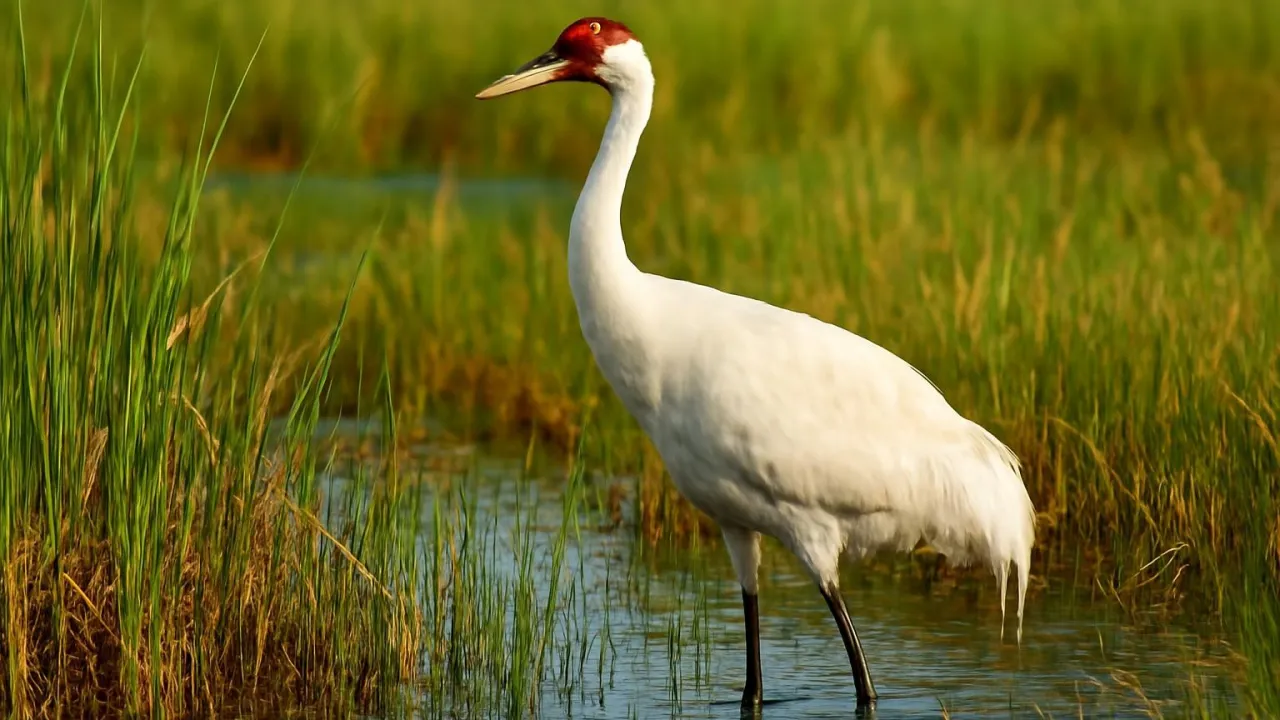
Whooping cranes migrate over 2,500 miles each year, one of the longest flights for North American birds!
✨ Word Sparks (Grade 2 Glossary)
Tap 🔊 to hear
wetlands
Land with water and plants all year
migration
Animals flying or moving to new homes
nest
A bird's home made of sticks and grass
🪝
Have you ever seen a bird as tall as a small child?
1
Tall White Birds
Whooping cranes are very tall birds that stand up to five feet high. Their feathers are mostly white with black tips on their wings. They have long legs and necks that help them walk in .
2
Wetland Homes
These birds live in wetland areas with shallow water and tall grasses. They build near water to keep their eggs safe. provide food and shelter for the cranes during the year.
3
Eating and Flying
Whooping cranes eat fish, insects, and plants found in . They use their long beaks to catch food in the water. These cranes fly thousands of miles during every year to find warmer places.
Whooping cranes can fly nonstop for hours during migration, showing incredible endurance and strength.
✨ Word Sparks (Grade 3 Glossary)
Tap 🔊 to hear
camouflage
Colors that help animals hide from others
predator
An animal that hunts other animals for food
adaptation
A body part that helps animals survive
🪝
Did you know whooping cranes use camouflage to hide in wetlands?
1
Tall Birds with White Feathers
Whooping cranes stand about five feet tall with long legs and necks. Their white feathers help them blend into bright wetland skies. This protects them from while they search for food.
2
Wetland Habitat and Nesting
These cranes live in wetlands with shallow water and tall grasses. They build nests on small islands or floating mats to keep eggs safe from flooding. The wetland provides nutrients and shelter for their young chicks.
3
Diet and Feeding Adaptations
Whooping cranes eat fish, frogs, insects, and plants found in wetlands. Their long beaks help them catch slippery prey easily. This allows them to feed efficiently in watery environments.
4
Migration and Survival
Each year, whooping cranes migrate thousands of miles between breeding and wintering grounds. This long flight helps them avoid cold winters and find food. Migration is a survival strategy that requires strong wings and energy.
Whooping cranes can fly at speeds up to 50 miles per hour during migration, covering great distances efficiently.
✨ Word Sparks (Grade 4 Glossary)
Tap 🔊 to hear
plumage
The feathers covering a bird's body
ecosystem
A community of plants and animals living together
conservation
Protecting nature to help animals survive
🪝
How do whooping cranes survive long flights and harsh winters each year?
1
Physical Features and Adaptations
Whooping cranes have long legs and necks that allow them to wade through wetlands easily, searching for food. Their white provides camouflage against bright skies, helping avoid predators. The black tips on their wings strengthen feathers for long flights. These adaptations enable survival in diverse wetland .
2
Wetland Ecosystem Role
As predators, whooping cranes control populations of fish, insects, and amphibians in wetlands, maintaining balance. Their feeding stirs up nutrients, benefiting plants and other animals. Wetlands also provide breeding grounds, where cranes build nests on floating vegetation to protect eggs from flooding.
3
Migration and Geographic Range
Whooping cranes migrate annually from northern breeding grounds in Canada to southern U.S. wintering sites, traveling over 2,500 miles. This migration avoids harsh winters and ensures access to food. Migration routes cross multiple states, requiring efforts across regions to protect habitats.
4
Human Impact and Conservation
Whooping cranes faced near extinction due to habitat loss and hunting but now benefit from protection programs. includes habitat restoration and captive breeding to increase populations. Human activities still threaten wetlands, so ongoing efforts are vital for crane survival and wetland health.
Whooping cranes were once nearly extinct, with only 15 wild birds left in 1941, but now number over 800 due to conservation.
✨ Word Sparks (Grade 5 Glossary)
Tap 🔊 to hear
Gruidae
The family group cranes belong to
metabolic
How animals use energy in their bodies
apex predator
Top animal that hunts others in its habitat
🪝
What makes the whooping crane one of North America’s most remarkable migratory birds?
1
Taxonomy and Scientific Classification
The whooping crane, scientifically named Grus americana, belongs to the family within the order Gruiformes. It is one of the tallest North American birds, distinguished by its striking white plumage and black wing tips. This species is closely related to other cranes but is unique for its loud whooping call used in communication.
2
Physiological Adaptations for Flight and Feeding
Whooping cranes possess powerful flight muscles and long, broad wings that enable sustained flights at speeds up to 50 miles per hour. Their elongated legs and necks facilitate wading in shallow wetlands, while their sharp, pointed beaks efficiently capture fish, amphibians, and aquatic insects. These physiological traits optimize their survival in wetland habitats.
3
Migration Patterns and Energy Use
Each year, whooping cranes undertake a migration exceeding 2,500 miles from Canadian breeding grounds to southern U.S. wintering areas. This journey requires significant energy reserves, which they build through high-calorie diets before migration. Their ability to fly nonstop for hours demonstrates remarkable endurance and efficiency.
4
Conservation History and Current Status
Once near extinction with fewer than 20 individuals in the 1940s, whooping cranes have recovered due to captive breeding and habitat protection programs. Conservation efforts focus on wetland restoration and minimizing human disturbance along migration corridors. Despite progress, the species remains endangered, requiring continued international cooperation.
5
Quantitative Comparisons and Ecological Impact
Whooping cranes can weigh up to 15 pounds (7 kilograms) and stand nearly 5 feet tall (1.5 meters). They fly faster than many other large birds and cover longer migration distances than most North American species. Their role as apex wetland predators influences aquatic food webs, contributing to ecosystem health and biodiversity.