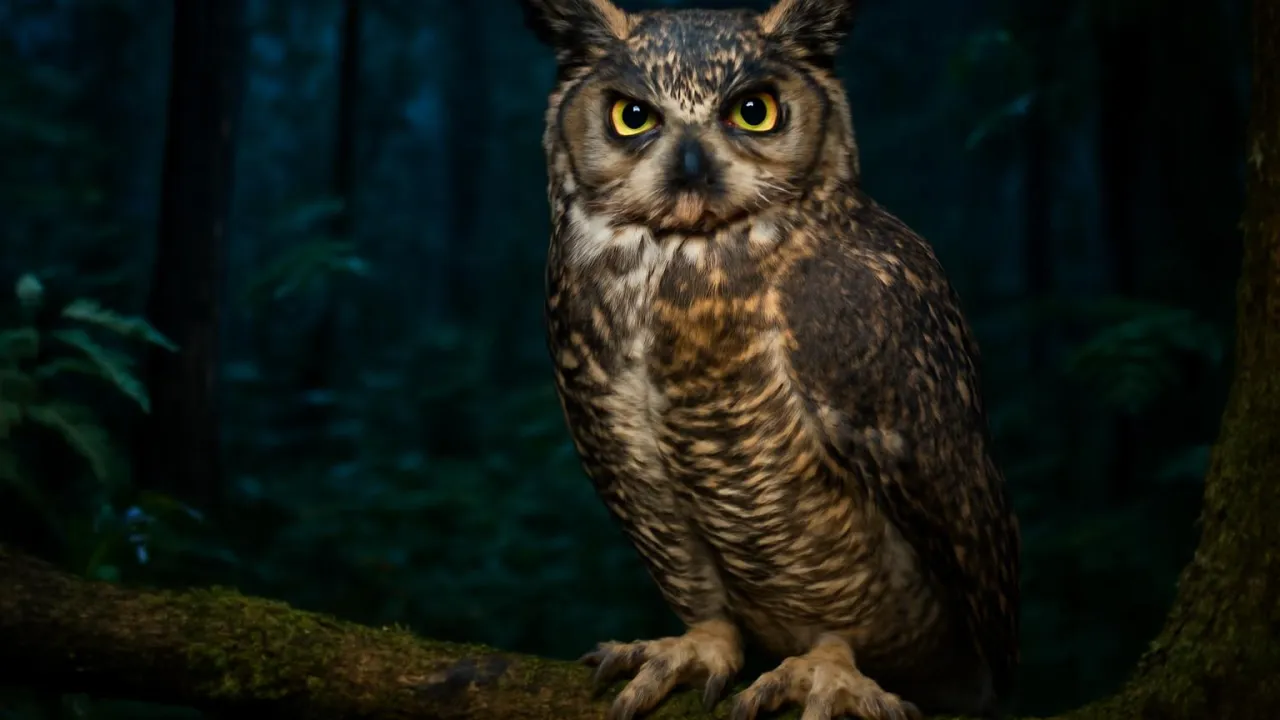
Great Horned Owls can hear sounds from very far away, even under snow!
✨ Word Sparks (Grade 2 Glossary)
Tap 🔊 to hear
prey
Animals that owls hunt and eat
tufts
Small groups of feathers that look like ears
nest
A bird’s home made of sticks and leaves
🪝
Have you ever heard an owl hoot in the quiet night?
1
Owl’s Appearance
Great Horned Owls have large yellow eyes and feathered ear . Their feathers are brown, white, and gray with patterns. These colors help owls blend into tree bark. Their strong claws help catch quickly.
2
Where They Live
They live in many places like forests, deserts, and cities. Owls build in tall trees or use old nests from other birds. They are mostly active at night when they hunt for food. During the day, they rest hidden in tree branches.
3
What They Eat
Great Horned Owls eat small animals like mice, rabbits, and birds. Their sharp beaks tear food into pieces easily. Owls use silent flight to sneak up on without being heard. This helps them catch food better in the dark.
Great Horned Owls can hear prey moving under leaves or snow from over 100 feet away!
✨ Word Sparks (Grade 3 Glossary)
Tap 🔊 to hear
camouflage
Colors that help animals hide in nature
talons
Sharp claws birds use to catch prey
nocturnal
Active at night, resting during the day
🪝
Did you know Great Horned Owls have special feathers for silent flight?
1
Silent Flight and Camouflage
Great Horned Owls have soft feathers that muffle sound during flight. This silent flight helps them sneak up on prey without warning. Their mottled brown and gray feathers act as in trees. Camouflage helps owls avoid predators and surprise prey.
2
Habitat and Range
These owls live across North and South America in forests, deserts, and cities. They adapt well to many habitats by nesting in trees or using abandoned nests. Their wide range helps them find food and shelter throughout the year. They are mostly , hunting at night to avoid competition.
3
Diet and Hunting
Great Horned Owls are carnivores that eat mammals, birds, and reptiles. Their sharp and beaks help capture and kill prey quickly. They use excellent night vision and acute hearing to locate animals in darkness. This combination of skills makes them efficient hunters.
4
Adaptations for Survival
The owl’s large eyes gather more light for better night vision. Their ear tufts do not help hearing but may help with or communication. Owls can rotate their heads up to 270 degrees to see around without moving their bodies. These adaptations improve hunting and staying safe.
Great Horned Owls can hunt animals as large as skunks, using powerful talons despite the strong smell!
✨ Word Sparks (Grade 4 Glossary)
Tap 🔊 to hear
apex predator
Top animal that hunts others in food webs
ecological
Relating to how living things interact
biodiversity
Many different plants and animals living together
🪝
How do Great Horned Owls silently rule the night skies and food webs?
1
Silent Flight and Ecosystem Role
Great Horned Owls have specialized feathers that reduce noise during flight, allowing them to hunt silently. This silent flight gives them an advantage as in their ecosystems. They help control populations of rodents and other small animals, maintaining balance in food webs. Their presence supports healthy forests and fields by limiting overpopulation.
2
Habitat and Geographic Range
These owls inhabit a wide range of environments, from dense forests to deserts across North and South America. They adapt well to urban areas, nesting in parks and large trees, showing great flexibility. Their ability to live in diverse habitats helps them survive environmental changes and human impacts. This wide distribution makes them one of the most common owls in the Americas.
3
Hunting Strategies and Adaptations
Great Horned Owls hunt mainly at night using exceptional night vision and acute hearing to locate prey. Their silent flight and powerful talons allow them to capture prey quickly and efficiently. They prey on a variety of animals, including mammals, birds, reptiles, and even skunks. This diverse diet helps them survive in many different environments and seasons.
4
Human Impact and Conservation
While Great Horned Owls face threats from habitat loss and collisions with vehicles, they remain widespread and adaptable. Conservation efforts focus on protecting natural habitats and reducing human disturbances. Educating people about the owl’s role in ecosystems helps promote coexistence. These owls are important indicators of environmental health and .
1. What role do Great Horned Owls play in their ecosystems?
2. How do Great Horned Owls hunt quietly at night?
🤯 Mind-Blowing Fact • Grade 5
Great Horned Owls can rotate their heads up to 270 degrees, letting them see almost all around without moving their bodies!
✨ Word Sparks (Grade 5 Glossary)
Tap 🔊 to hear
asymmetrical
Ears placed at different heights for better hearing
rod cells
Eye cells that help see in very low light
apex predator
Top hunter in an ecosystem with no enemies
🪝
What makes the Great Horned Owl a master nocturnal predator across two continents?
1
Taxonomy and Scientific Classification
The Great Horned Owl, scientifically named Bubo virginianus, belongs to the family Strigidae. This family includes typical owls known for their nocturnal habits and excellent sensory adaptations. Within its genus Bubo, it is closely related to other large owls like the Eurasian Eagle-Owl. Its classification reflects evolutionary traits such as feathered ear tufts and powerful talons.
2
Physiological Adaptations for Hunting
This owl’s silent flight is enabled by specialized fringed feathers that reduce turbulence and noise. Its large eyes contain a high number of , enhancing night vision in low light conditions. The owl’s ear placement allows precise sound localization to detect prey movements even under snow or leaves. Strong leg muscles and sharp talons deliver lethal force to subdue prey quickly.
3
Conservation Status and Human Interaction
Great Horned Owls are currently classified as Least Concern due to their wide distribution and adaptability. However, habitat destruction and vehicle collisions pose localized risks to populations. Conservation efforts include habitat preservation and public education to reduce human-wildlife conflicts. Historically, indigenous cultures revered these owls for their hunting prowess and spiritual significance.
4
Ecological Role and Food Web Impact
As , Great Horned Owls regulate populations of rodents, rabbits, and other small mammals, which can affect vegetation growth indirectly. Their diet also includes birds, reptiles, and amphibians, showing ecological versatility. By controlling prey species, they help maintain balanced ecosystems across diverse habitats from deserts to forests. Their presence indicates healthy biodiversity and ecosystem stability.
5
Quantitative Comparisons and Records
Great Horned Owls weigh between 2 to 5.5 pounds (0.9 to 2.5 kilograms) and measure up to 25 inches (64 centimeters) tall. They can fly silently at speeds up to 40 miles per hour (64 kilometers per hour) during hunting dives. Their hearing can detect prey sounds from over 100 feet (30 meters) away, even beneath snow cover. These impressive physical abilities make them formidable nocturnal hunters.