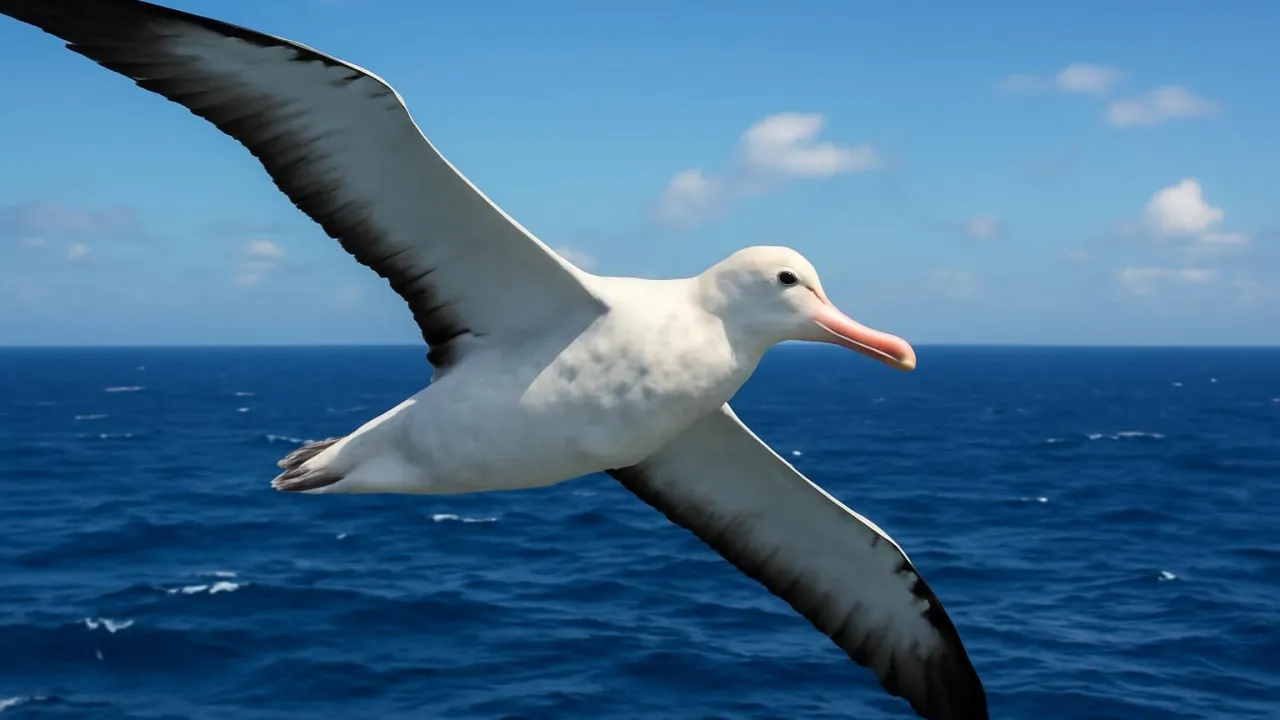
Wandering albatrosses can fly more than 10,000 miles in one trip without landing!
✨ Word Sparks (Grade 2 Glossary)
Tap 🔊 to hear
wingspan
How wide a bird's wings open when flying
nest
A home birds make to lay eggs and raise babies
prey
Animals that another animal hunts and eats
🪝
Have you ever wondered how birds can fly across huge oceans without resting?
1
Amazing Wingspan
The wandering albatross has the longest of any bird. Its wings can stretch over eleven feet wide. These large wings help it glide for hours without flapping. This saves energy during long flights.
2
Ocean Life
This bird lives mostly over the Southern Ocean near cold islands. It spends most of its life flying over water. It only comes to land to and raise chicks.
3
Catching Food
The albatross eats fish, squid, and small sea creatures. It uses its sharp beak to catch food from the ocean surface. It can spot from high in the sky while flying.
1. Where do wandering albatrosses spend most of their time?
2. What helps the albatross catch its food?
🤯 Mind-Blowing Fact • Grade 3
Wandering albatrosses can glide over 600 miles in a single day without flapping their wings!
✨ Word Sparks (Grade 3 Glossary)
Tap 🔊 to hear
glide
To fly smoothly without flapping wings
prey
Animals that are hunted and eaten by others
adaptation
A special body part or skill that helps survival
🪝
Did you know the wandering albatross can glide for hours without flapping its wings?
1
Longest Wingspan
The wandering albatross has the longest wingspan of any bird, reaching up to eleven feet. This huge wingspan helps it smoothly over the ocean. By soaring on air currents, it saves energy during long flights. This allows it to travel great distances without tiring.
2
Ocean Habitat
This bird lives mainly in the Southern Ocean around subantarctic islands. It spends most of its life flying over open water, rarely landing except to breed. The cold ocean provides rich nutrients that support fish and squid, the albatross’s main . Its habitat helps it find enough food to survive.
3
Feeding and Hunting
The albatross uses its keen eyesight to spot from high above the waves. It swoops down to catch fish and squid near the ocean’s surface. Its sharp beak is perfect for grabbing slippery prey quickly. This hunting skill helps it get enough nutrients for energy.
4
Survival Adaptations
The wandering albatross’s feathers provide waterproofing to keep it dry in wet ocean air. Its large wings allow it to use dynamic soaring, a technique that uses wind gradients for effortless flight. This reduces the need to flap wings often, conserving energy. Camouflage coloring helps it blend with the sea and sky, protecting it from predators.
1. How does the wandering albatross save energy during flight?
2. What helps the albatross catch slippery fish and squid?
🤯 Mind-Blowing Fact • Grade 4
Wandering albatrosses can travel over 10,000 miles in a single foraging trip across the ocean!
✨ Word Sparks (Grade 4 Glossary)
Tap 🔊 to hear
dynamic soaring
A flying method using wind differences to save energy
bycatch
Animals caught accidentally by fishing gear
guano
Bird droppings that help plants grow on islands
🪝
How does the wandering albatross play a vital role in its ocean ecosystem?
1
Wings Built for Soaring
The wandering albatross has the longest wingspan of any living bird, reaching up to eleven feet, which allows it to soar above the ocean for hours without flapping. This ability reduces energy use and helps it travel thousands of miles across the Southern Ocean. Its wings use , exploiting wind gradients to maintain flight with minimal effort. This adaptation is crucial for finding food in vast ocean areas.
2
Ocean Habitat and Distribution
These birds inhabit the cold Southern Ocean and nest on remote subantarctic islands such as South Georgia and the Crozet Islands. Their wide geographic range allows them to access rich feeding grounds full of fish and squid. Seasonal winds and ocean currents affect their migratory patterns, guiding them to areas with abundant prey. Human activities like fishing can impact their food supply and habitat quality.
3
Ecosystem Role and Food Web
As top oceanic predators, wandering albatrosses help maintain healthy fish and squid populations by controlling prey numbers. They also scavenge, cleaning up dead animals and preventing disease spread. Their nesting colonies provide nutrients to island ecosystems through deposits, supporting plant growth. Symbiotic relationships with other seabirds sometimes occur, sharing feeding areas without direct competition.
4
Threats and Conservation
Wandering albatross populations face threats from longline fishing, which can accidentally catch and kill them. Climate change affects ocean temperatures and prey availability, challenging their survival. Conservation efforts include protected nesting sites and fishing regulations to reduce . International agreements help monitor and protect these majestic birds across their wide range.
1. What flying technique helps wandering albatrosses save energy?
2. How do wandering albatrosses help island ecosystems?
🤯 Mind-Blowing Fact • Grade 5
Wandering albatrosses can fly nonstop for days, covering thousands of miles using wind currents alone!
✨ Word Sparks (Grade 5 Glossary)
Tap 🔊 to hear
dynamic soaring
Flying using wind differences to save energy over oceans
bycatch
Animals caught by fishing gear by accident
vulnerable
At risk of becoming endangered or extinct
🪝
What makes the wandering albatross one of the most remarkable ocean travelers on Earth?
1
Scientific Classification and Range
The wandering albatross (Diomedea exulans) belongs to the family Diomedeidae, known for large seabirds with exceptional flying abilities. It inhabits the Southern Ocean surrounding Antarctica and subantarctic islands, including South Georgia and the Kerguelen Islands. Its vast range is supported by its ability to exploit wind patterns for long-distance travel. This species is a key indicator of ocean health in its ecosystem.
2
Physiological Flight Mechanics
The wandering albatross’s wingspan can reach up to 11 feet (3.4 meters), the longest of any living bird, enabling and slope soaring. These flight techniques use wind gradients and ocean waves to maintain lift without continuous flapping, drastically reducing energy expenditure. Its lightweight skeleton and strong muscles support sustained gliding, while specialized tendon locking mechanisms keep wings extended during long flights.
3
Feeding Behavior and Nutritional Ecology
This species primarily feeds on fish, squid, and crustaceans, often foraging by surface seizing or shallow diving. It relies on keen eyesight and olfactory senses to locate prey over vast oceanic distances. The wandering albatross plays a vital role in marine food webs as a top predator, influencing prey population dynamics and nutrient cycling. Seasonal variations in prey abundance drive its migratory and breeding behaviors.
4
Conservation Status and Human Impact
Currently classified as by the IUCN, wandering albatross populations are threatened by in longline fisheries and habitat disturbance. Climate change alters ocean temperatures and wind patterns, affecting prey availability and flight conditions. Conservation efforts focus on international cooperation, including protected marine areas and bycatch mitigation technologies. Monitoring populations helps assess ecosystem health and guide protection strategies.
5
Quantitative Comparisons and Remarkable Facts
The wandering albatross can glide over 600 miles (965 kilometers) in a single day using , traveling speeds up to 50 miles per hour (80 kilometers per hour). Its wingspan is nearly twice as wide as a typical eagle’s and allows it to cover distances exceeding 10,000 miles (16,000 kilometers) during foraging trips. These impressive metrics highlight its adaptation to life as a master of oceanic flight.