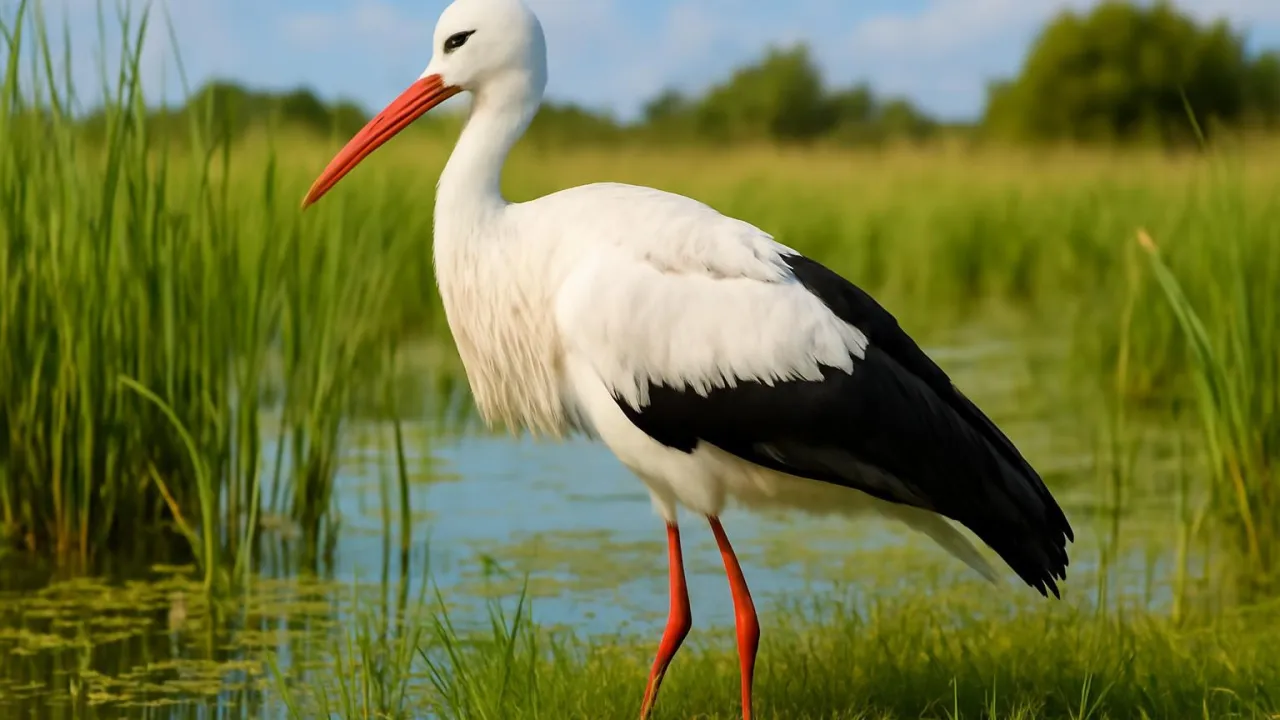
White storks can soar on air currents for hours without flapping their wings!
✨ Word Sparks (Grade 3 Glossary)
Tap 🔊 to hear
camouflage
Colors or shapes that help animals hide
predator
An animal that hunts other animals for food
adaptation
A body change that helps animals survive better
🪝
Did you know white storks use their long legs to wade through water and hunt?
1
Physical Features for Survival
White storks have long red legs that help them walk through wetlands and shallow water. Their long necks and sharp beaks allow them to catch prey easily. Their white feathers help them blend with the sky when flying to avoid .
2
Habitat and Migration
These birds live in wet meadows, fields, and near lakes across Europe, Africa, and Asia. They migrate thousands of miles to warmer places during winter. Migration helps them find food and better weather.
3
Diet and Hunting
White storks eat frogs, fish, insects, and small mammals. They use their sharp beaks to catch prey by wading slowly through water. This hunting method helps them find food without scaring animals away.
4
Nesting and Reproduction
White storks build large nests on rooftops or tall trees using sticks and grass. Both parents take turns caring for eggs and feeding chicks. This teamwork helps their young survive and grow strong.
White storks can glide on thermal air currents for hours, traveling over 100 miles in a single day!
✨ Word Sparks (Grade 4 Glossary)
Tap 🔊 to hear
ecosystem
A community of living things and their environment
symbiosis
When two species help each other live better
conservation
Protecting nature and animals from harm
🪝
How does the white stork’s long legs and beak help it survive in wetlands?
1
Adaptations for Wetland Life
White storks have long legs that allow them to wade through wetlands without getting their bodies wet, helping them hunt aquatic prey effectively. Their sharp, pointed beaks are perfect for catching frogs, fish, and insects hiding in shallow water. These physical adaptations improve their chances of survival by making hunting easier and more efficient.
2
Role in the Ecosystem
White storks play an important role in wetland food webs by controlling populations of small animals such as frogs and insects. This helps maintain balance in their . Additionally, their large nests provide shelter for other small animals, showing a form of where different species benefit from each other.
3
Migration and Geographic Range
White storks breed across Europe and parts of Asia during warmer months, then migrate to Africa for winter. Their migration covers thousands of miles, using air currents to soar efficiently. This long-distance travel allows them to exploit seasonal food sources and avoid harsh weather conditions.
4
Human Impact and Conservation
Human activities like wetland drainage and urban development threaten white stork habitats. efforts include protecting wetlands and creating artificial nesting platforms. These actions help preserve stork populations and maintain biodiversity in their habitats.
1. What helps white storks catch food in wetlands?
2. Why do white storks migrate to Africa?
🤯 Mind-Blowing Fact • Grade 5
White storks can glide for hours on thermal currents, covering over 100 miles in a single day without flapping!
✨ Word Sparks (Grade 5 Glossary)
Tap 🔊 to hear
physiology
How the body parts work and function together
migration
Seasonal long-distance movement of animals
conservation
Efforts to protect animals and their habitats
🪝
What unique physiological traits allow the white stork to migrate thousands of miles each year?
1
Taxonomy and Scientific Classification
The white stork, scientifically named Ciconia ciconia, belongs to the family Ciconiidae. It is a large wading bird characterized by long legs, a long neck, and a sharp beak adapted for hunting in wetlands. This species is closely related to other storks found across Europe, Africa, and Asia. Its evolutionary history reflects adaptations to diverse wetland environments.
2
Physiological Mechanics of Flight and Hunting
White storks possess strong wing muscles and broad wingspans reaching up to 7 feet, enabling efficient soaring on thermal air currents. Their long legs and sharp beaks facilitate wading through water and capturing prey such as amphibians and fish. Their ability to glide for hours conserves energy during long migratory flights, making them excellent long-distance travelers.
3
Migration Patterns and Energy Conservation
Each year, white storks migrate from European breeding grounds to sub-Saharan Africa, traveling distances over 6,000 miles. They use thermal updrafts to soar and minimize wing flapping, conserving energy. This is precisely timed with seasonal food availability and breeding cycles, ensuring survival and reproductive success.
4
Conservation History and Human Interaction
Historically, white storks were common in rural Europe but faced habitat loss due to wetland drainage and urbanization. programs now protect nesting sites and wetlands, including the installation of artificial platforms. These efforts have helped stabilize populations in many regions and raise awareness about wetland ecosystem importance.
5
Quantitative Comparisons and Environmental Adaptations
White storks can fly at speeds up to 30 miles per hour and soar at altitudes reaching 10,000 feet. Adults weigh between 6.6 to 8.8 pounds and stand about 3.3 feet tall. Their adaptations to varying temperatures and wetland environments demonstrate remarkable evolutionary success. Their ability to travel vast distances showcases impressive endurance and navigation skills.