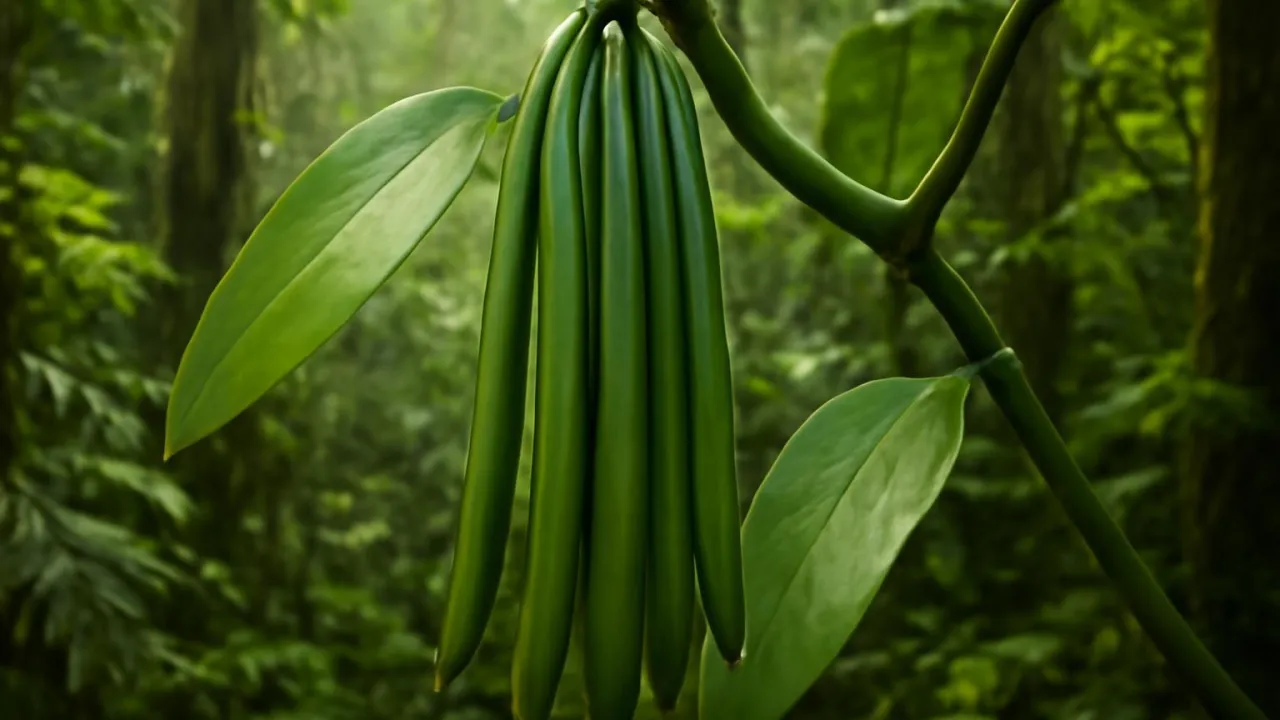
Vanilla is the only fruit from an orchid that is used for flavoring worldwide!
✨ Word Sparks (Grade 2 Glossary)
Tap 🔊 to hear
pollinate
When pollen moves to make seeds grow
ripe
Ready to eat or use
flavor
The taste or smell of food
🪝
Have you ever smelled the sweet scent of a vanilla pod?
1
Growing Vanilla Pods
Vanilla pods grow on vines that climb tall trees in warm forests. They need shade and lots of rain to grow well. The pods start green and turn dark when .
2
How Vanilla Pods Develop
The vanilla flower is pollinated by tiny bees or by hand. After pollination, the pod grows slowly for about nine months. The pod becomes long and thin as it grows.
3
Why Vanilla Is Special
Vanilla pods have tiny seeds inside that give a sweet . People use vanilla to add flavor to ice cream and cakes. The smell of vanilla is used in perfumes too.
Vanilla is the only edible fruit from the orchid family, which has over 25,000 species!
✨ Word Sparks (Grade 3 Glossary)
Tap 🔊 to hear
adaptation
A change that helps plants survive better
pollination
Moving pollen to make seeds grow
aroma
A smell that is pleasant and strong
🪝
Did you know vanilla pods come from orchids that need special pollination?
1
Vanilla’s Tropical Home
Vanilla planifolia grows in tropical rainforests where it climbs tall trees using vines. It thrives in humid, shaded areas that protect it from strong sun. This environment provides the nutrients and moisture needed for growth. The orchid’s to climb helps it reach filtered sunlight.
2
Pollination and Pod Growth
Vanilla orchids rely on tiny Melipona bees or human hand to transfer pollen. Without pollination, the flower cannot produce a pod. After pollination, the pod takes about nine months to mature and turn dark brown. This slow growth allows seeds inside to develop fully.
3
Vanilla Pod Structure
The vanilla pod is a long, slender fruit that protects thousands of tiny seeds inside. Its thick skin helps reduce water loss in the humid climate. The pod’s shape and texture allow it to dry evenly during curing. This structure is an to preserve flavor and .
4
Uses and Flavor
Vanilla pods are harvested and cured to develop their signature sweet flavor. The seeds and pod are used to flavor ice cream, cakes, and perfumes. Vanilla’s complex comes from vanillin, a natural chemical inside the pod. This flavoring is highly prized worldwide.
Vanilla’s unique pollination and curing process make it one of the most expensive spices globally!
✨ Word Sparks (Grade 4 Glossary)
Tap 🔊 to hear
biodiversity
Many different plants and animals living together
pollination
Moving pollen to help plants make seeds
curing
Drying and treating pods to develop flavor
🪝
How does the vanilla pod’s growth affect tropical ecosystems and human use?
1
Vanilla’s Role in Tropical Ecosystems
Vanilla orchids grow as vines in tropical rainforests, where they climb host trees without harming them. This climbing adaptation allows vanilla to reach filtered sunlight essential for photosynthesis. The orchids provide nectar to specialized bees, supporting local pollinator populations. Thus, vanilla contributes to and food webs in its ecosystem.
2
Pollination and Human Cultivation
In the wild, tiny Melipona bees pollinate vanilla flowers, but in cultivation, hand is common to ensure pod production. This human intervention increases vanilla yield and supports farmers’ livelihoods. Vanilla cultivation requires warm, humid climates with shade, typically found in Mexico, Madagascar, and Indonesia. The delicate pollination process makes vanilla a labor-intensive crop.
3
Vanilla Pod Development and Harvest
After , vanilla pods develop over nine months, gradually turning from green to dark brown. The pods are then cured through drying and sweating to develop their characteristic flavor and aroma. This process is essential for producing high-quality vanilla used in food and perfumes. The pods’ thick skin helps protect seeds during growth and curing.
4
Economic and Cultural Importance
Vanilla is one of the most valuable spices worldwide, often called “green gold” due to its high price. It plays a significant role in culinary arts, perfumes, and traditional medicine. The demand for natural vanilla supports many tropical farming communities but also leads to conservation challenges. Sustainable farming practices help protect vanilla’s natural habitats and .
1. Why is hand pollination important for vanilla farming?
2. What does curing do to vanilla pods?
🤯 Mind-Blowing Fact • Grade 5
Vanilla is the only fruit from the orchid family that humans eat and use worldwide as flavoring!
✨ Word Sparks (Grade 5 Glossary)
Tap 🔊 to hear
enzymatic
Chemical reactions caused by special proteins
biodiversity
Variety of plants and animals in nature
pollination
Transfer of pollen to make seeds grow
🪝
What scientific secrets make vanilla pods a prized natural flavor worldwide?
1
Scientific Classification and Origin
Vanilla planifolia belongs to the Orchidaceae family, which contains over 25,000 species globally. Native to Mexico’s tropical rainforests, this species was first cultivated by the Totonac people. The vanilla orchid’s unique reproductive biology requires precise by Melipona bees or manual techniques. This specificity limits natural pod production and influences global vanilla supply.
2
Physiological Mechanics of Vanilla Pods
Vanilla pods develop from fertilized flowers, growing slowly over nine months to reach lengths of 15 to 23 centimeters. The pod’s thick epidermis protects thousands of minute seeds and reduces water loss in humid environments. Inside, vanillin biosynthesis occurs through reactions during curing, producing the characteristic vanilla aroma. The pod’s structure supports seed dispersal and flavor preservation.
3
Historical and Conservation Context
Vanilla cultivation spread from Mexico to Madagascar and Indonesia during colonial times, becoming a major global spice crop. Overharvesting and habitat loss threaten wild vanilla populations, prompting conservation efforts. Sustainable farming practices and hand help maintain vanilla’s genetic diversity and ecological balance. Botanical gardens and seed banks also support vanilla conservation.
4
Quantitative Comparisons and Uses
Vanilla pods typically measure 6 to 9 inches long and weigh about 3 to 5 grams each when cured. The curing process can take up to six months, involving sweating and drying at controlled temperatures around 45 to 60 degrees Celsius. Vanilla is the second most expensive spice after saffron, costing up to $600 per kilogram. It is widely used in culinary arts, perfumery, and aromatherapy worldwide.
5
Economic Impact and Future Prospects
Global vanilla production supports thousands of smallholder farmers, especially in Madagascar, which produces 80% of the world’s supply. Market demand fluctuates due to climate sensitivity and labor-intensive methods. Advances in biotechnology aim to produce synthetic vanillin and improve crop resilience. Sustainable vanilla farming balances economic benefits with environmental stewardship.