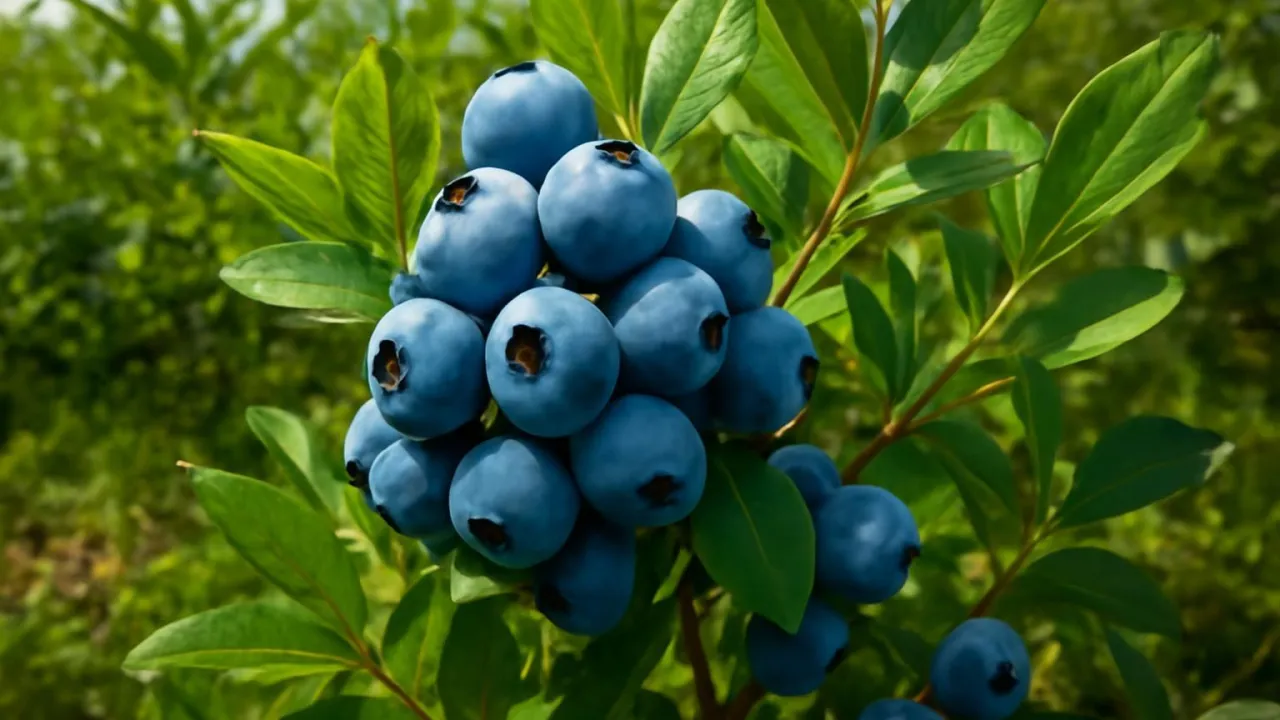
Highbush blueberries are rich in antioxidants that protect your body!
✨ Word Sparks (Grade 2 Glossary)
Tap 🔊 to hear
bushes
Many small plants growing close together
acidic
Soil that is good for some plants to grow
antioxidants
Healthy things in food that help your body
🪝
Have you ever tasted a juicy blueberry from a big bush?
1
Blueberry Bushes
Highbush blueberries grow on tall that can reach twelve feet. They have green leaves and blue berries. Birds and animals eat these berries often.
2
Where They Grow
These grow in forests and fields with plenty of sunlight. They need moist, soil to grow healthy and strong. People pick the berries to eat fresh or make jams.
3
Special Berry Features
Blueberries are round and blue with a smooth skin. They taste sweet and are full of vitamins. These berries help keep your body healthy and strong.
1. What do highbush blueberries need to grow well?
2. Who eats blueberries in the wild?
🤯 Mind-Blowing Fact • Grade 3
Highbush blueberries use animals to spread their seeds far and wide!
✨ Word Sparks (Grade 3 Glossary)
Tap 🔊 to hear
photosynthesis
How plants use sunlight to make food
antioxidants
Natural helpers that keep your body healthy
seed dispersal
How plants spread seeds to grow new plants
🪝
Did you know highbush blueberries have special leaves that help them survive?
1
Blueberry Bush and Leaves
Highbush blueberries grow tall bushes with green leaves that change color in fall. Their leaves help protect the plant from cold weather. The bushes produce clusters of blue berries in summer. These leaves also help the plant save water during dry days.
2
Growing in the Right Habitat
These bushes thrive in acidic, moist soils found in forests and fields. They need full sunlight to make energy through . This adaptation helps them survive in their natural habitat. The soil acidity helps keep harmful bacteria away.
3
Berries and Their Role
The blueberries are round fruits full of and vitamins. They attract birds and animals, which help spread seeds for new plants. This process is called . Animals eat the berries and carry seeds far away.
4
Survival Adaptations
The plant’s waxy skin on berries protects them from drying out. Their blue color also helps camouflage them among leaves. These adaptations help the blueberries survive and reproduce. The waxy coating also helps berries stay fresh longer.
Highbush blueberries help keep forests healthy by feeding many animals!
✨ Word Sparks (Grade 4 Glossary)
Tap 🔊 to hear
symbiotic
When two living things help each other
biodiversity
Many different plants and animals living together
erosion
When soil washes away from wind or water
🪝
How do highbush blueberries play a key role in forest ecosystems?
1
Ecosystem and Habitat
Highbush blueberries grow mainly in eastern North American forests where the soil is acidic and moist. Their presence supports many animals by providing food and shelter. These bushes also help prevent soil by holding the ground with their roots. Their roots improve soil health by adding organic matter.
2
Food Web Connections
The berries are an important food source for birds, mammals, and insects. In return, these animals help spread blueberry seeds, creating a relationship. This mutual benefit strengthens the forest’s and health. The bushes also provide shelter for small animals during harsh weather.
3
Human Impact and Agriculture
Farmers cultivate highbush blueberries in orchards for fresh fruit and processing. Sustainable farming practices help protect wild populations and maintain soil quality. However, habitat loss and climate change can threaten natural blueberry bushes. Efforts to conserve wild bushes help preserve genetic diversity.
4
Geographic Distribution
Highbush blueberries naturally grow from Canada to the southeastern United States. They prefer temperate climates with cold winters and warm summers. This range allows them to thrive in diverse forest and field environments. Their adaptability helps them survive in different soil types.
2. Why are highbush blueberries important to forests?
🤯 Mind-Blowing Fact • Grade 5
Highbush blueberries need up to 1,000 chill hours below 45°F to produce sweet fruit!
✨ Word Sparks (Grade 5 Glossary)
Tap 🔊 to hear
mycorrhizal
Fungi that help plant roots get nutrients
deciduous
Plants that lose leaves in fall
chill hours
Cold hours plants need to grow fruit
🪝
What scientific secrets help highbush blueberries thrive in their natural habitats?
1
Taxonomy and Botanical Classification
Highbush blueberry, scientifically known as Vaccinium corymbosum, belongs to the Ericaceae family. This shrub is part of the Vaccinium genus, which includes other important berry-producing plants. Understanding its taxonomy helps botanists study its relationships with similar species. This classification also guides cultivation and conservation strategies worldwide.
2
Physiological Adaptations and Growth
Highbush blueberries have adapted to acidic, well-drained soils with high organic matter content. Their leaves contain specialized pigments that protect against ultraviolet radiation and cold temperatures. The plant’s root system forms symbiotic relationships with fungi to improve nutrient uptake. These adaptations enable the plant to thrive in temperate forest environments.
3
Ecological Role and Conservation
These bushes play a vital role in forest ecosystems by providing food for over fifty bird species and numerous mammals. Conservation efforts focus on protecting natural habitats from deforestation and climate change impacts. Sustainable cultivation practices also help maintain genetic diversity. Protecting wild populations ensures long-term survival of this important species.
4
Botanical History and Human Uses
Native Americans first harvested highbush blueberries for food and medicine long before European settlers arrived. Today, commercial farming produces millions of pounds annually, making blueberries a significant agricultural crop. Their antioxidants and vitamins contribute to human health benefits. Blueberries are used in fresh fruit markets, jams, juices, and dietary supplements.
5
Quantitative Comparisons and Growth Data
Highbush blueberry bushes can grow between 6 and 12 feet tall, with berries averaging 0.25 to 0.5 inches in diameter. The plants require 800 to 1,000 below 45°F for optimal fruit production. Their antioxidant levels surpass many other fruits, making them nutritionally valuable. These chill hours are critical for flowering and fruit set in spring.