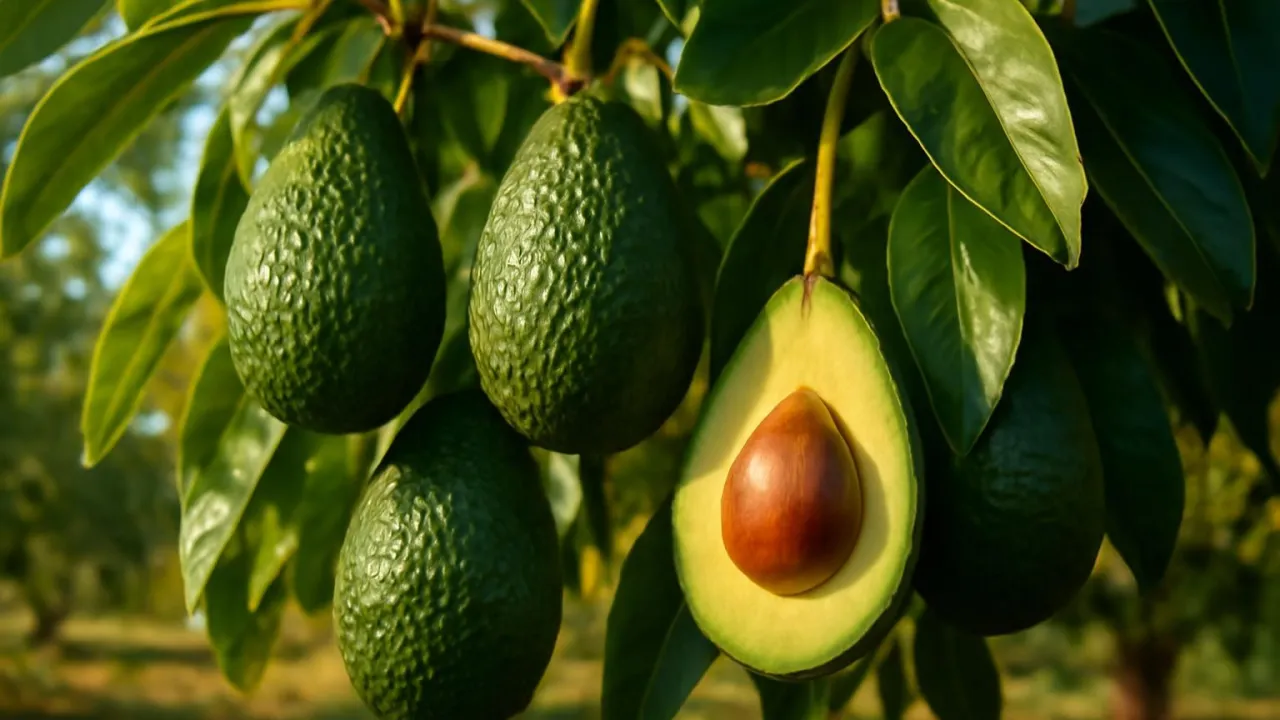
A single Hass avocado tree can grow over 500 avocados in one year!
✨ Word Sparks (Grade 2 Glossary)
Tap 🔊 to hear
fruit
Part of a plant we can eat
seed
Hard part that grows new plants
guacamole
A dip made from mashed avocados
🪝
Did you know some fruits have skin as bumpy as a lizard?
1
Meet the Hass Avocado
Hass avocados have dark, rough skin and soft, pale green insides. They grow on tall trees with shiny leaves. The is shaped like an egg and has a big round .
2
Where Do Avocados Grow?
These trees need warm weather and lots of sunlight to grow well. They are found in places like Mexico and California. Avocados do not like cold or frosty weather.
3
A Tasty, Healthy Treat
People love to eat Hass avocados in salads, sandwiches, and . The is creamy and full of healthy fats. These fats help your heart and keep you strong.
Botanically, avocados are fruits—even though we eat them like vegetables!
✨ Word Sparks (Grade 3 Glossary)
Tap 🔊 to hear
nutrients
Good things in food that help you grow
pollination
When pollen moves to help plants make fruit
fiber
Part of food that helps your tummy
🪝
What fruit has skin like a dragon and is creamy inside?
1
The Bumpy Green Wonder
The Hass avocado is famous for its rough, bumpy skin and creamy, green flesh. Its skin protects the soft inside from bugs and sun. When you cut it open, you’ll find a large, round seed in the middle. The fruit grows on evergreen trees that can reach over 60 feet tall.
2
Where Avocados Call Home
Hass avocados originally came from Mexico, but now grow in warm places worldwide. These trees need lots of sun, well-drained soil, and mild temperatures to thrive. If it gets too cold, the tree can lose its leaves or stop making fruit. Most avocados in stores come from California and Mexico.
3
A Superfood for People
Hass avocados are packed with like potassium, , and healthy fats. The creamy texture comes from natural oils inside the fruit. Eating avocados helps your body absorb vitamins and keeps your heart healthy. People mash them into guacamole or slice them for salads and toast.
4
How the Avocado Grows Up
A new avocado tree starts from a seed, but it takes years to grow fruit. The tree makes small yellow-green flowers, which bees visit for . After pollination, tiny avocados grow and slowly get bigger for months. The bumpy skin forms last, protecting the fruit until it’s ready to pick.
Every Hass avocado in the world can be traced back to one original tree!
✨ Word Sparks (Grade 4 Glossary)
Tap 🔊 to hear
erosion
When soil washes or blows away
orchard
A place where fruit trees grow
berry
A type of fruit with seeds inside
🪝
Did you know the world’s favorite avocado started as a backyard experiment?
1
The Hass Avocado’s Amazing Origin
The Hass avocado was first discovered in California in the 1920s by a mailman named Rudolph Hass, who planted a special seed in his backyard. This variety quickly became popular because its thick, bumpy skin protected the fruit during shipping and its creamy flesh tasted delicious. Today, Hass avocados are grown in many warm regions, including Mexico, California, Peru, and South Africa. These trees can live for decades and produce hundreds of avocados each year.
2
How the Avocado Thrives
Hass avocado trees need full sunlight, mild temperatures, and well-drained soil to grow well. Too much cold or frost can damage the leaves and flowers, lowering the fruit harvest. The tree’s deep roots help it find water during dry times, but it still needs regular watering to make plump, healthy fruit. Bees and other insects pollinate the small flowers, starting the process that leads to each new avocado.
3
The Avocado’s Role in Nature
Avocado trees provide food and shelter for many creatures, including birds, insects, and small mammals. Their leaves and branches offer shade and nesting spots, while fallen fruit feeds animals on the ground. In farming areas, growing avocados can help keep soil healthy and prevent , but large farms must be careful not to use too much water or remove too many wild plants.
4
From Orchard to Table
Once picked, Hass avocados are shipped around the world because their tough skin keeps them safe. People use avocados in many dishes, from guacamole to sushi, and even in smoothies. The healthy fats in avocados are good for your heart and brain, making them a favorite in healthy diets. Fun fact: although we call them vegetables in the kitchen, avocados are actually berries in the plant world!
1. Why do farmers like Hass avocados for shipping?
2. What is one way avocados help nature?
🤯 Mind-Blowing Fact • Grade 5
Every Hass avocado on Earth is a genetic clone of the very first Hass tree!
✨ Word Sparks (Grade 5 Glossary)
Tap 🔊 to hear
mesocarp
The soft, edible part of a fruit
grafted
When one plant is joined to another to grow better
photosynthesis
How plants make food from sunlight
🪝
Could a single backyard tree change how the world eats forever?
1
A Fruit with a Global Story
The Hass avocado, scientifically named Persea americana var. hass, is the world’s most popular avocado variety. It was first grown from a single seed by Rudolph Hass in California in 1926, and every Hass avocado today is genetically descended from that original tree. Native to Central Mexico, avocados have been cultivated by humans for thousands of years, but the Hass variety’s thick skin and rich flavor made it perfect for commercial farming and global trade.
2
How the Hass Avocado Grows
Hass avocado trees are evergreen and can reach heights of 60 feet (18 meters), with broad, glossy leaves that capture sunlight for . The trees require full sun, well-drained soil, and moderate water to thrive, but are sensitive to frost and root rot. Each tree produces hundreds of small yellow-green flowers, yet only a small percentage are pollinated—mainly by bees—resulting in fruit. It typically takes five to seven months from pollination for a Hass avocado to mature and develop its signature bumpy skin.
3
Inside the Avocado: Nutrition and Structure
The edible part of the Hass avocado is the , which is high in monounsaturated fats, fiber, potassium, and vitamins E and C. A single medium Hass avocado weighs about 7 ounces (200 grams) and contains around 250 calories. Its thick, pebbly skin protects the creamy flesh from pests, bruising, and moisture loss, allowing the fruit to be shipped long distances. The large central seed is not eaten, but can be planted to grow a new tree, though most commercial trees are for better fruit quality.
4
Avocados in Ecosystems and Agriculture
Hass avocado orchards support biodiversity by providing habitat for birds, insects, and mammals, but large-scale farming can impact local water supplies and native forests. Avocado roots help prevent soil erosion, but irrigation must be carefully managed to avoid depleting groundwater. In some regions, sustainable farming practices—like mulching and intercropping—are used to protect the environment. The global demand for avocados has led to both economic growth and environmental challenges in producing countries.
5
Fun Botanical Facts and Conservation
Botanically, the avocado is a berry with a single large seed, and it belongs to the laurel family (Lauraceae). Unlike most fruits, avocados ripen after being picked, which allows growers to control harvest times and reduce waste. The original Hass tree grew until 2002, living for 76 years and producing millions of descendants. Today, scientists are working to develop disease-resistant trees and promote sustainable avocado farming to protect this valuable crop for future generations.