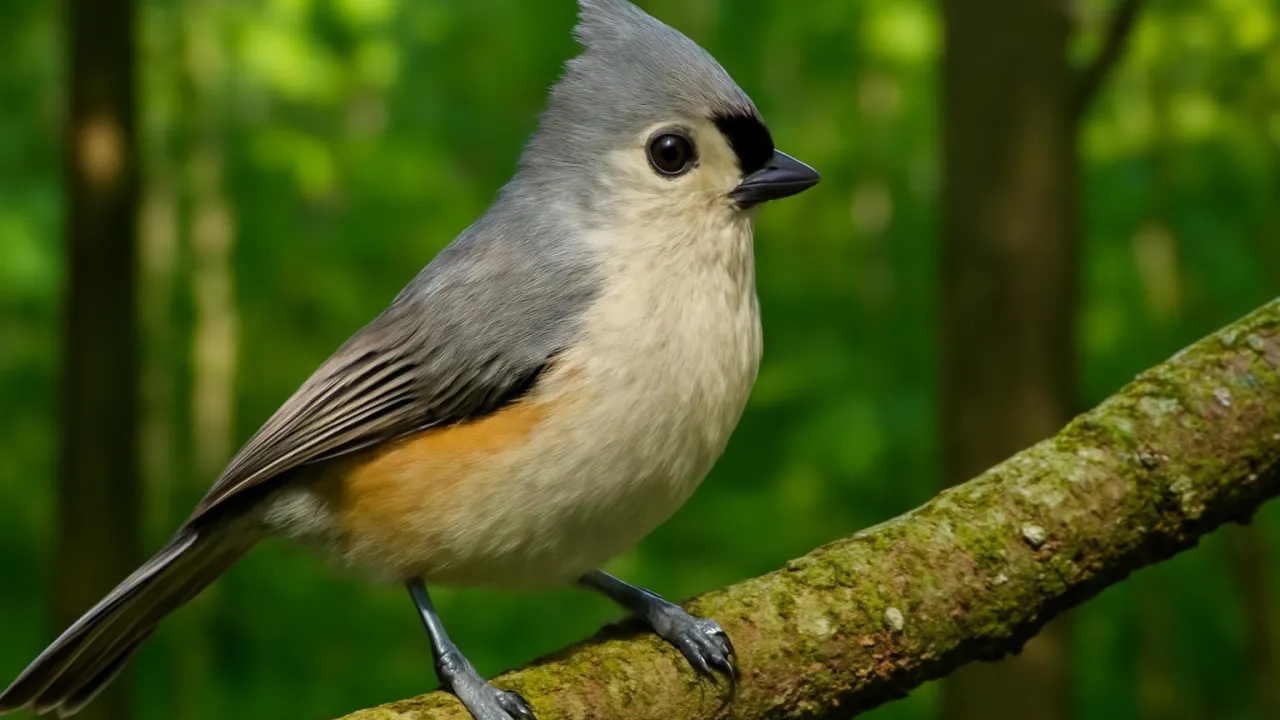
1. What does the tufted titmouse use to crack nuts?
2. Where does the tufted titmouse like to live?
🤯 Mind-Blowing Fact • Grade 2
Tufted titmice can remember where they hide seeds to eat later in cold weather!
✨ Word Sparks (Grade 2 Glossary)
Tap 🔊 to hear
nest
A home birds build for their babies
insects
Small animals with six legs
crested
Having a pointy feather on the head
🪝
Have you noticed a small gray bird with a pointy crest on its head?
1
The Tufted Crest
The tufted titmouse has a gray crest that stands up when it is excited. It has white underparts and big black eyes. Its small size helps it move quickly through trees.
2
Where It Lives and Grows
This bird lives in eastern forests and parks where there are many trees. It builds in tree holes or birdhouses. Baby titmice grow fast and soon learn to fly and find food.
3
What It Eats and How
The titmouse eats , seeds, and nuts by using its sharp beak. It often hops on branches and looks for food under leaves. Sometimes it stores seeds for winter.
2. What do tufted titmice sometimes store for winter?
🤯 Mind-Blowing Fact • Grade 3
Tufted titmice can remember hundreds of hidden seed locations for months during winter!
✨ Word Sparks (Grade 3 Glossary)
Tap 🔊 to hear
camouflage
Colors that help animals hide
predator
An animal that hunts others
cache
A secret place to hide food
🪝
Did you know the tufted titmouse uses its crest to show how it feels?
1
A Crest That Talks
The tufted titmouse has a gray crest that rises when it is alert or curious. This feathered crest helps it communicate with other birds nearby. Its white belly and rust-colored sides help it blend into tree bark. This keeps it safe from .
2
Home in the Forest
Tufted titmice live in deciduous and mixed forests of eastern North America. They build nests inside tree cavities or old woodpecker holes. These safe homes protect their eggs and young chicks from weather and enemies.
3
Eating and Storing Food
The titmouse eats insects, spiders, seeds, and nuts using its strong, pointed beak. It often forages by hopping along branches and leaves. It also food, hiding seeds in bark crevices to eat during winter months.
4
Survival Adaptations
Its sharp eyes and quick movements help it avoid like hawks and snakes. The bird’s small size and agility allow it to dart through thick branches. Its vocal calls warn others of danger and help keep its territory safe.
Tufted titmice can recognize and remember individual neighbors’ calls to avoid unnecessary fights.
✨ Word Sparks (Grade 4 Glossary)
Tap 🔊 to hear
ecosystem
All living things in one place
territory
An area animals protect from others
understory
Small trees and bushes under tall trees
🪝
How does the tufted titmouse’s crest help it survive in forests?
1
Crest Communication and Behavior
The tufted titmouse uses its crest to communicate moods such as alertness, excitement, or aggression to other birds. This visual signal helps avoid fights and strengthens social bonds within flocks. When threatened, the bird fluffs its crest to appear larger and warn predators.
2
Role in the Forest Ecosystem
As an insectivore and seed eater, the titmouse plays a key role in controlling insect populations and dispersing seeds. It helps pollinate some plants by visiting flowers for insects. Its presence supports a balanced food web by providing prey for hawks and snakes.
3
Habitat and Geographic Range
Tufted titmice inhabit deciduous and mixed woodlands across eastern North America, from southern Canada to the Gulf Coast. They prefer mature forests with dense for nesting and foraging. Human changes like deforestation can reduce their habitat but they adapt well to suburban areas with bird feeders.
4
Adaptations for Survival
Their sharp eyesight and quick reflexes allow them to spot predators early and escape swiftly. The bird’s small size and strong legs help it cling to branches while searching for food. Vocal calls serve as alarms and help maintain boundaries among neighboring birds.
1. What does the tufted titmouse’s crest do when it feels threatened?
2. How do tufted titmice help plants?
🤯 Mind-Blowing Fact • Grade 5
Tufted titmice can flap their wings up to 25 times per second, enabling fast and agile flight.
✨ Word Sparks (Grade 5 Glossary)
Tap 🔊 to hear
Paridae
A family of small songbirds including titmice
caching
Hiding food to eat later
canopy
The top layer of trees in a forest
🪝
What makes the tufted titmouse a fascinating example of bird adaptation and behavior?
1
Scientific Classification and Description
The tufted titmouse, scientifically named Baeolophus bicolor, belongs to the family . It is a small songbird measuring about six inches in length with gray upperparts and a distinctive crest. Its white underbelly and rust-colored flanks distinguish it from similar species. This bird is closely related to chickadees and shares many behavioral traits.
2
Physiological Adaptations and Mechanics
The tufted titmouse’s crest is made of specialized feathers that can be raised or lowered to communicate emotional states. Its strong, pointed beak allows it to crack hard seeds and catch small insects efficiently. The bird’s lightweight skeleton and powerful wing muscles enable agile flight through dense forest canopies, aiding in predator avoidance.
3
Behavior, Communication, and Memory
Tufted titmice use a complex system of vocal calls and visual signals like crest movements to communicate with flock members. They exhibit remarkable spatial memory by hundreds of seeds in various locations and retrieving them months later during winter scarcity. This behavior increases their survival chances in harsh conditions.
4
Ecological Role and Human Impact
As both insectivores and seed dispersers, tufted titmice contribute significantly to forest ecosystem health by controlling insect populations and aiding plant reproduction. Although deforestation threatens their natural habitats, these birds have adapted well to suburban environments with bird feeders, reflecting their ecological flexibility.
5
Quantitative Comparisons and Conservation
Measuring approximately six inches long and weighing around 20 grams, the tufted titmouse can flap its wings up to 25 times per second during flight. It inhabits forests ranging from southern Canada to the Gulf Coast. Conservation efforts focus on preserving mature woodlands and promoting backyard habitats to support their populations.