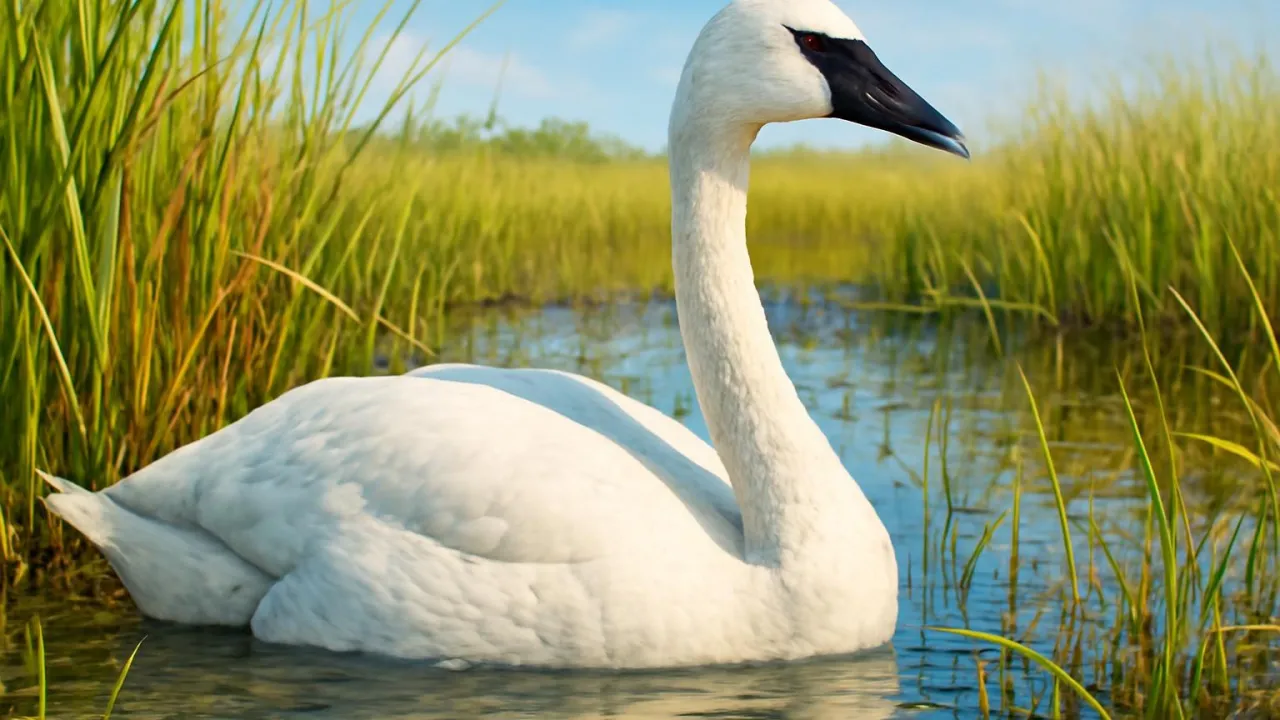
Trumpeter swans have the loudest call of any North American bird!
✨ Word Sparks (Grade 2 Glossary)
Tap 🔊 to hear
wingspan
The distance from one wing tip to the other
cygnets
Baby swans that are soft and gray
nest
A bird’s home made of sticks and grass
🪝
Have you heard a bird that sounds like a loud trumpet?
1
Big and White
The trumpeter swan is the largest waterbird in North America, and it has bright white feathers. It can grow up to five feet tall and has a long neck. This bird’s can reach over seven feet, making it very wide when flying.
2
Where It Lives
Trumpeter swans live in cold wetlands, lakes, and ponds where water is clean. They build near the water’s edge and lay eggs in spring. The young swans, called , grow feathers and learn to swim quickly.
3
Special Trumpet Call
This swan is named for its loud call that sounds like a trumpet. It uses this call to talk to other swans and warn of danger. The call can be heard from far away across the water.
2. What does the trumpeter swan’s call sound like?
🤯 Mind-Blowing Fact • Grade 3
Trumpeter swans use their loud calls to protect their families from danger.
✨ Word Sparks (Grade 3 Glossary)
Tap 🔊 to hear
camouflage
Colors that help animals hide from others
migration
Moving to a new place for food or weather
nutrients
Food parts that help animals grow strong
🪝
How does the trumpeter swan’s trumpet call help it survive?
1
Largest Waterbird
The trumpeter swan is the largest waterbird in North America, with a wingspan over seven feet. Its large size helps protect it from many predators and allows it to fly long distances during . The swan’s white feathers provide against snowy backgrounds in winter.
2
Habitat and Life Cycle
Trumpeter swans live in freshwater wetlands and lakes where they find food and shelter. They build large nests near water and lay eggs that hatch into cygnets. These young swans grow quickly and learn to swim and fly within a few months.
3
Feeding and Adaptation
Trumpeter swans feed mainly on aquatic plants, pulling roots from underwater with their strong beaks. Their long necks help them reach deep plants, giving them an advantage over other birds. This adaptation allows them to get needed to stay healthy.
4
Trumpet Call and Communication
The trumpeter swan’s loud call sounds like a trumpet and is used to communicate with mates and warn of predators. This call can travel long distances over water, helping swans stay connected even when far apart. This communication is vital for their survival and social behavior.
2. What is one reason trumpeter swans make loud calls?
🤯 Mind-Blowing Fact • Grade 4
Trumpeter swans can fly over 60 miles per hour during migration, faster than many birds.
✨ Word Sparks (Grade 4 Glossary)
Tap 🔊 to hear
herbivore
An animal that eats only plants
biodiversity
Many different plants and animals living together
conservation
Protecting animals and their homes
🪝
How does the trumpeter swan’s loud call affect its role in the ecosystem?
1
Size and Habitat
The trumpeter swan is North America’s largest waterbird, standing up to five feet tall and weighing over 30 pounds. It inhabits freshwater wetlands, lakes, and ponds mainly in Canada and northern United States, where it finds abundant aquatic plants for food and shelter. These wetlands provide the perfect environment for feeding and nesting.
2
Life Cycle and Migration
Trumpeter swans build large nests near water edges and lay between three to eight eggs each spring. The cygnets grow quickly and learn to fly within a few months. These swans migrate seasonally to warmer areas, traveling hundreds of miles to survive harsh winters and find food.
3
Ecosystem Role and Food Web
As , trumpeter swans help control aquatic plant growth, which maintains a balanced ecosystem. They also provide food for predators like foxes and eagles. Their presence supports wetland health and , showing their important role in the food web and ecosystem stability.
4
Communication and Human Impact
The swans’ loud trumpet calls help pairs stay connected and warn others of threats, which increases survival chances. efforts have helped their populations recover after past hunting threats. Protecting wetlands is crucial to preserving their habitat and ensuring the species continues to thrive.
2. Why is wetland protection important for trumpeter swans?
🤯 Mind-Blowing Fact • Grade 5
Trumpeter swans’ calls can travel over two miles, louder than almost any bird sound in North America.
✨ Word Sparks (Grade 5 Glossary)
Tap 🔊 to hear
Anatidae
The bird family that includes swans, ducks, and geese
insulation
Keeping warm by trapping heat inside feathers or fur
migration
Seasonal movement from one place to another for survival
🪝
What unique adaptations help the trumpeter swan thrive in North American wetlands?
1
Scientific Classification and Size
The trumpeter swan, Cygnus buccinator, is the largest native waterfowl species in North America, standing up to five feet tall and weighing between 21 and 30 pounds. Its wingspan ranges from 6 to 8 feet, enabling powerful flight during long . This species belongs to the family, which includes ducks, geese, and swans.
2
Physiological Adaptations and Feeding
Trumpeter swans possess long, muscular necks and large bills that allow them to forage for submerged aquatic vegetation efficiently. Their webbed feet enable strong swimming in cold waters, while dense feathers provide against freezing temperatures. These adaptations allow them to extract nutrients from roots and stems deep underwater.
3
Life Cycle, Migration, and Conservation
These swans breed in northern wetlands, constructing large nests from reeds and grasses near water. Cygnets hatch after about a month and develop flight feathers within four to five months. Seasonal covers distances up to 1,000 miles, moving to southern wetlands during winter. Conservation efforts have increased populations after near-extinction due to hunting and habitat loss.
4
Ecological Role and Human Impact
As herbivores, trumpeter swans regulate aquatic plant populations, contributing to wetland ecosystem balance and biodiversity. They serve as prey for predators like eagles and foxes, integrating into complex food webs. Human activities, including wetland drainage and pollution, threaten their habitats, but protected areas and restoration projects support their survival.
5
Quantitative Comparisons and Vocalization
Trumpeter swans can reach flight speeds up to 60 miles per hour and weigh up to 30 pounds, making them among the heaviest flying birds. Their trumpet-like calls can be heard over two miles away, serving as effective communication during and territorial defense. These vocalizations are louder than most other North American bird calls.